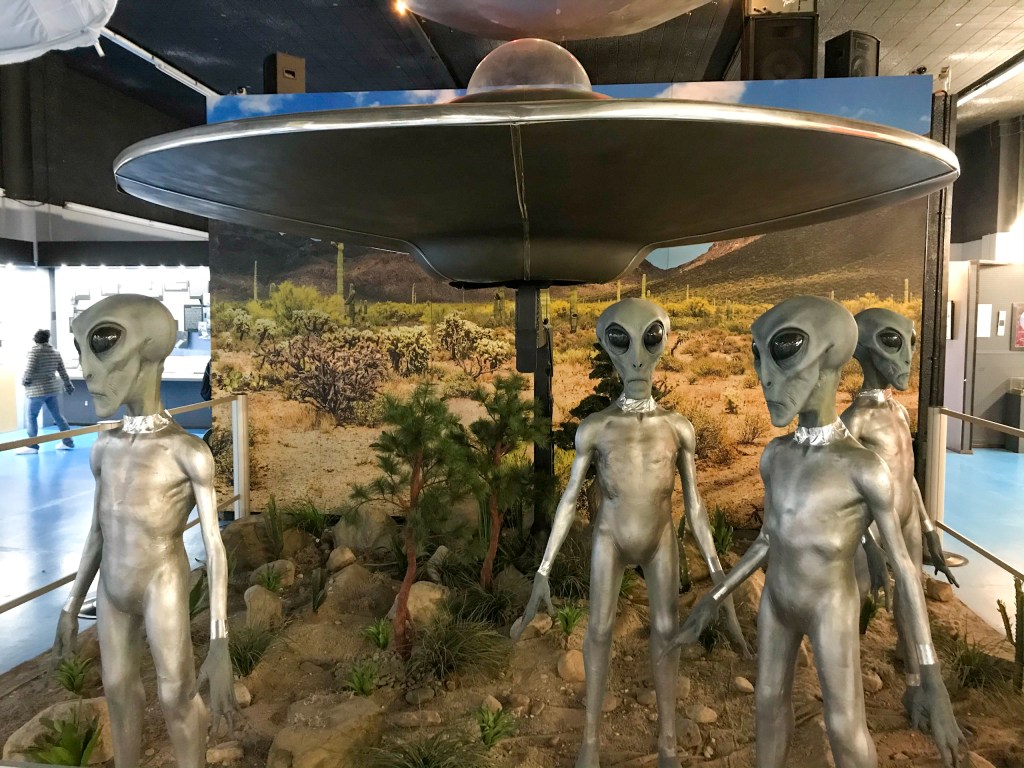
After leaving Carlsbad Caverns, Abbey and I headed up through Carlsbad the city (don’t go there, it’s inundated by the oil & gas industry) and on into Roswell. The town of Roswell is bigger than I imagined, but the touristy love of aliens and conspiracy theories is exactly as I pictured it. We stopped at the International UFO Museum and enjoyed the kitschy displays and the surprisingly informative exhibits that encompass the Roswell incident. If you’re in the area, it’s worth a stop – kinda cheesy but you know that going in.
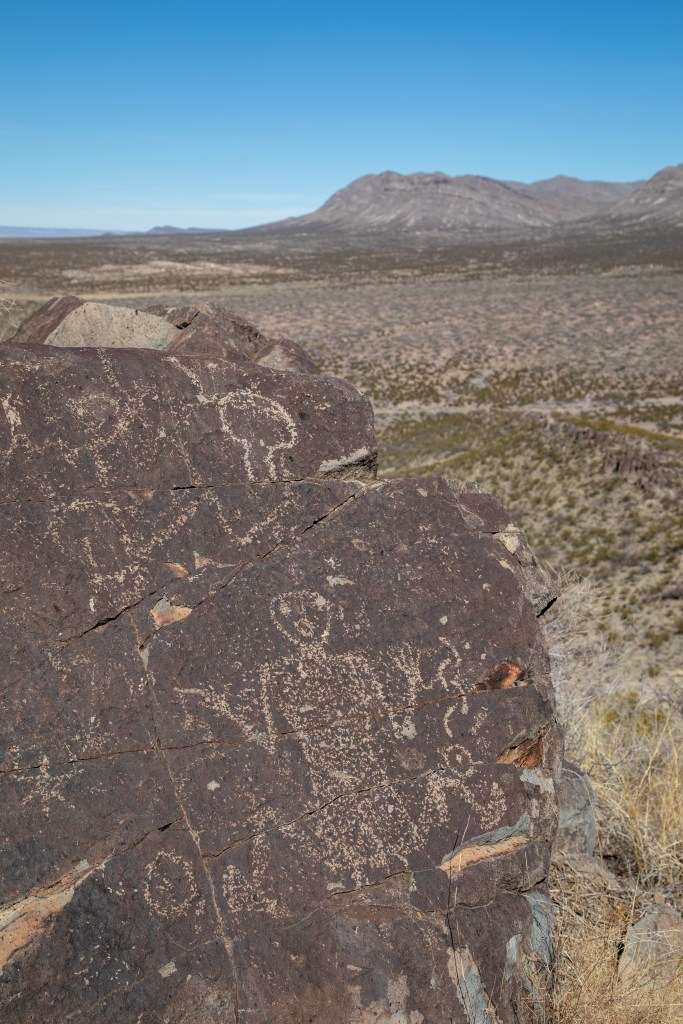
After Roswell we swung through the Three Rivers Petroglyph Site, home to the largest rock art site in the southwest. There are over 21,000 petroglyphs in this one area, and you can easily see hundreds and hundreds on one short trail along a ridge.
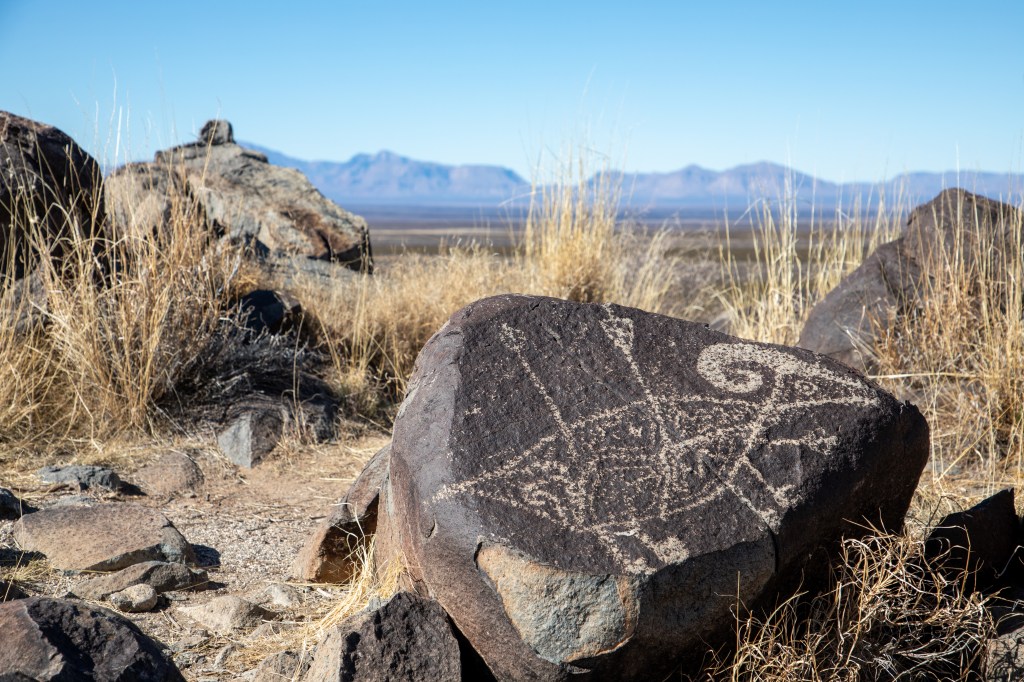
Jornada Mogollon people made these petroglyphs from about 1000 to 1400 CE, but then they mysteriously abandoned the area shortly thereafter. They had no written history and it is unclear if there are even modern-day descendants. As such, attributing meaning to these petroglyphs is just speculation. Maybe they had spare time and found it enjoyable to just draw pictures.
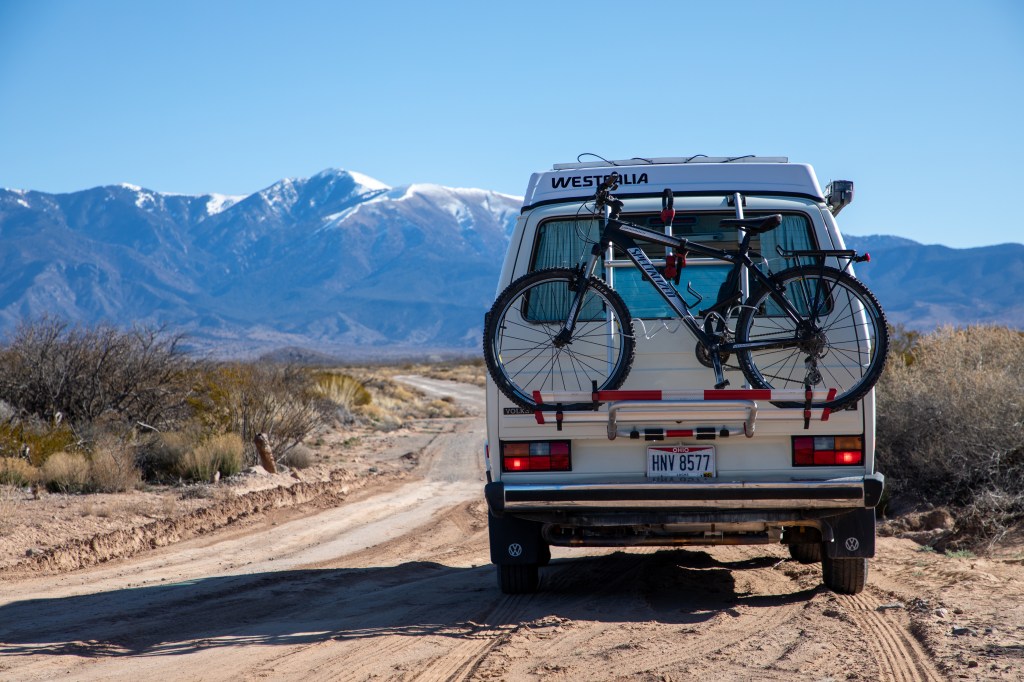
The roads out here are pretty great.
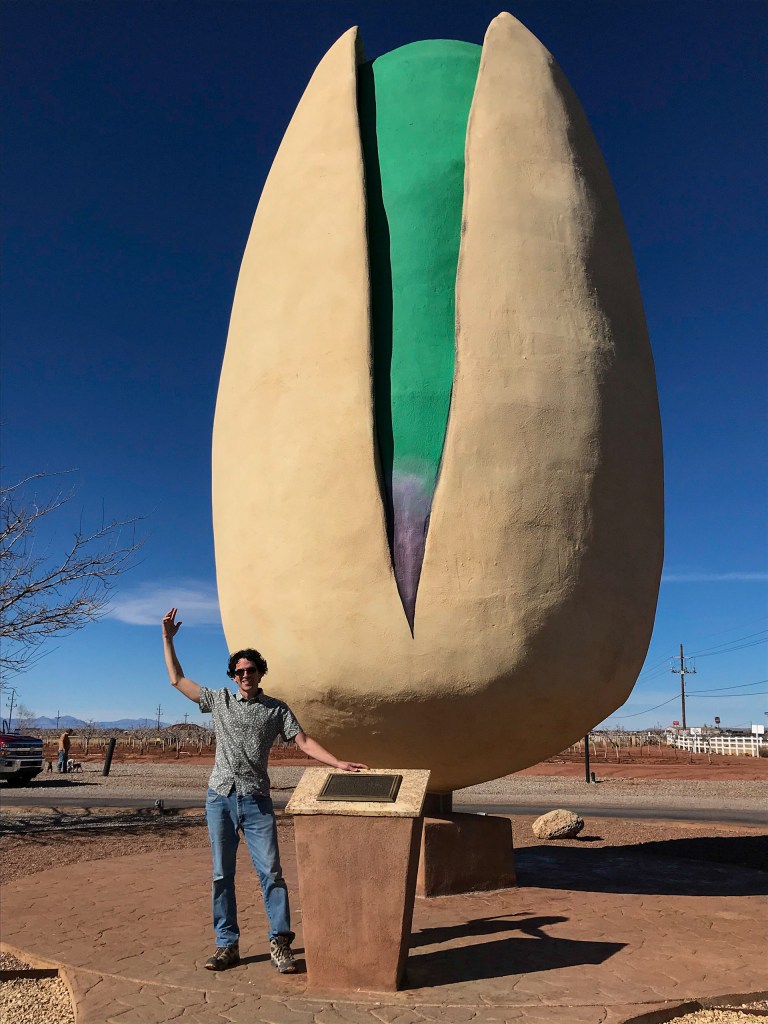
On our way towards White Sands National Park, Abbey and I came across a pistachio farm. We sampled many pistachios, had pistachio ice cream, and even got to see the world’s largest pistachio. Sometimes the touristy places are fun.
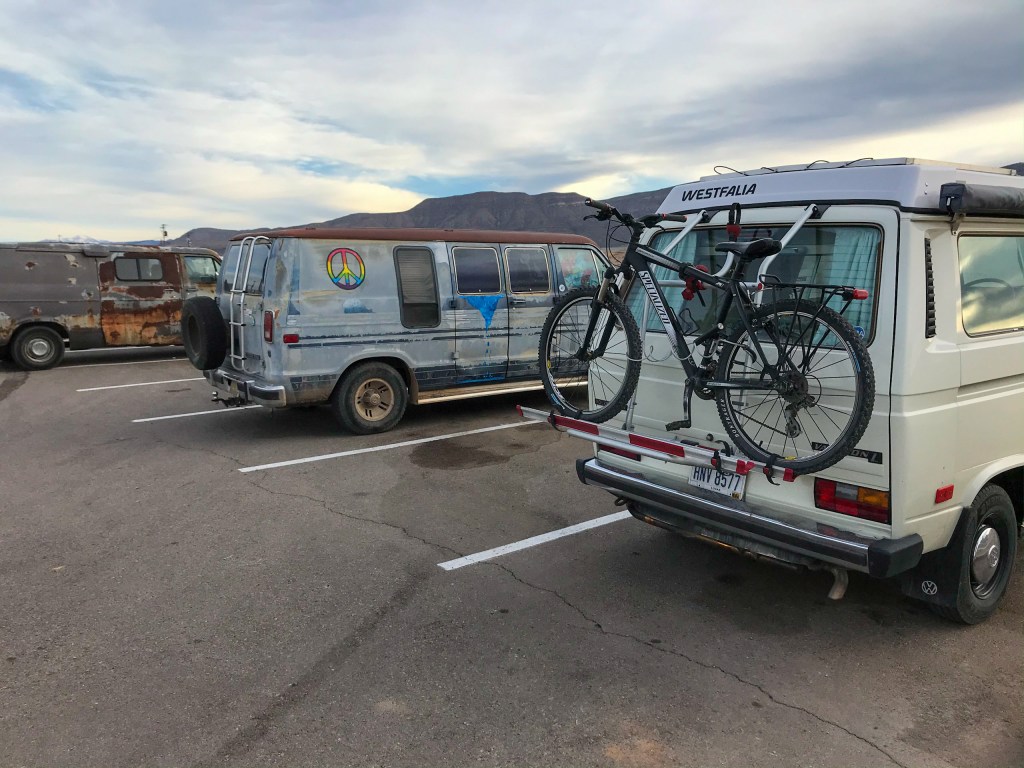
Abbey and I occasionally spend the night in parking lots. This may sound appalling to some, but sometimes it’s convenient when there are no nearby campgrounds or when you don’t feel like going out of your way down some little dirt road for miles. Many businesses, like Cabela’s, Cracker Barrel, and Walmart, welcome and encourage overnight campers. There is an interesting subculture of people that stay in these parking lots, and I had no idea just how many people make use of these free camp spots every single night across the nation. Abbey and I always park away from everyone else but it never fails that overnighters will come in after us and park right near us; typically the creepiest and seediest looking vans.
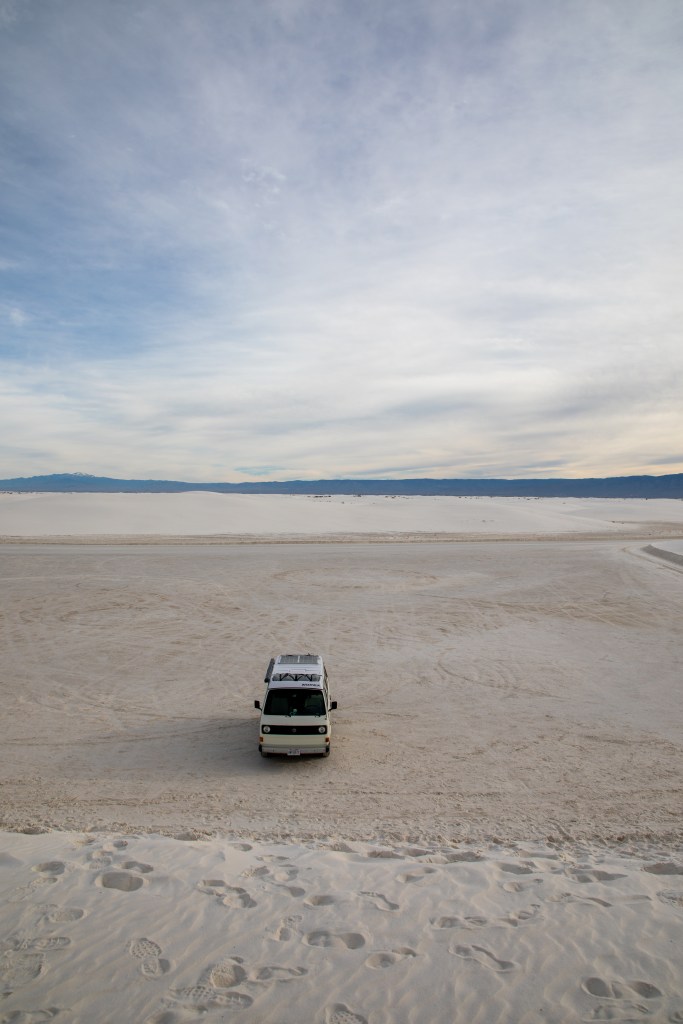
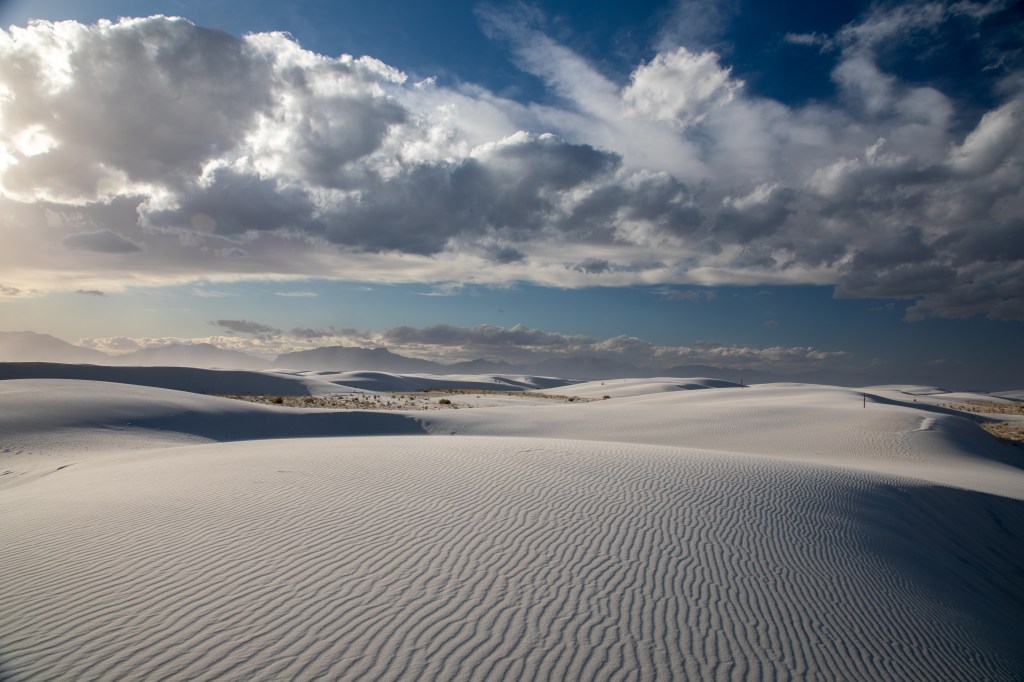
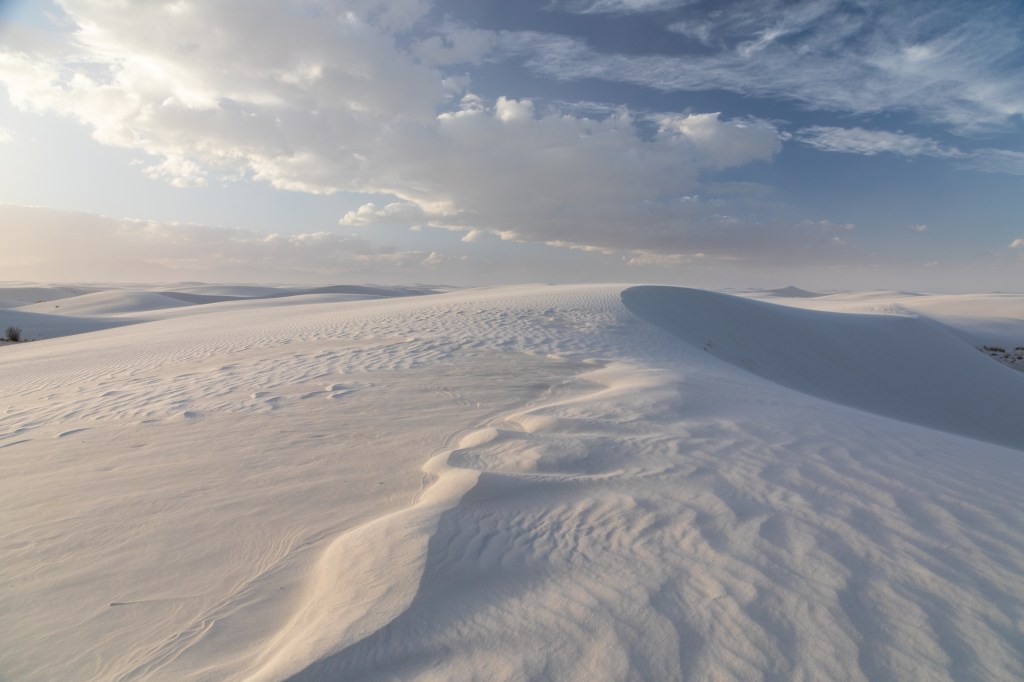
After spending the night with the creeper vans, we made it into White Sands National Park first thing in the morning. The landscape is striking, and even the early morning sun feels blinding when reflected off the white gypsum sand.
With the average dune here moving around 15 feet a year, the roads aren’t actually roads – they’re just graded sand. The path of the roads through the National Park changes a little bit every year.
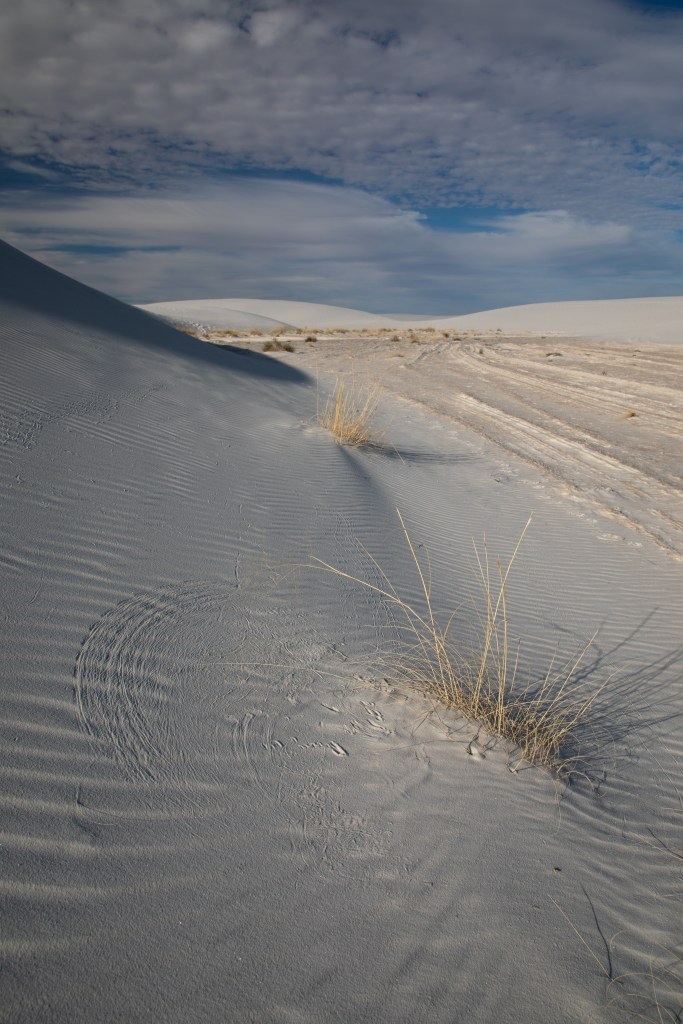
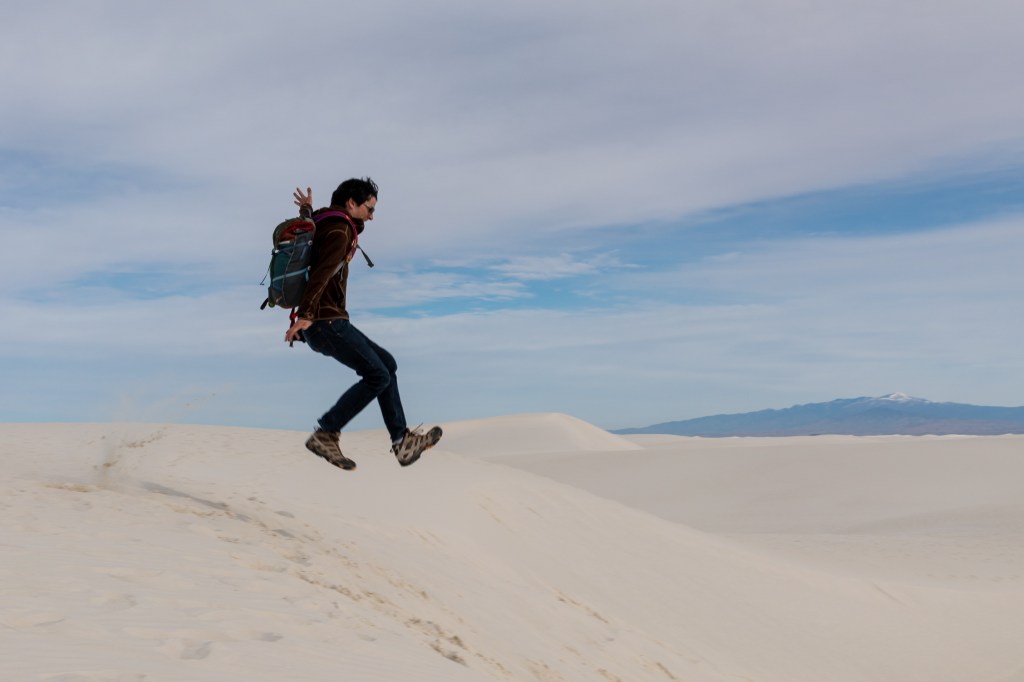
Running and jumping off dunes is fun, although I am still getting gypsum out of my clothes, boots, and of course, Evelyn.
There are only ten campsites available in the entire National Park, so it gets pretty quiet. When you check in with the ranger they brief you on a host of requirements and regulations, and then they call the army to tell them that you’re out camping next to the missile range. Please don’t accidentally bomb us.
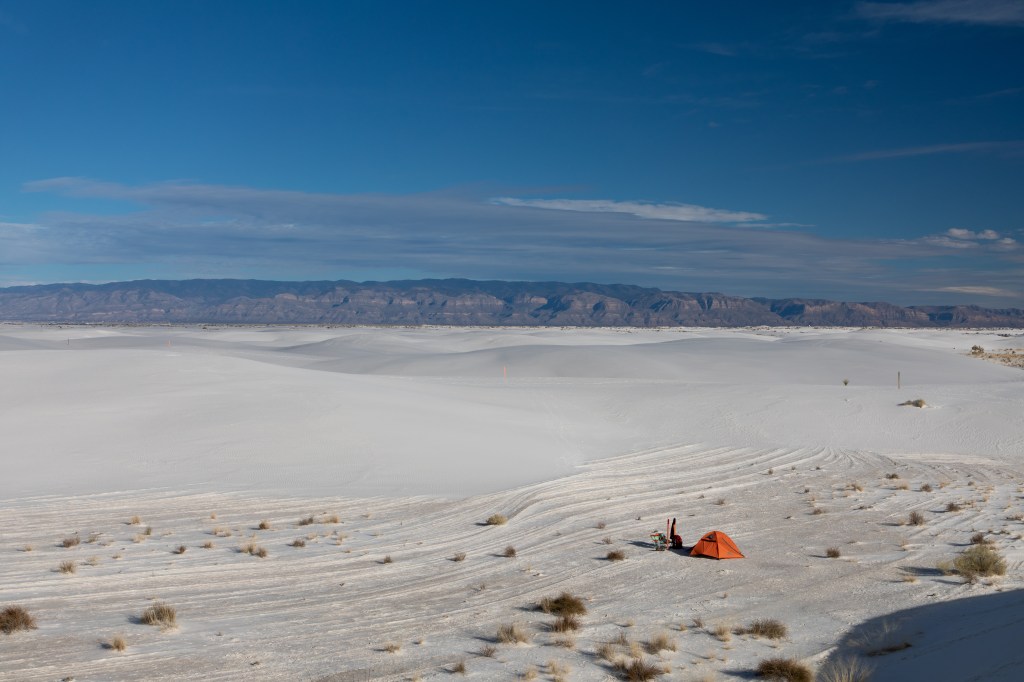
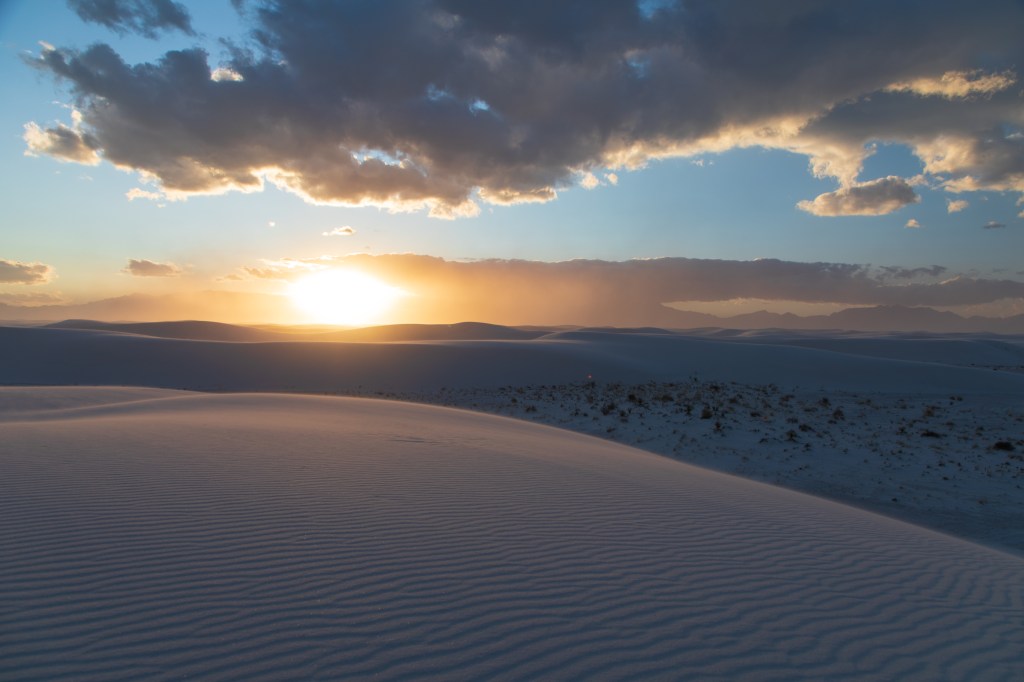
Our first night camping was cold but eerily still. No wind and not a whisper of noise. It was one of the quietest places I’ve ever experienced. I imagine the insulating properties of gypsum have something to do with that. We had a fantastic sunset.


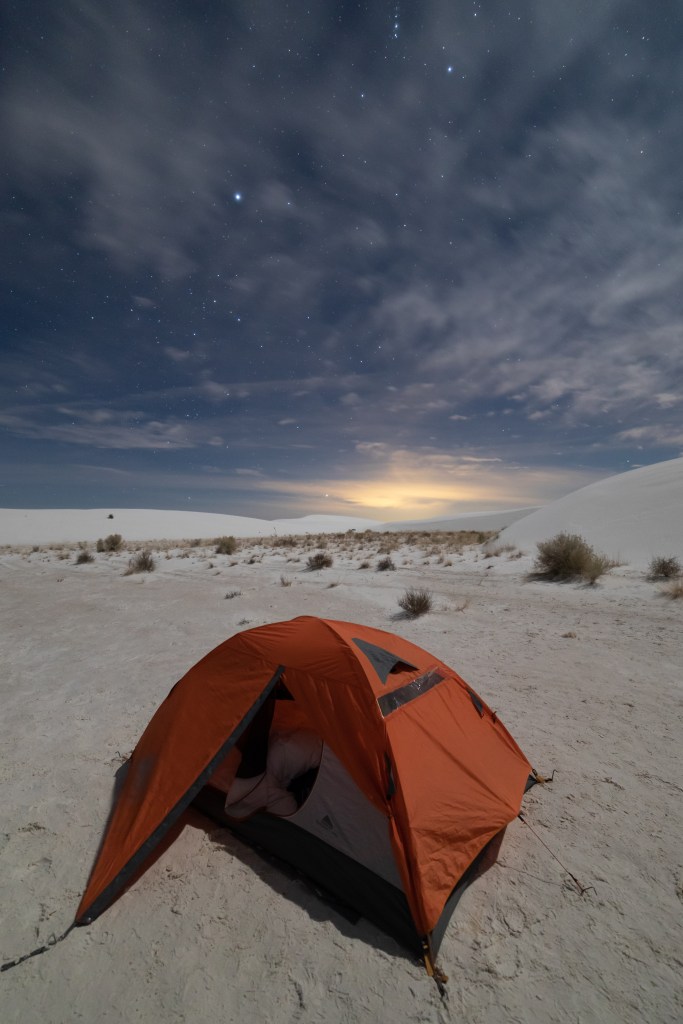
When we got up to look at the stars at night, we were met by a half moon, clouds, and nearby light pollution. The white sands made everything so bright you could easily walk around without a light, and this long-exposure picture makes it look like some weird day/night hybrid, which it kinda was.
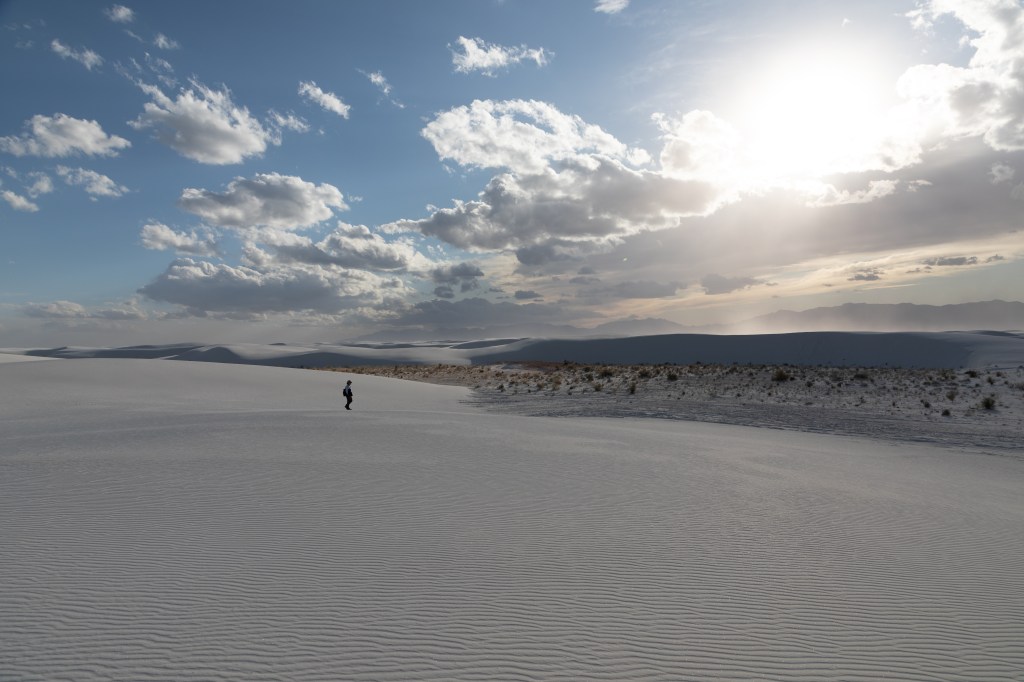
For our second day in White Sands, we met up with my cousin Dave (who had also come to Carlsbad Caverns with us) and did some more dune hiking. Towards the afternoon it started to get progressively windier, and soon you could see clouds of white sand blowing on the horizon.
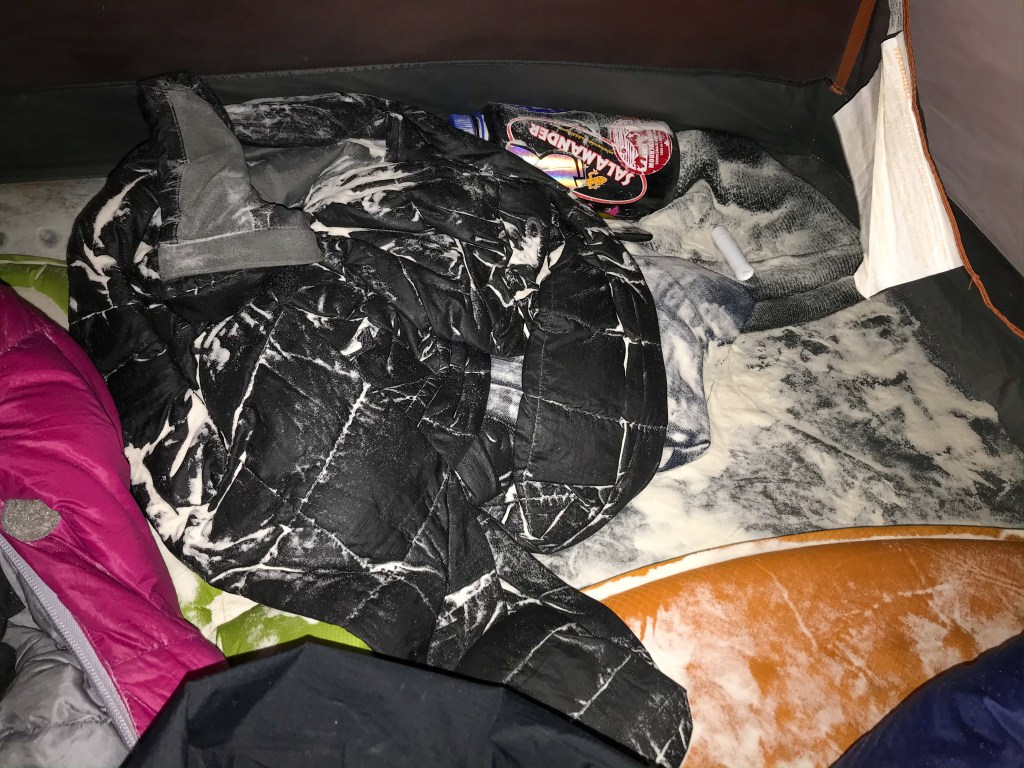
Before we got in the tent for the night, the wind was enough to knock you backwards and it was getting hard to see or hear because of all the flying gypsum. We hunkered down in the tent, and then the wind REALLY started to pick up. Our tent, an older Kelty four season, can take a beating and is designed for high winds and winter expeditions. But tonight it was going to meet it’s match. As the winds howled and groaned outside, the tent bent and heaved wildly. Sand started billowing into the tent. I could feel wind reaching in under the tent floor and trying to pick it, and us, up.
My mind raced. How much stress can these aluminum poles take? What should we do if the tent is ripped away from us? We hunkered down deeper and cocooned under our sleeping bags and clothes to keep the flying gypsum out of our faces. Just then I heard a sudden creaking and then sustained flapping – a stake had just come undone. I knew the stakes were critical to the integrity of the tent and the poles, so I threw on my jacket and went outside. At this point it was so windy that the gypsum was painful – stinging you anywhere there was exposed skin. I was being exfoliated. I re-staked the tent blind since I dared not open my eyes and dove back into the tent.
We had to re-stake twice more over the next hour, but then the wind decided to intensify further. The tent bowed downwards so badly under strong gusts that it laid flat against us – and then – RRRRIIIIPPPP. The rain fly on the leeward side tore upon, admitting wind and sand directly into the tent. The aluminum poles utterly bent, the rain fly breached, but still the tent held on.
As morning came and the winds subsided, we had a chance to survey the damage. Abbey and I hope to repair the tent because it’s been a champ over the years, and has kept us cozy for many an adventure. We’ll bend the poles back and superglue/sew up the rain fly. And next time we’re in a high-wind area we’ll use 12 stakes and not 8.
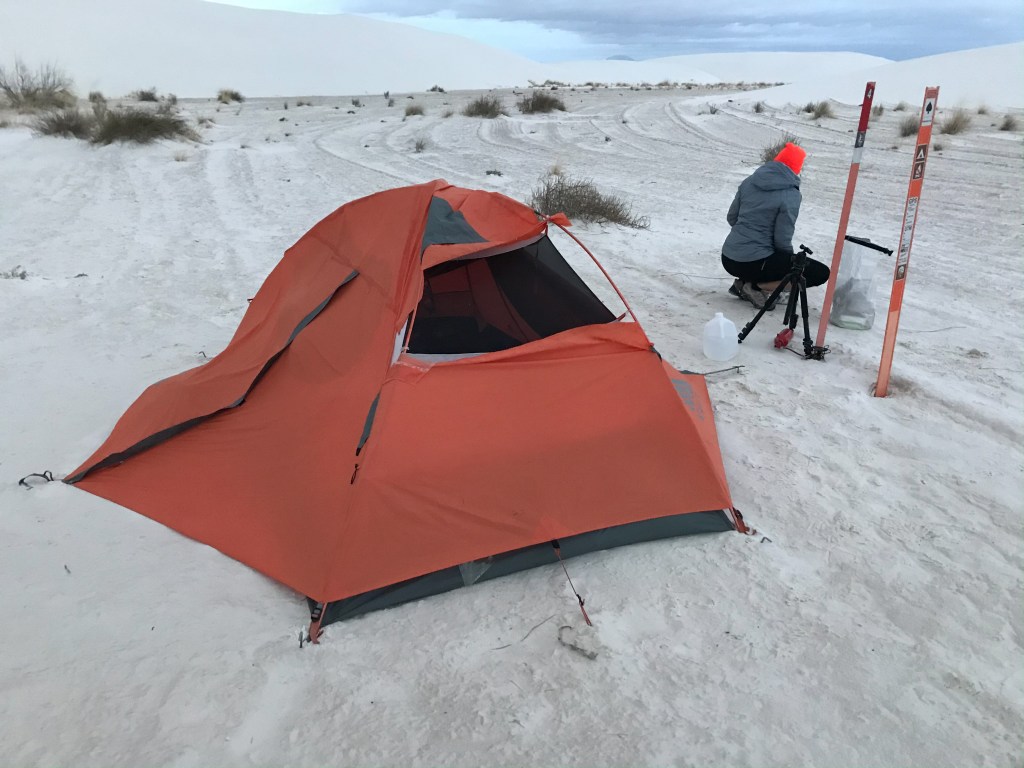
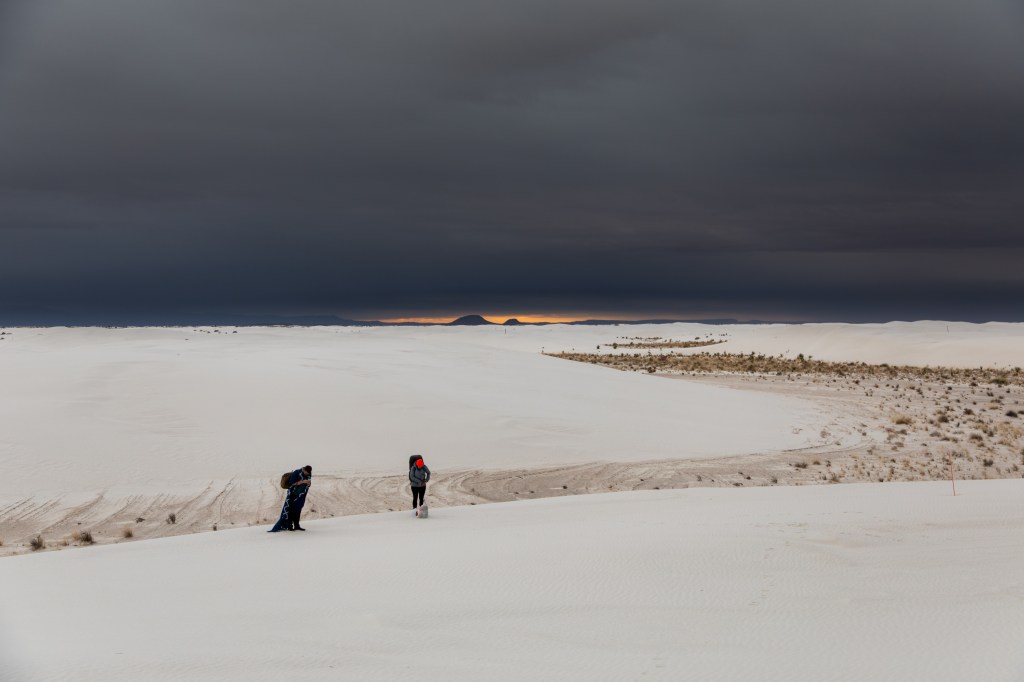
As we packed up our gear and hiked back to the van, we saw the receding side of the storm that passed over in the night.
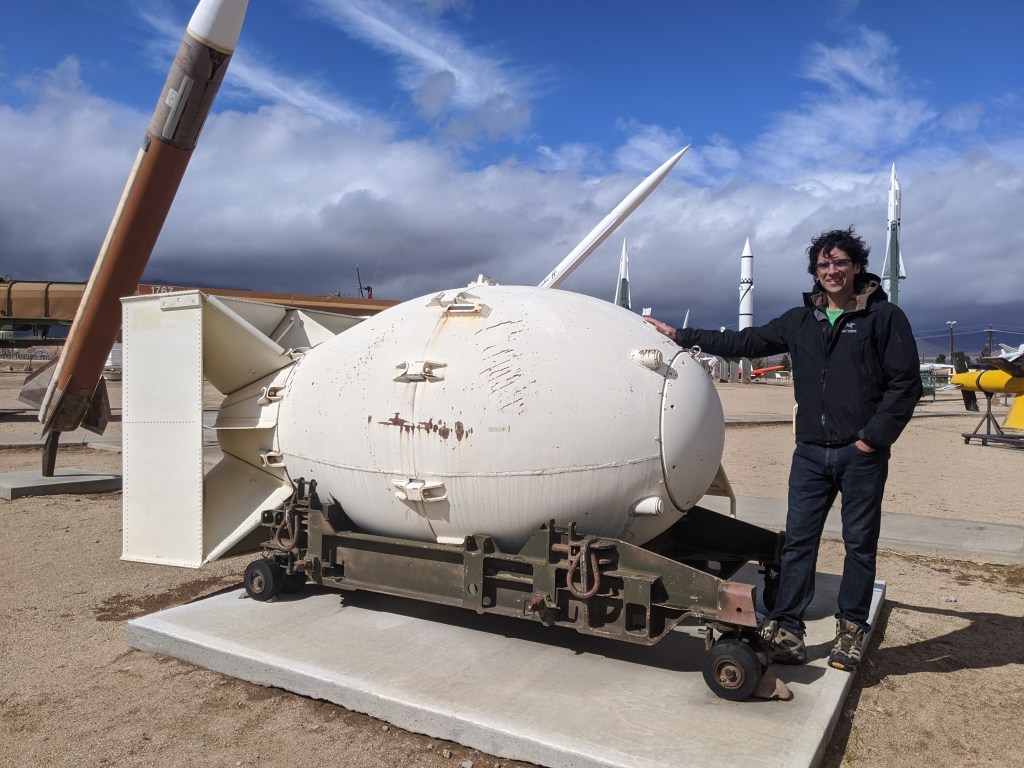
After White Sands, my cousin left us and Abbey and I continued onward to the White Sands Missile Museum. The museum is located on an active army base, so you have to stop and go through rather intense security, including a photo shoot and presumably a quick background check. The security was worth it, though, because the museum was fascinating!

The museum has hundreds of different types of missiles and bombs on display, including Fat Man. There is probably no nuclear core in there, though.
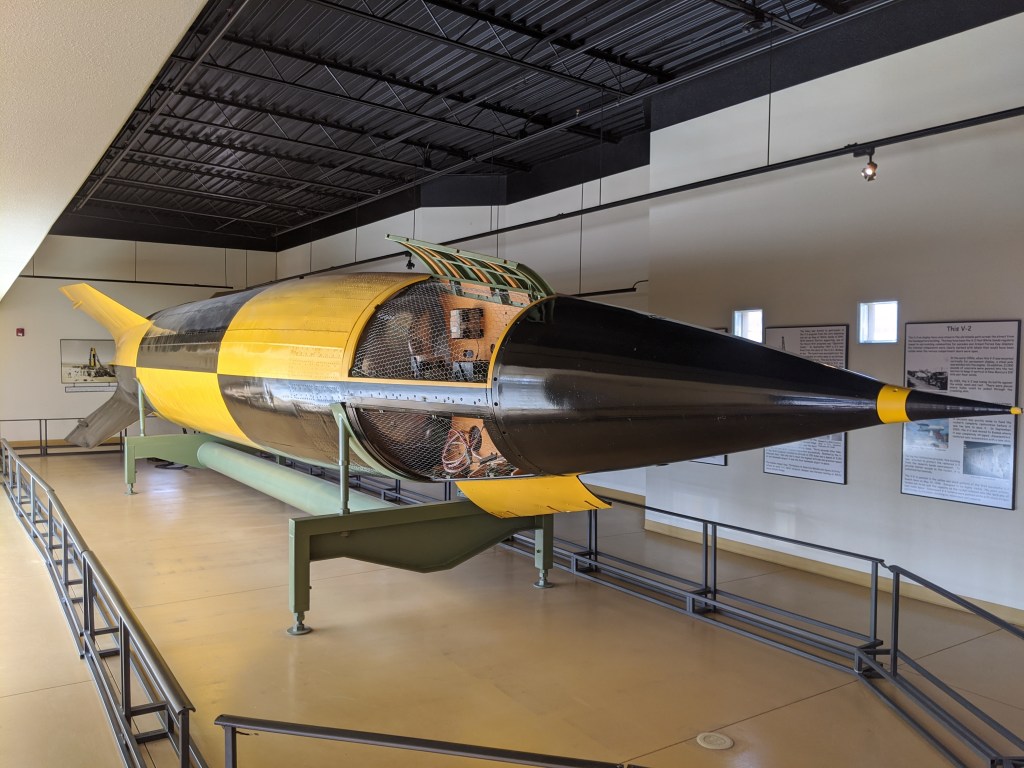
The museum also boasts one of the most complete original V-2 rockets in the world – this one was fully restored to original condition.
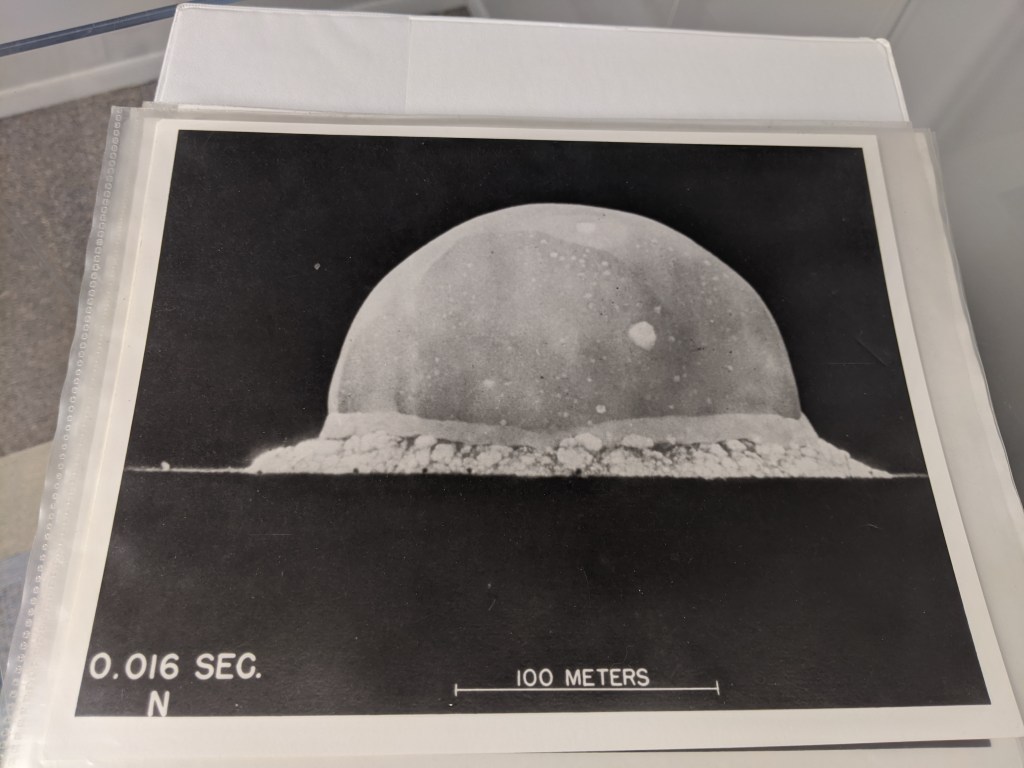
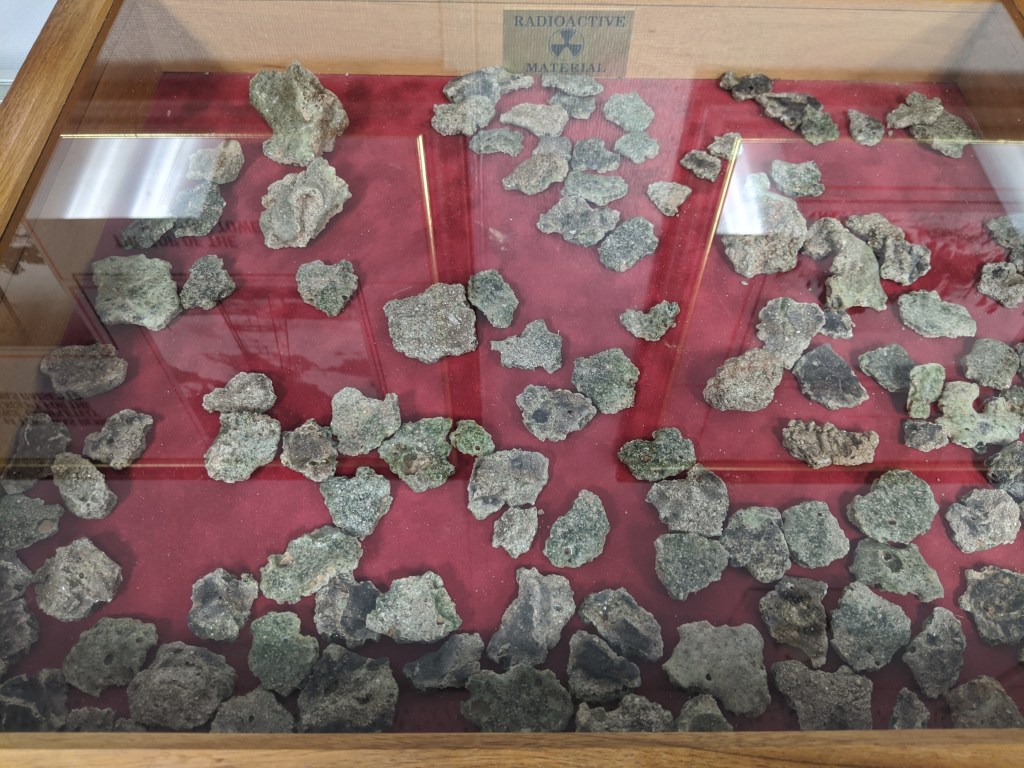
The Trinity test in 1945 was the first detonation of an atomic bomb. The explosion was so powerful that sand was melted to form glass, which was named Trinitite. I was overjoyed to see some of this at the museum.
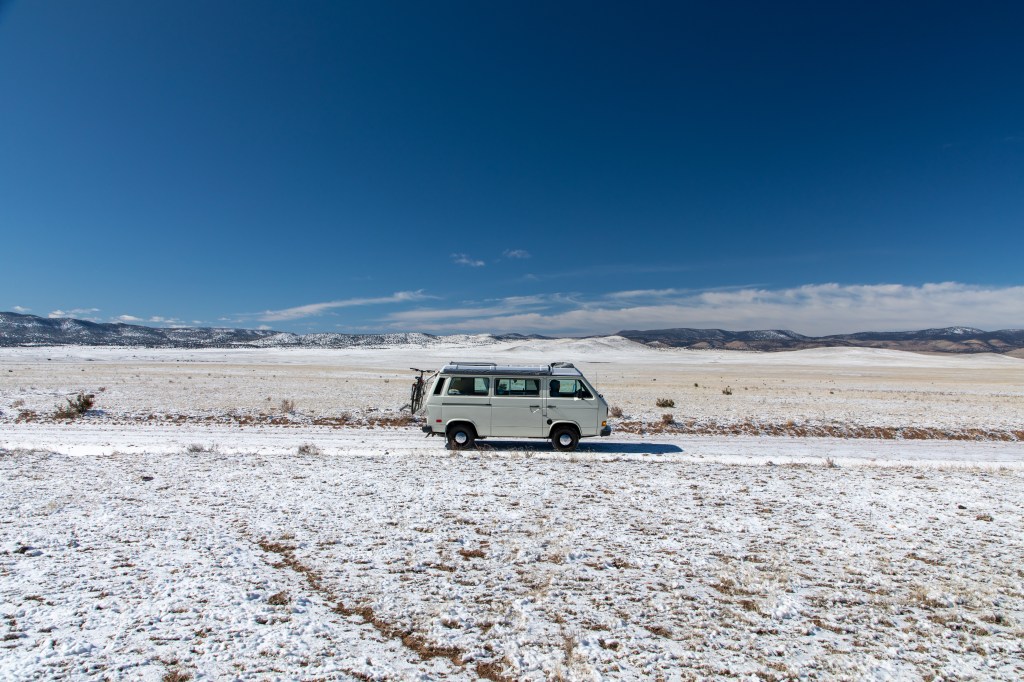
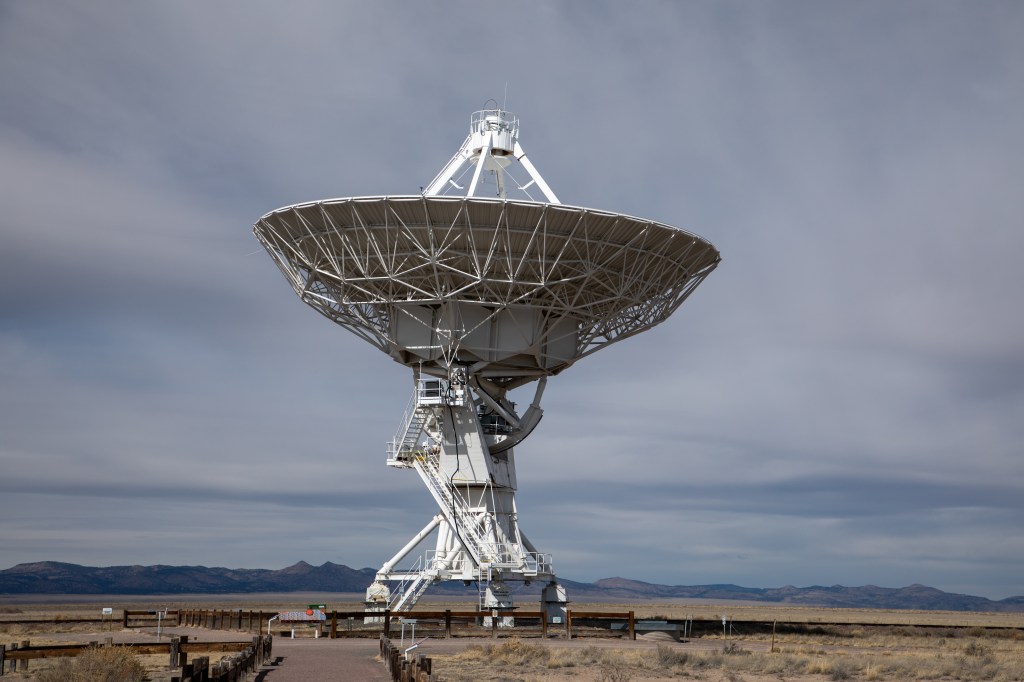
After the missile museum, we set our sites on the Very Large Array (VLA). Located in the high desert in the middle of nowhere, 40 miles of our drive was down a gravel road where we only saw one other car. It was cold and windy.
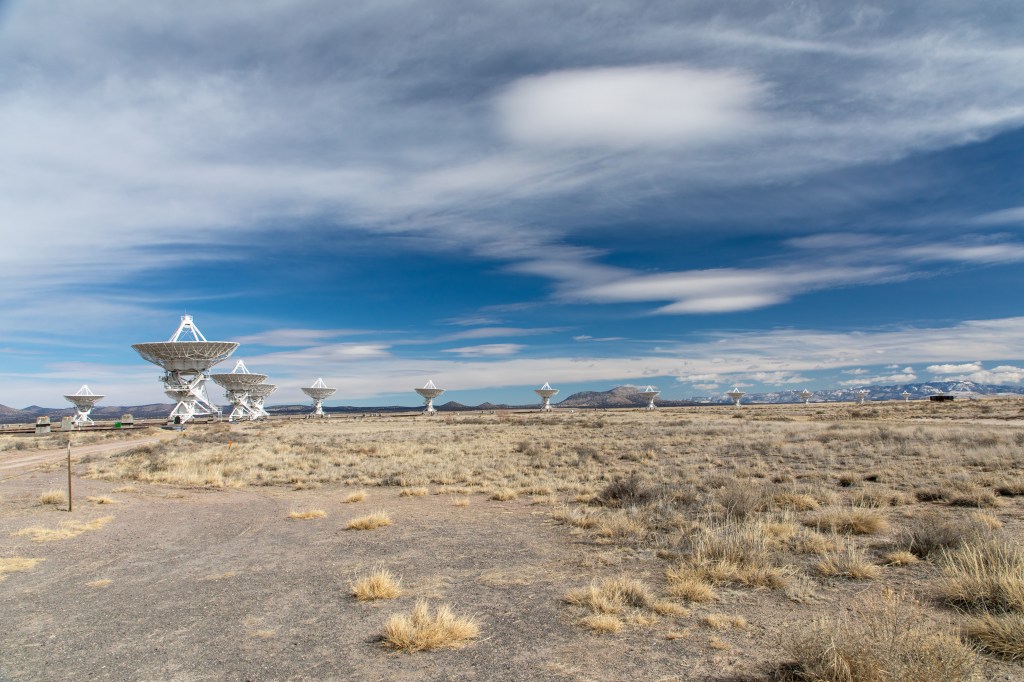
The whole VLA is mobile – each of the 27 radio antennas can be moved down railroad tracks with a maximum array size of 22 miles! The engineering that went on to build this place is quite impressive.
Abbey and I had a great time in this part of New Mexico, but now we’re setting our sites on the next destination – Pie Town!
Cheers!
 Hardway Travels
I love the creeper van pic. Those vans do not share Evelyn’s cute/cool vibe. White sands looked gorgeous through your lens, and I hope you can reboot the old Kelty.
LikeLike