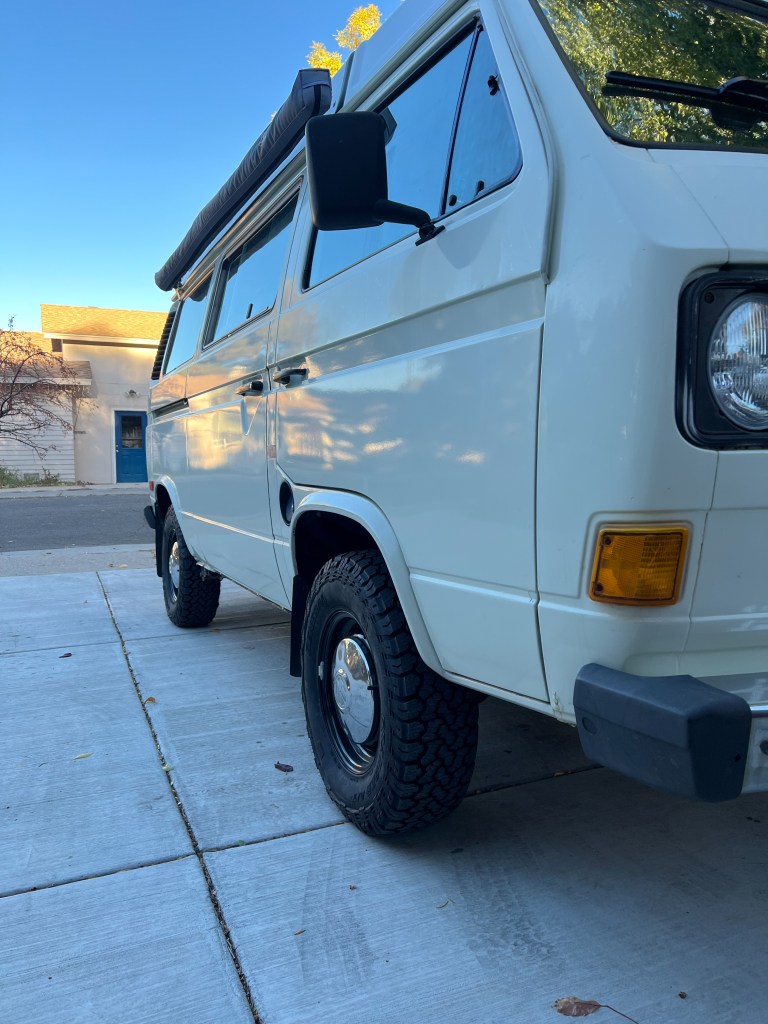
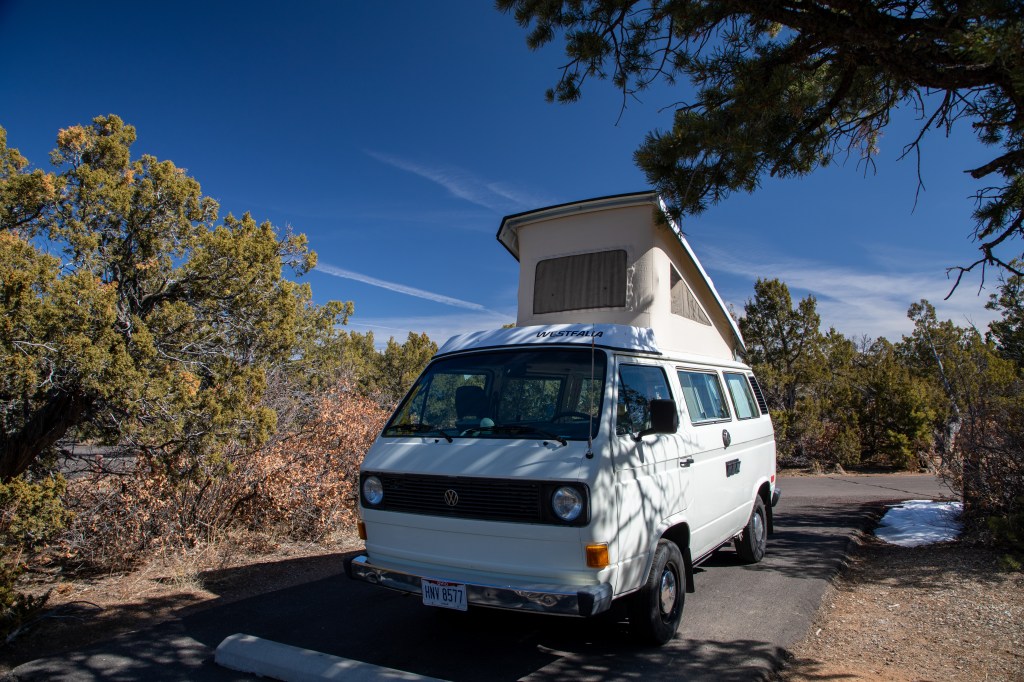
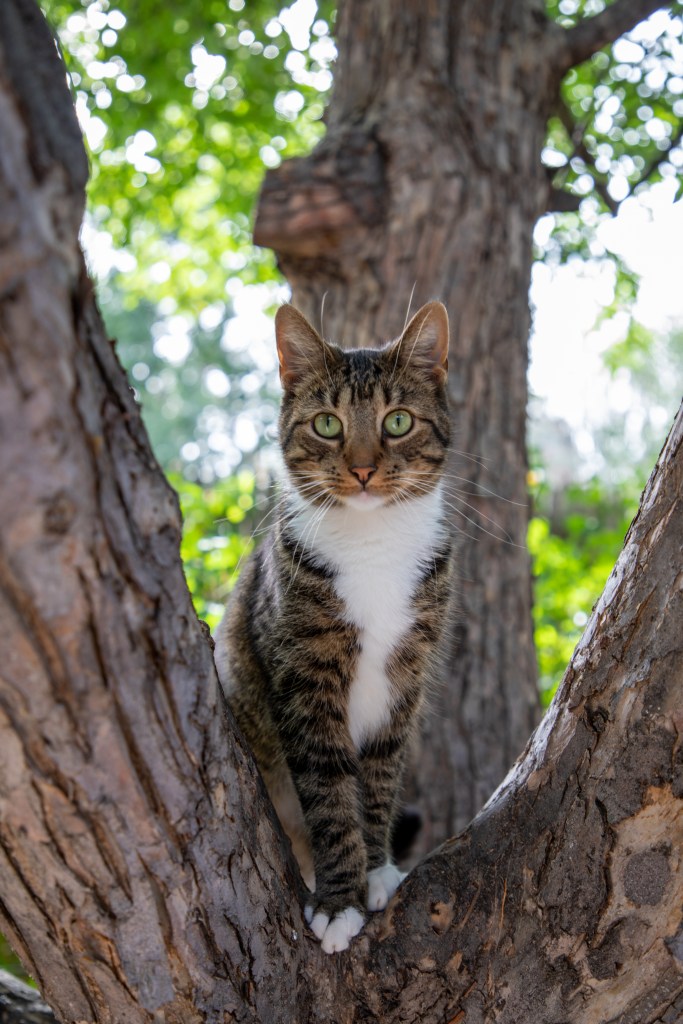
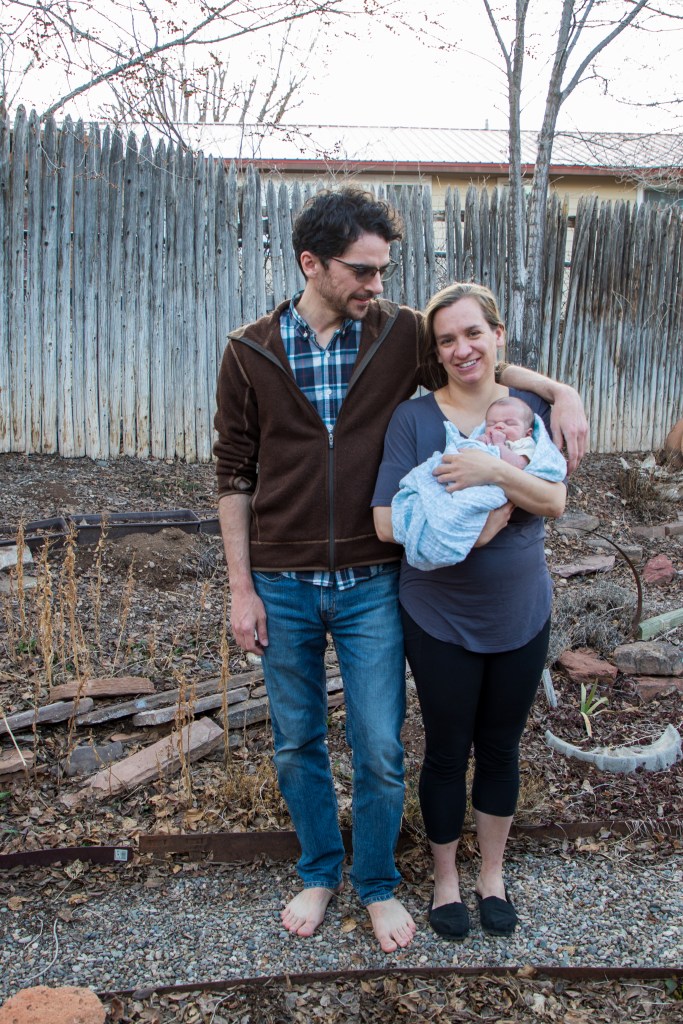
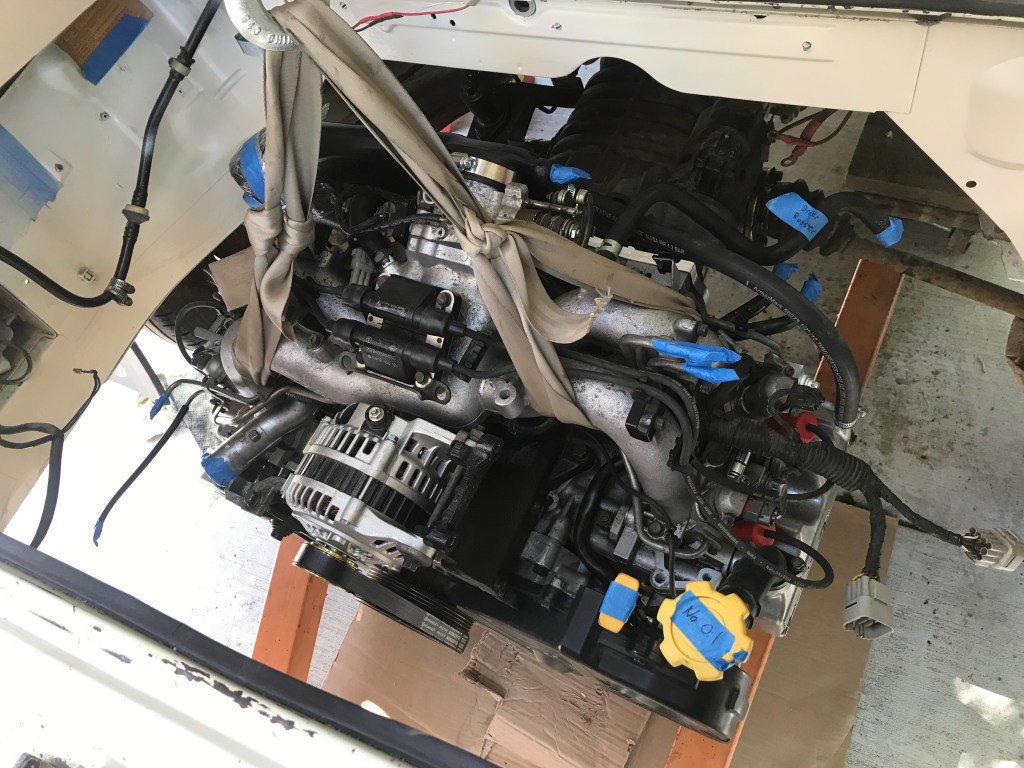
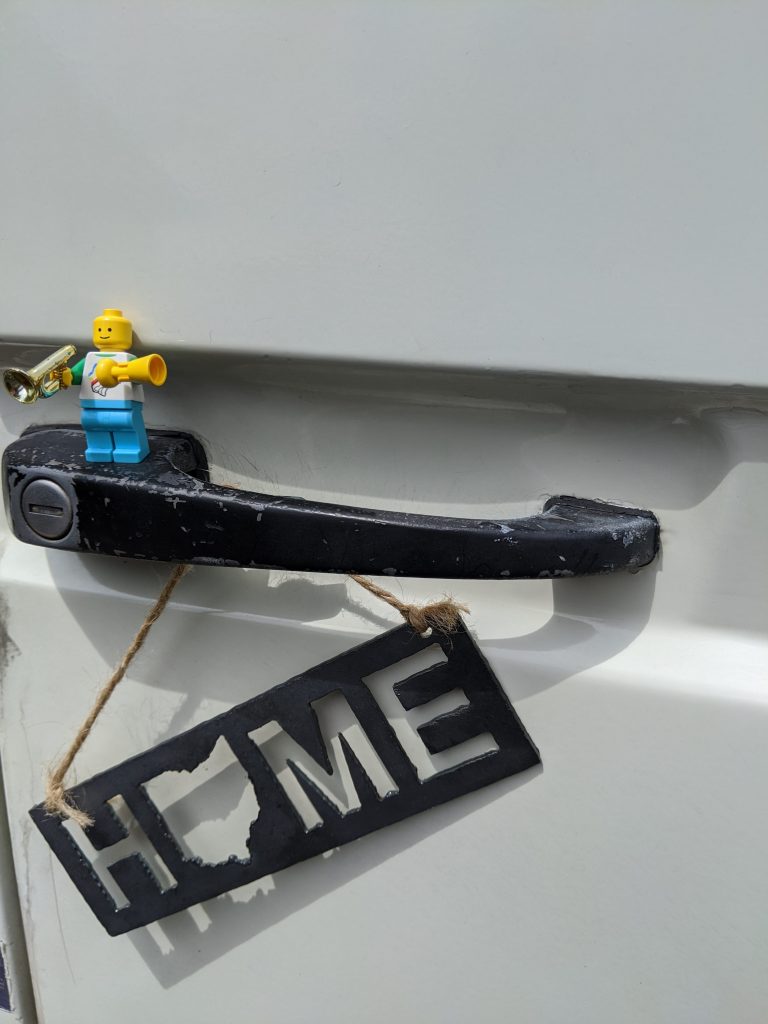
It’s been over three years since Abbey and I set off on a cross-country trip in Evelyn, our beloved 1983 Volkswagen Vanagon. A lot has changed since then. We moved out West. We both have jobs we love. We have a cat. And a daughter. And a house. Evelyn is still around, and we still take her camping. I replaced the air-cooled engine with a Subaru 2.2L, which has double the horsepower and way better reliability.
I enjoy reminiscing on our travels. It was a wonderful time in our lives, and I think a large part of where we are now can be attributed to our trip. We learned to slow down and appreciate the simple things. Before the trip I thought I knew how to do that, but when you have the time to spend hours, or days, watching one animal, or taking in one particular view, you notice details that would otherwise be missed. Owls eat crawdads. Squirrels eat mushrooms. Most species of birds wipe their beaks after eating.
I think the trip also helped to break us out of our “bubble” and build confidence. Had we not taken the leap, I suspect we’d still be in Ohio (not that we don’t love Ohio), working at jobs that weren’t so great and living in a depressed area. The trip broke us of this, but more importantly, it enabled us to see the value in ourselves. Further, we were reminded that we have control over our own destiny.
I don’t plan to regularly update this blog, so until next time, safe travels!
This is the first time I’ve been slow on updating the blog, and it’s for one reason – our trip is over. Abbey and I arrived at my dad’s place in Maumee, Ohio on May 8th, a full 239 days from when we set out in our Volkswagen campervan named Evelyn.
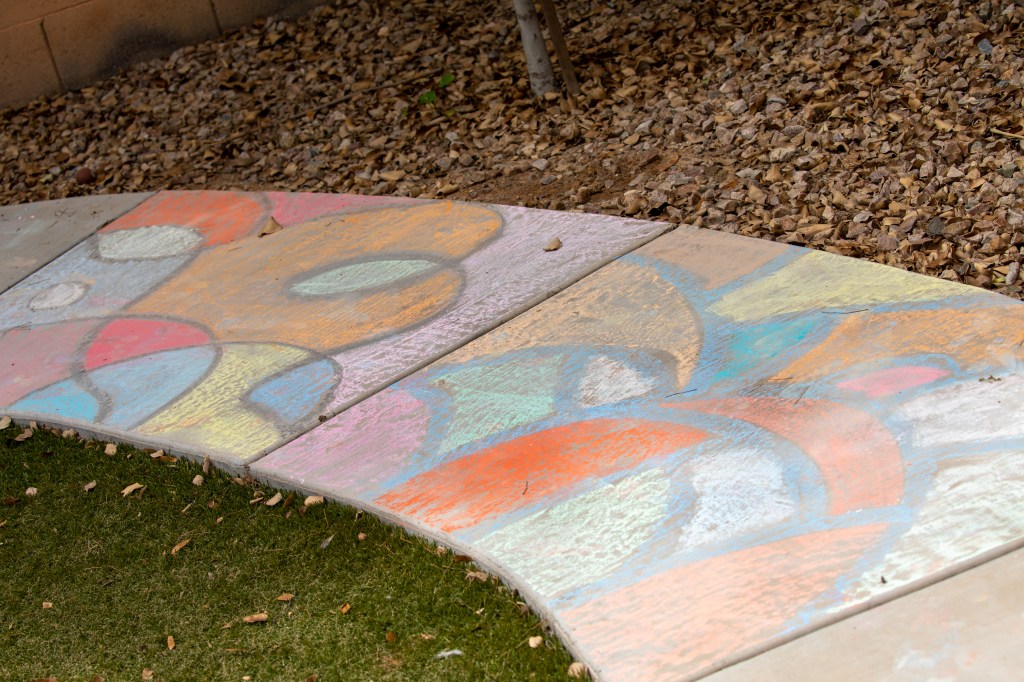
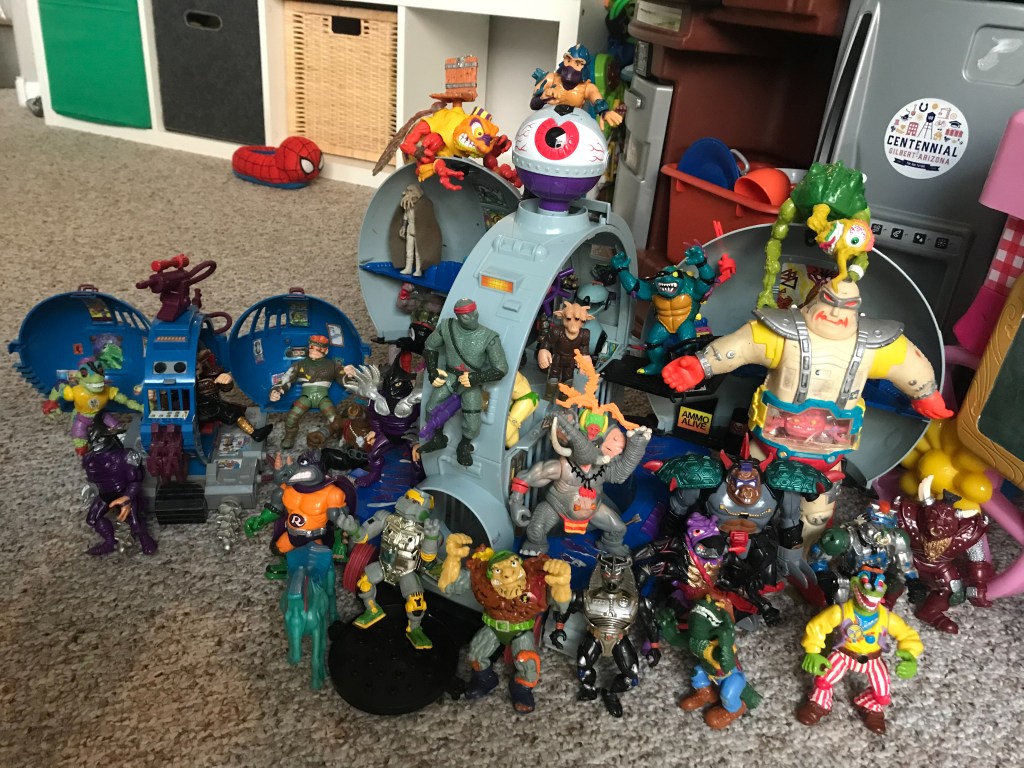
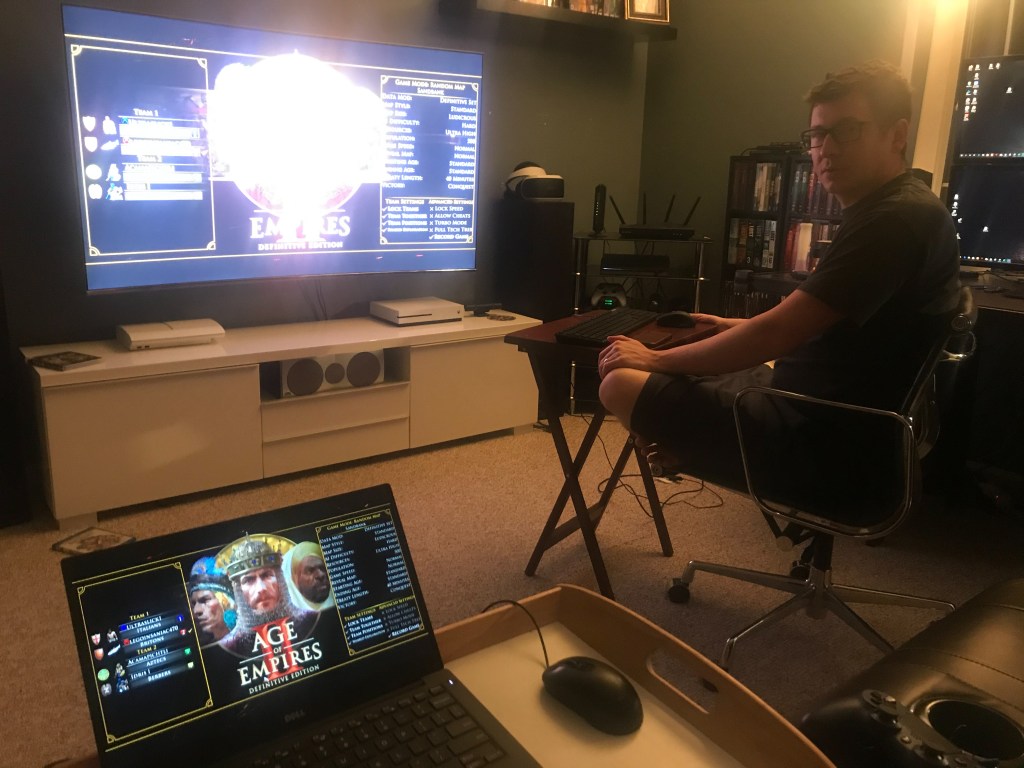
We had been staying with our friends Chris and Kelley and their kids in Phoenix. We were self-quarantining due to the pandemic, and we couldn’t have picked better people to do it with. We drew chalk art. We played Teenage Mutant Ninja Turtles. We played loads of video games.
We made sure to keep in touch with our friends and family back home, too.
As the days rolled on, we knew that this pandemic wasn’t going to be over quickly. With National and State parks, forests, and open spaces closed, we had limited options. And Abbey and I knew it wouldn’t be socially responsible to continue traveling across the country during a pandemic.
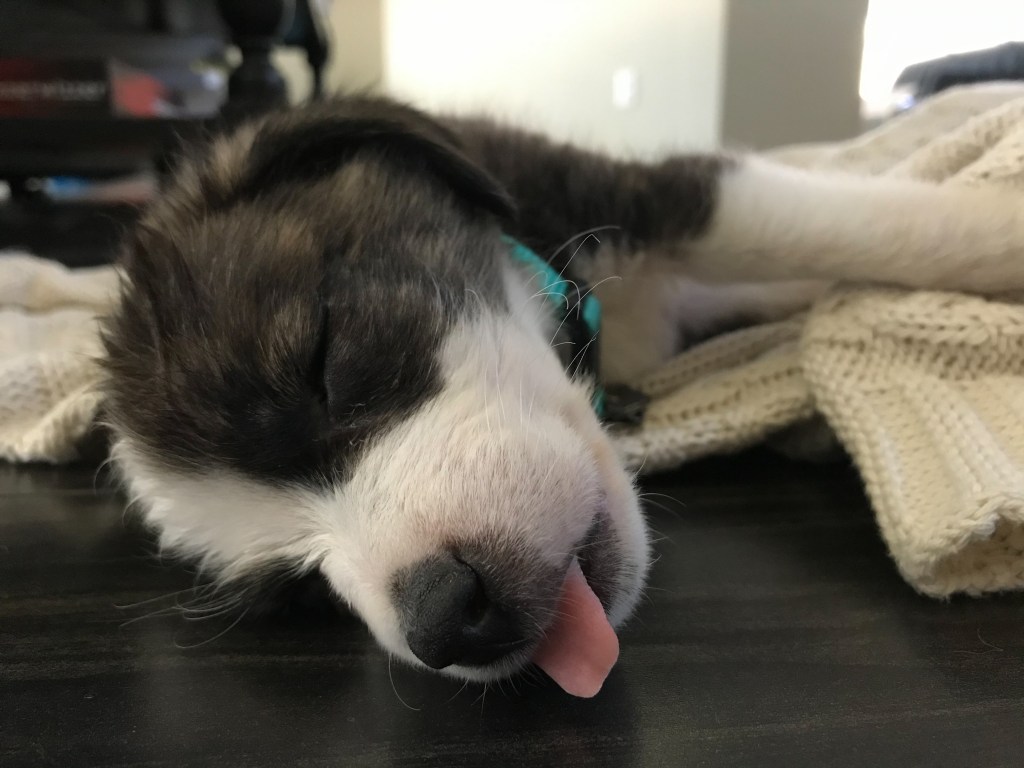
Chris got a puppy for his birthday – Sammy. She brought a bunch of cheer into the house, but also sheer fear when she went for your ankles with her little needle teeth.
Abbey and I had another concern on our minds – the collapsing economy. When I planned this trip, I considered the worst possible scenario – that there would be a new recession we’d both struggle to find jobs when we were done traveling. I’m glad I considered that – and thankful that we have the reserves to weather it – but it sucks it’s coming to fruition. Ironically, the last time I was looking for a job was right after I graduated college in 2008 and the great recession was underway.
Abbey and I started looking for jobs, and after 40 days of living with Chris and Kelley, we chose to head home to Ohio. We (or rather, I) drove 2,000 miles in 4 days.
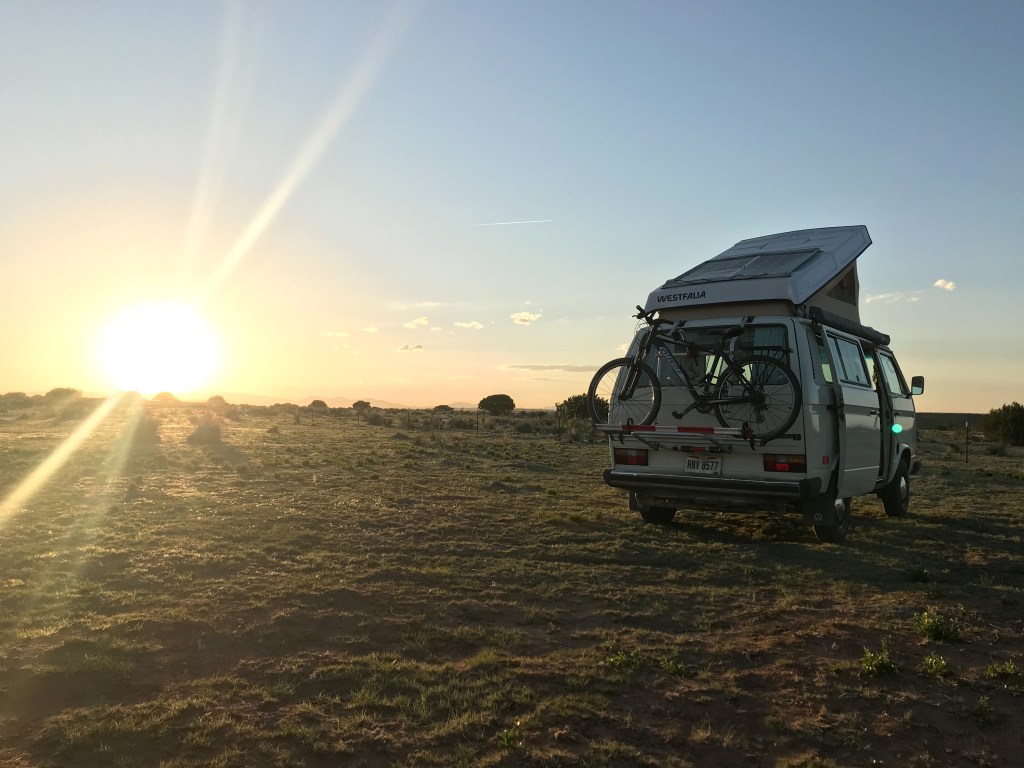
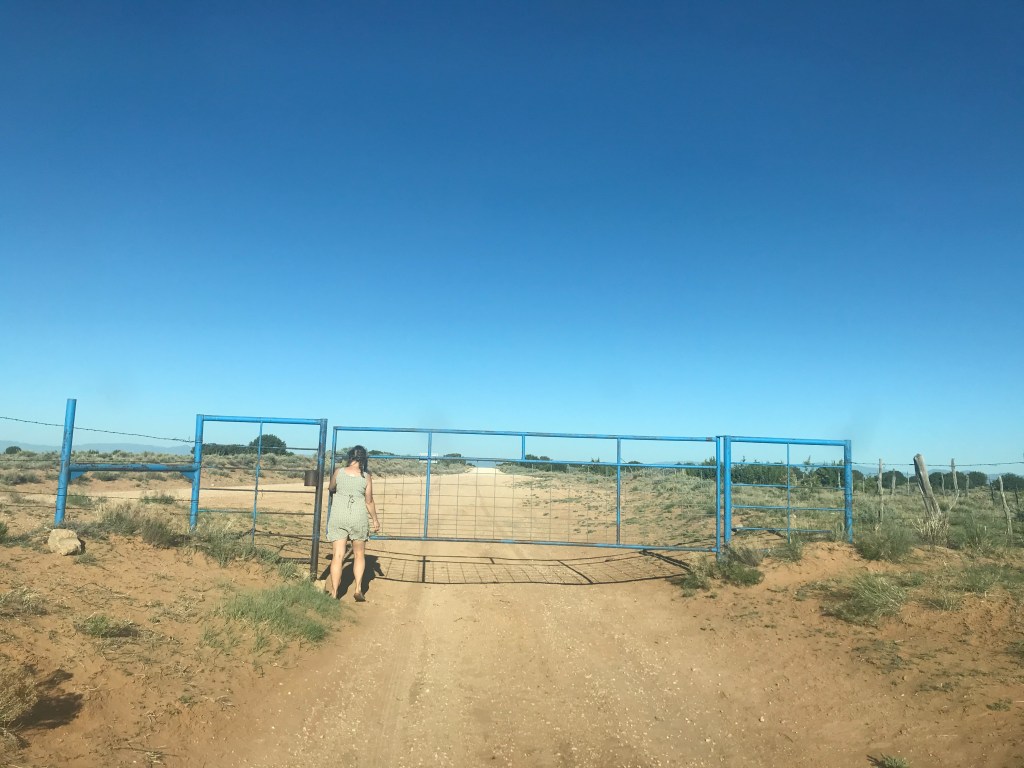
In New Mexico, we drove past Gallup, where the entire town had been locked down under the Riot Control Act. There were police barricades at all the entrances. We kept driving past Albuquerque and stayed the night on some BLM land where there was no one around besides antelope.
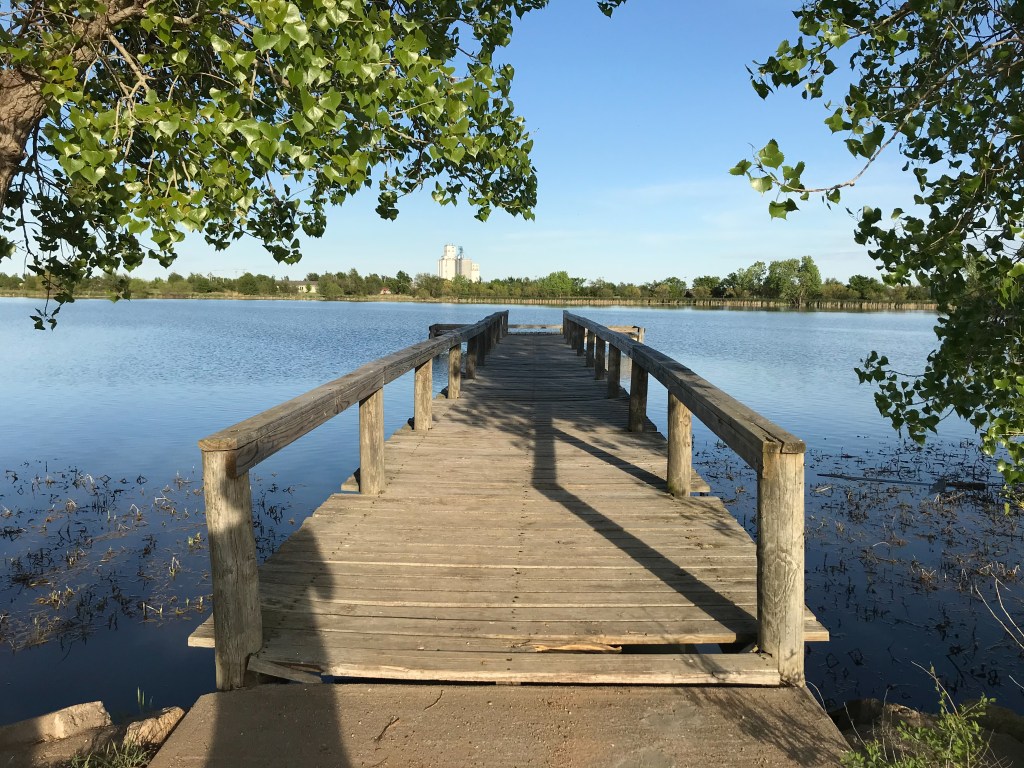
The following day, we pushed into Kansas and were the only ones at a beautiful county park. The small lake and surrounding prairie meant there were a host of birds – we saw red wing blackbirds, bluebirds, thrushes, killdeer, and rather surprisingly, two glossy ibis.
The third day we made it to Illinois and the rain and cold of the Midwest. As odd is it sounds, it was refreshing and welcoming. We stayed the night in a Cracker Barrel parking lot (of all the parking lots you can spend the night, we’ve learned these are BY FAR the best).
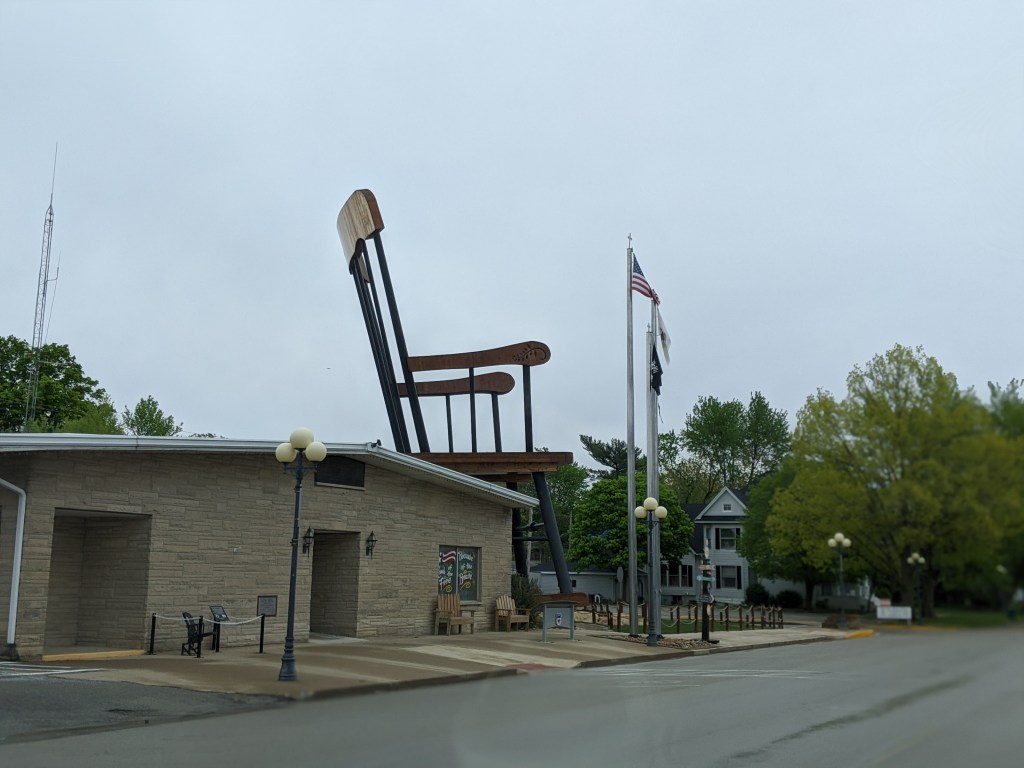
On our final day, we drove through Casey, Illinois, home to the world’s largest rocking chair and several other oddities.
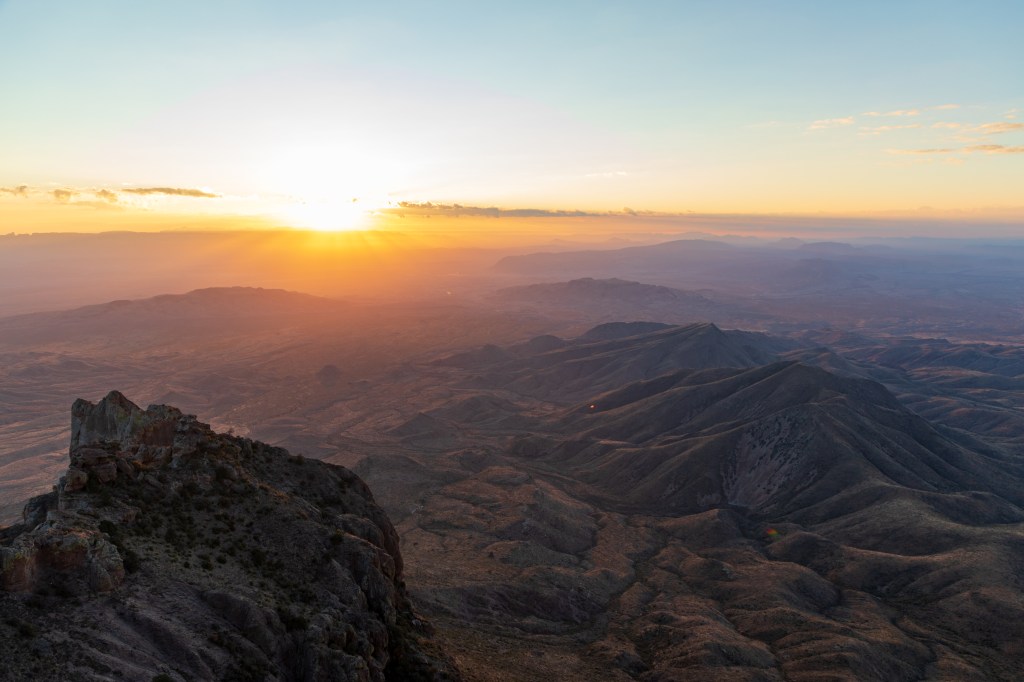
Crossing into Ohio was bittersweet. We were glad to be home but also sad that the trip was ending. This was the greatest trip of my life, but it was also fraught with challenges, from the loss of my mom to the global pandemic. I learned so much about myself, Abbey, nature, and life, and it’s an experience I’ll cherish forever. I keep reminiscing about great memories from the trip, like when we watched a Barred Owl catch and eat a crawdad in Congaree, or when we looked out on the sunset from atop a cliff in the back country of Big Bend.
As for now, Abbey and I are living with family while looking for jobs. I am greatly considering writing a book about our trip.
I hope you’ve enjoyed reading our blog. Abbey, Kirk, Evelyn, and I wish you well!
After Mexico, Abbey and I had planned to go back to Phoenix (we left the bike rack, bike, and some camping gear there) before heading up to Utah.
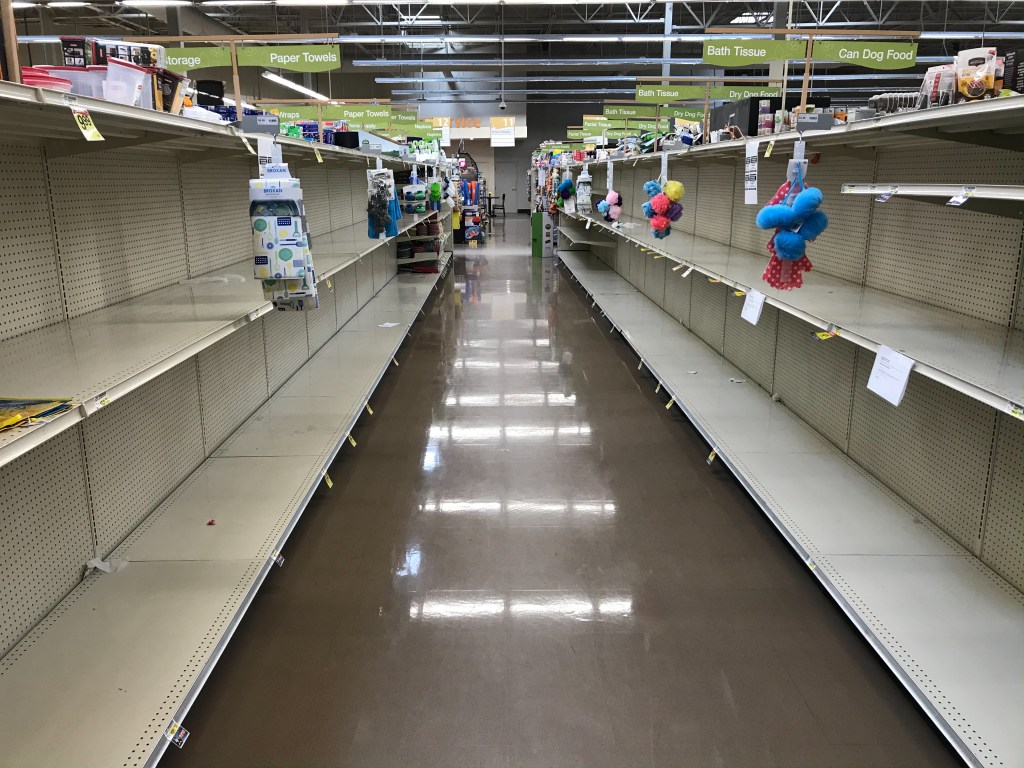
While we were in Mexico there was no noticeable panic surrounding Covid-19, but when we crossed back into California we were stunned at the state of the grocery stores. The psychology behind panic-buying is curious.
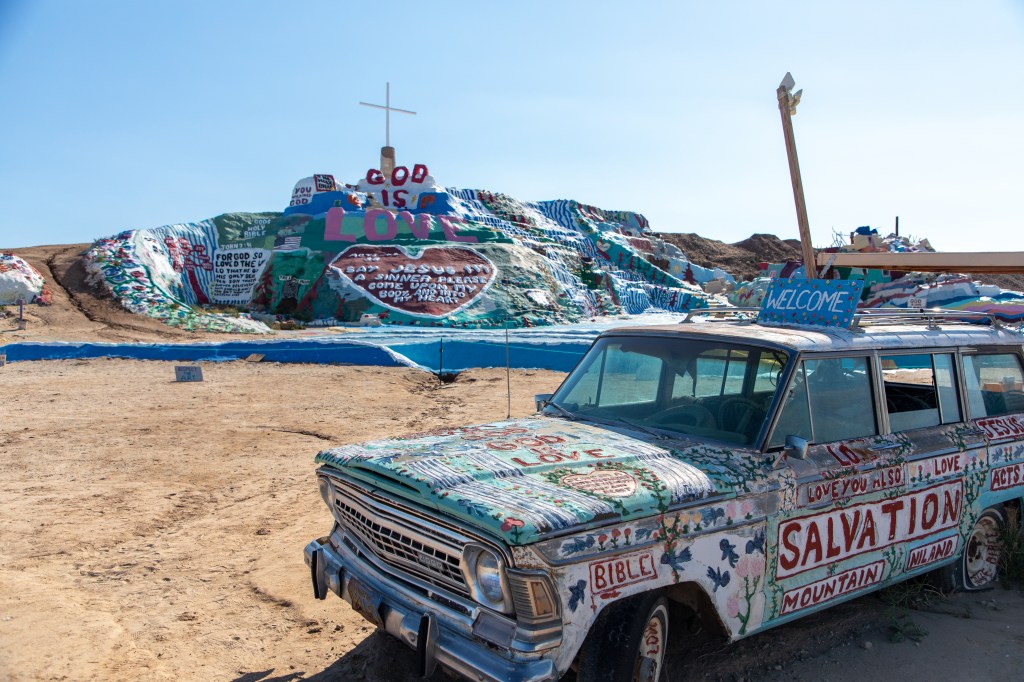
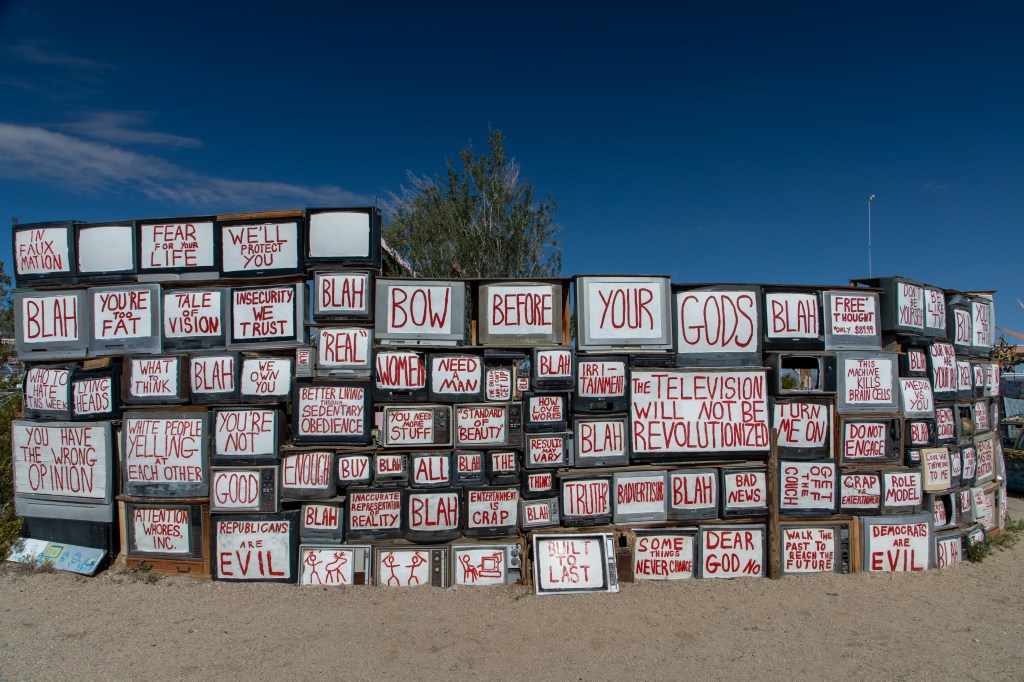
Our first stop after leaving San Diego was Salvation Mountain and Slab City. After reading/watching Into the Wild I knew the places existed and was excited to check them out. It’s a bunch of government-owned land full of squatters, some of whom salvage things from dumps and make art. Salvation Mountain is all about God and was the work of one man and occasional helpers over the course of decades.
We took a different route back to Phoenix, staying as far South as we could. The border with Mexico and the wall were frequently in view. I was surprised by how strong our Border Patrol presence was and the number of checkpoints we had to go through.
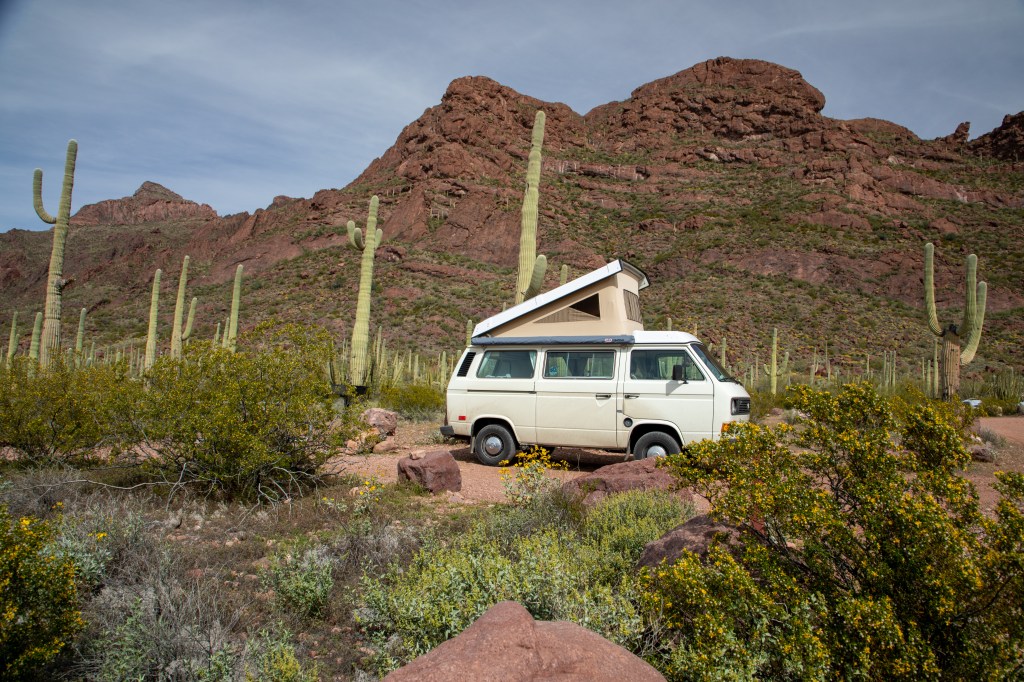
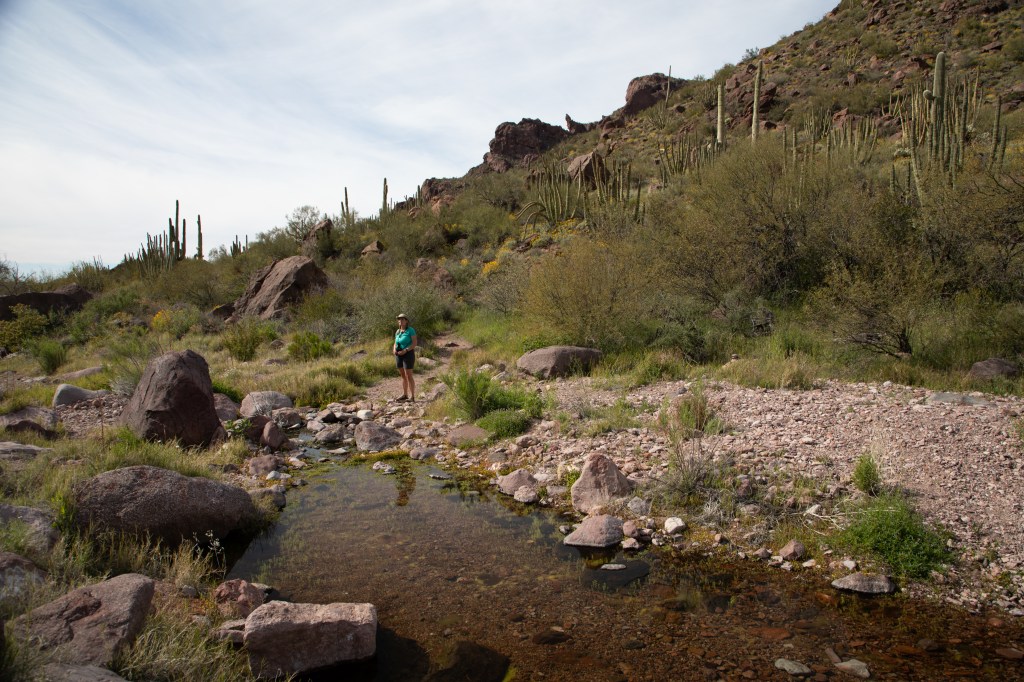
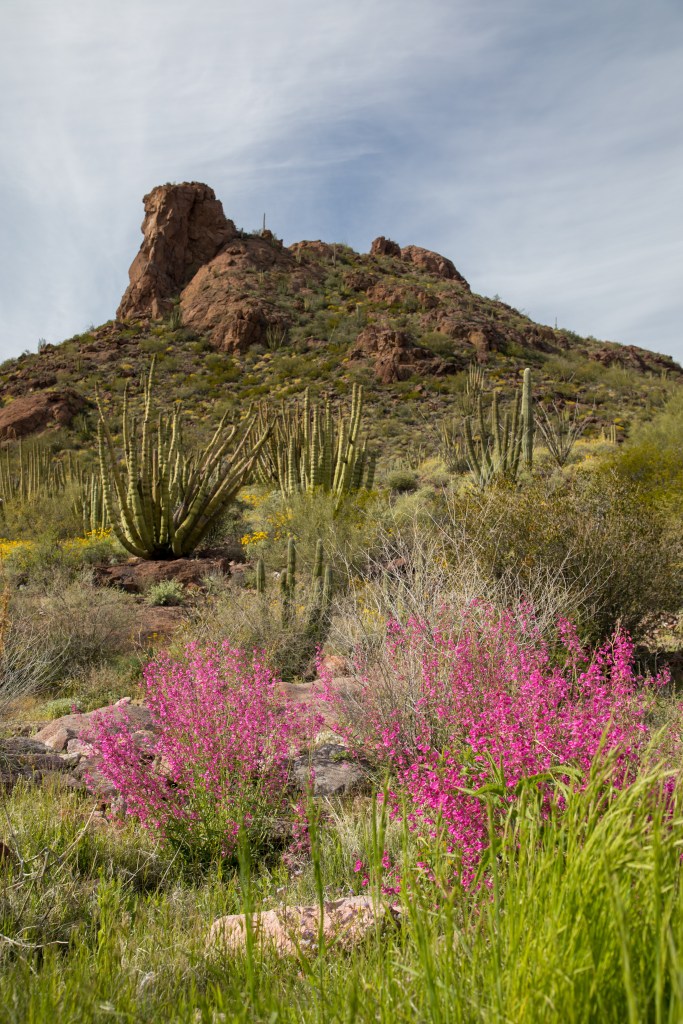
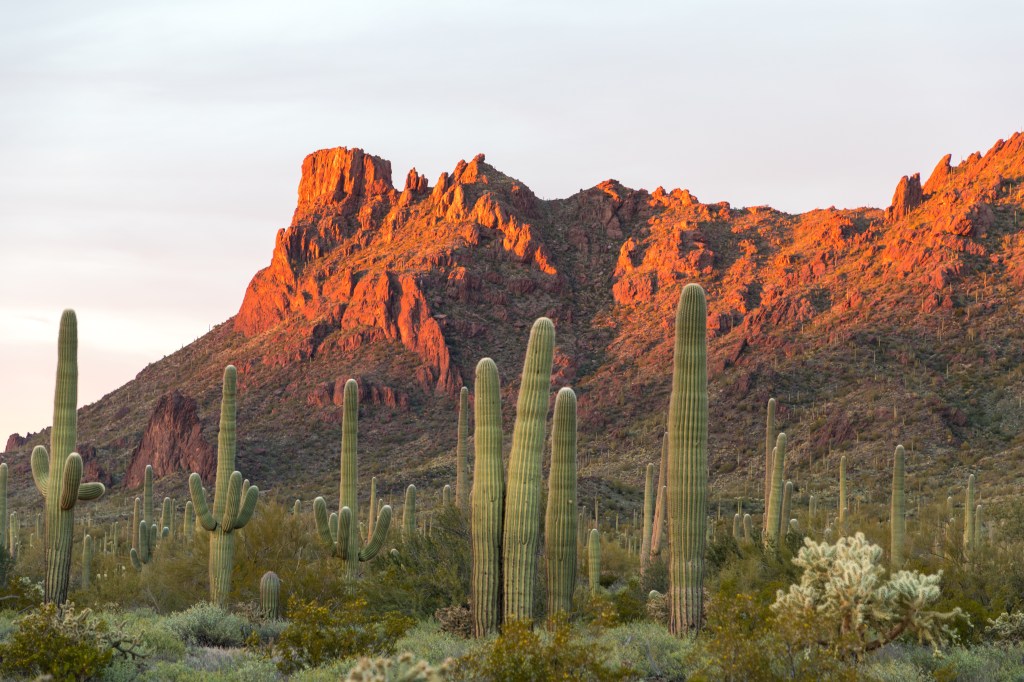
Abbey and I spent three days in Organ Pipe Cactus National Monument, and we could have stayed even longer. Spring in the Sonoran Desert is a beautiful thing. The first campground we stayed at was primitive, with only four campsites and a pit toilet. It was wonderfully remote and quiet, with great hiking trails around it.
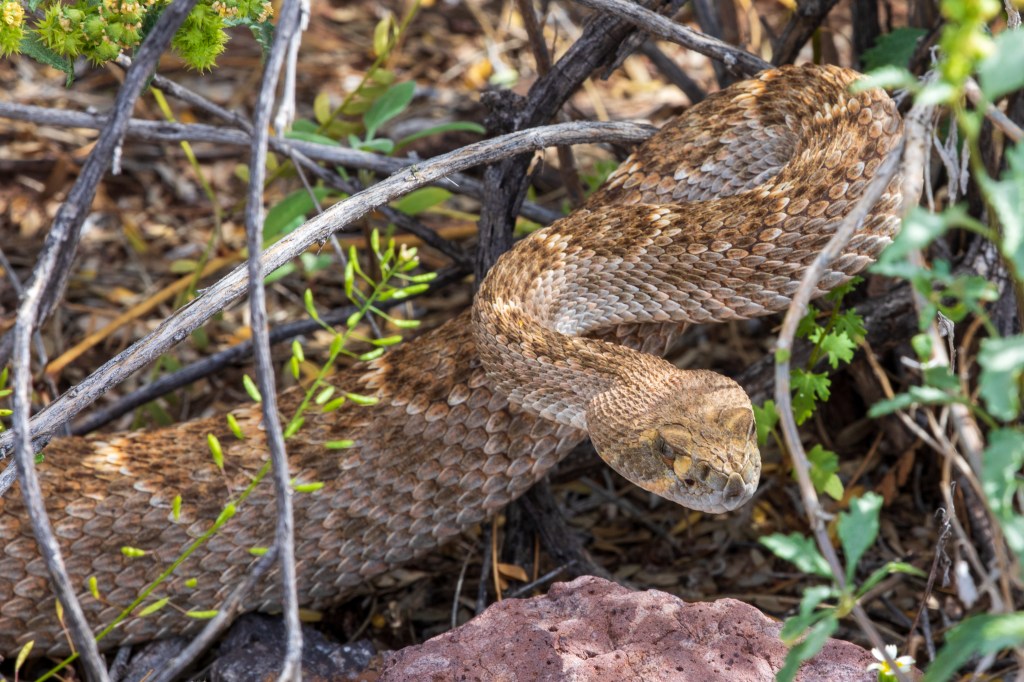
I’ve startled several rattlesnakes in my life (or rather, they’ve startled me), and the instinctual response is always the same. Nothing will stop you in your tracks and make you jump backwards faster. I wonder how old that instinct is. Probably well older than humans. And even primates.
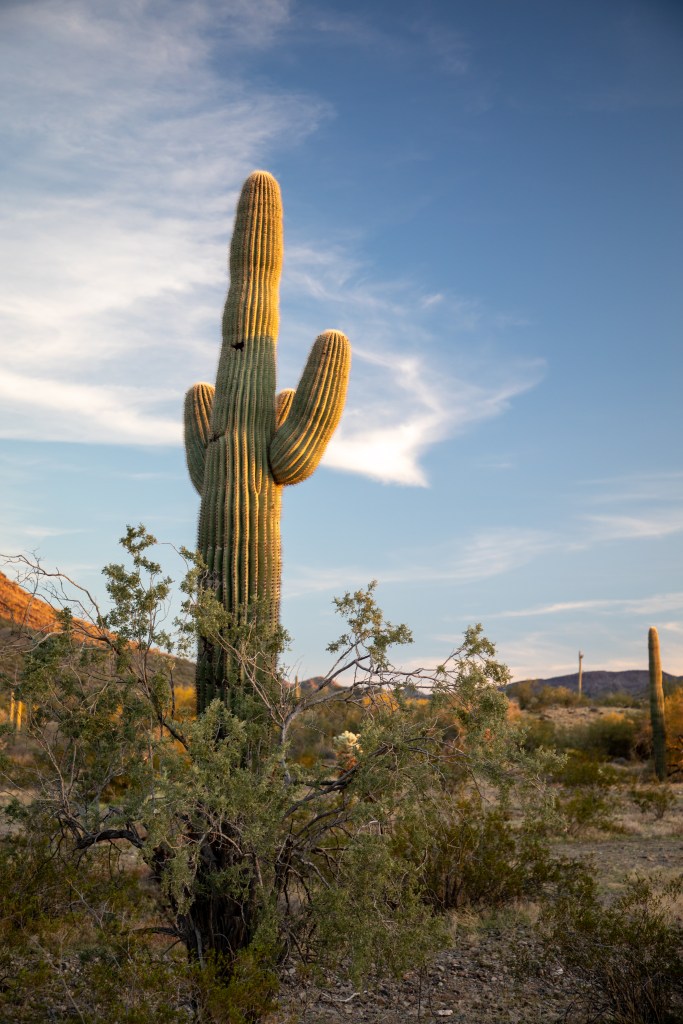
Organ Pipe Cacti are intolerant of frost; this is the very Northern reaches of their range. They only grow on South-facing slopes and where there are large rocks nearby that retain heat through the cool nights.
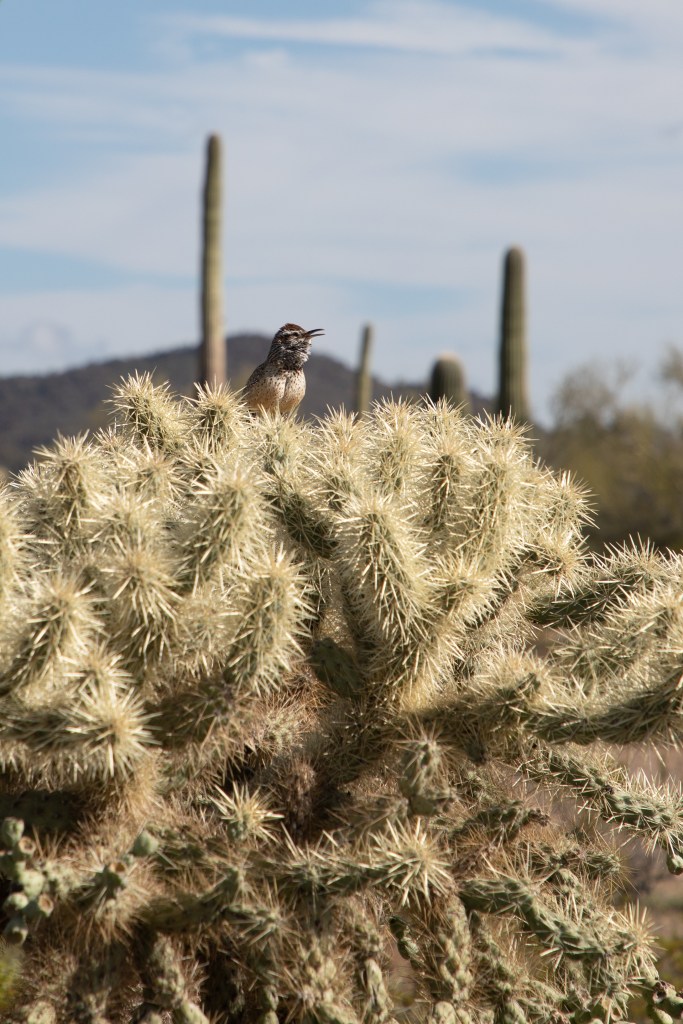
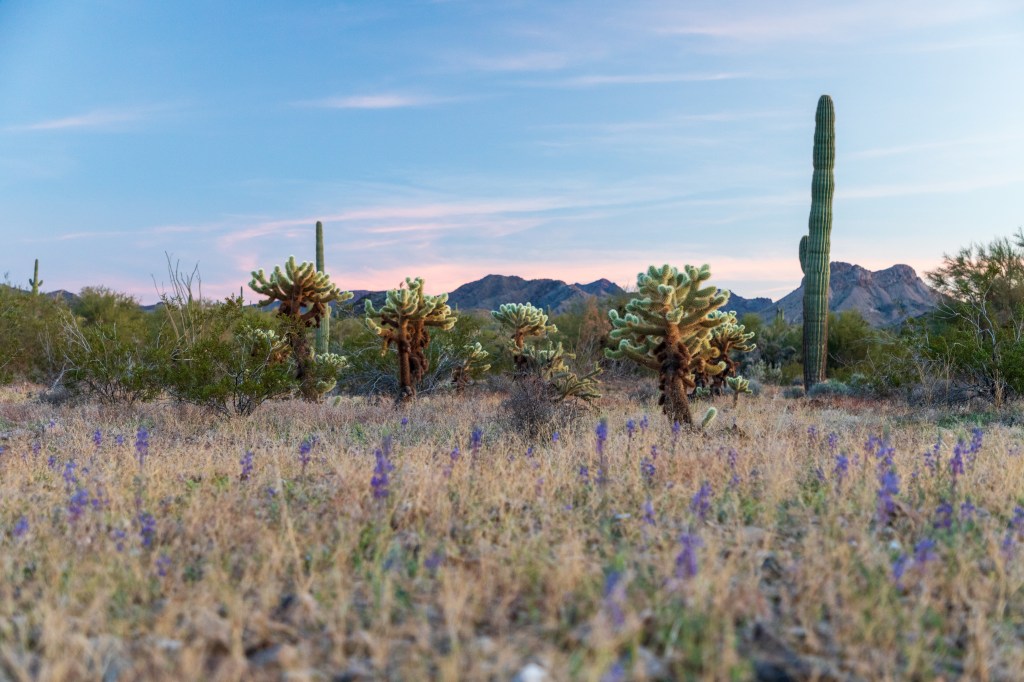
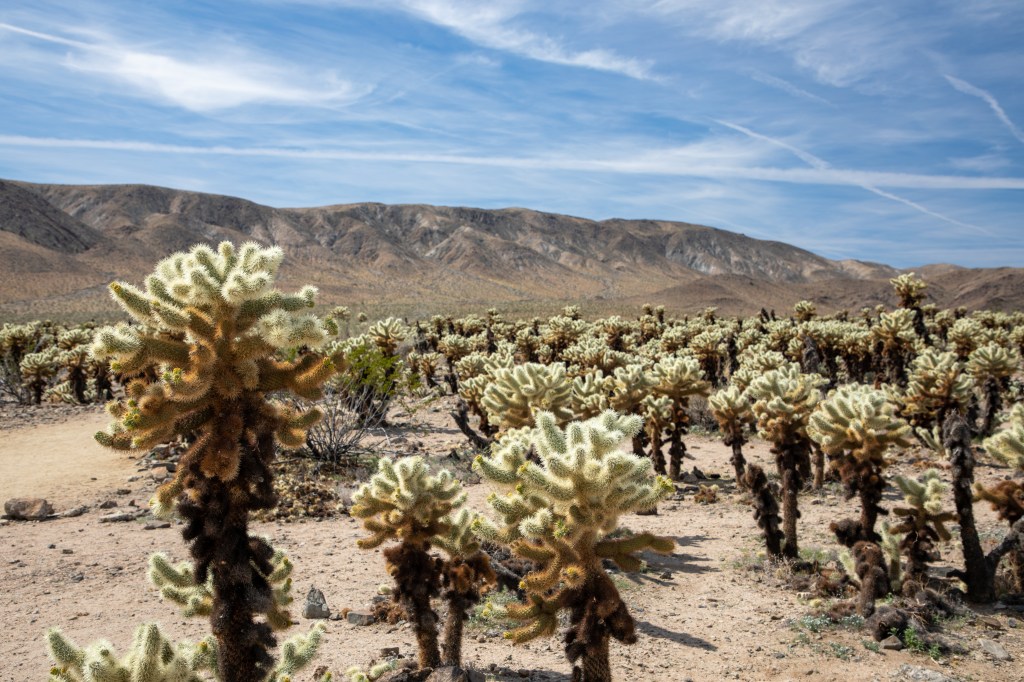
Cactus Wrens and Curved-Beak Thrashers frequently nest in Cholla, which provide ample protection. Cholla are seriously nasty and even a gentle touch will cause serious agony.
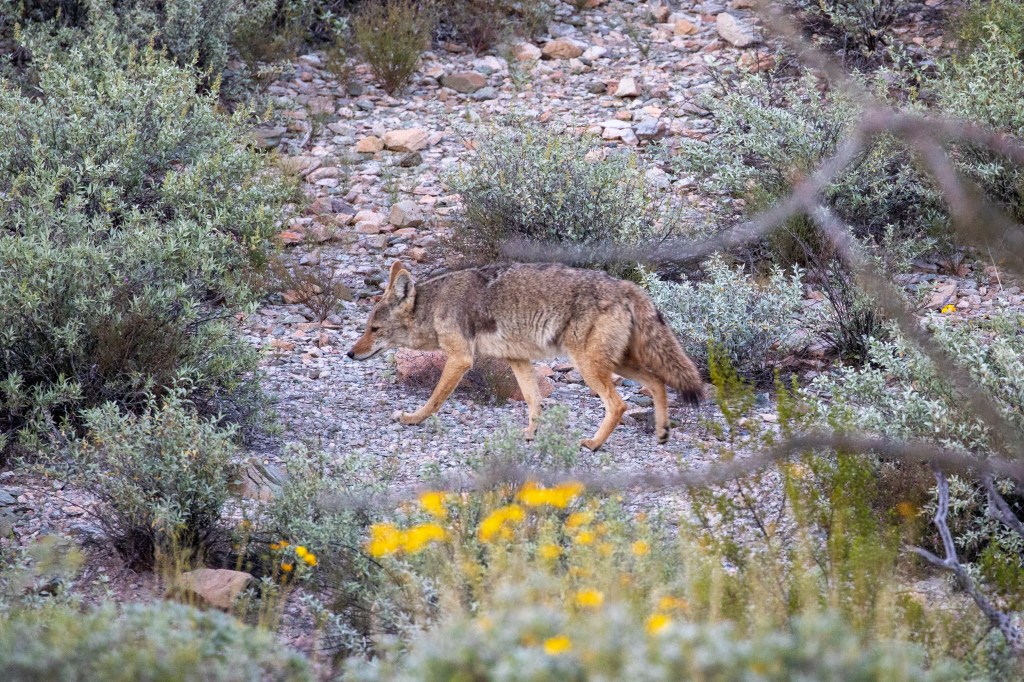
We saw a coyote at dusk. We were actually pretty close – the wind was providing both auditory and olfactory cover for us.
One morning, we drove down a dirt road to get out to a small 5 mile hike to Bull Pasture. The drive was incredible, but the hike was even more beautiful.
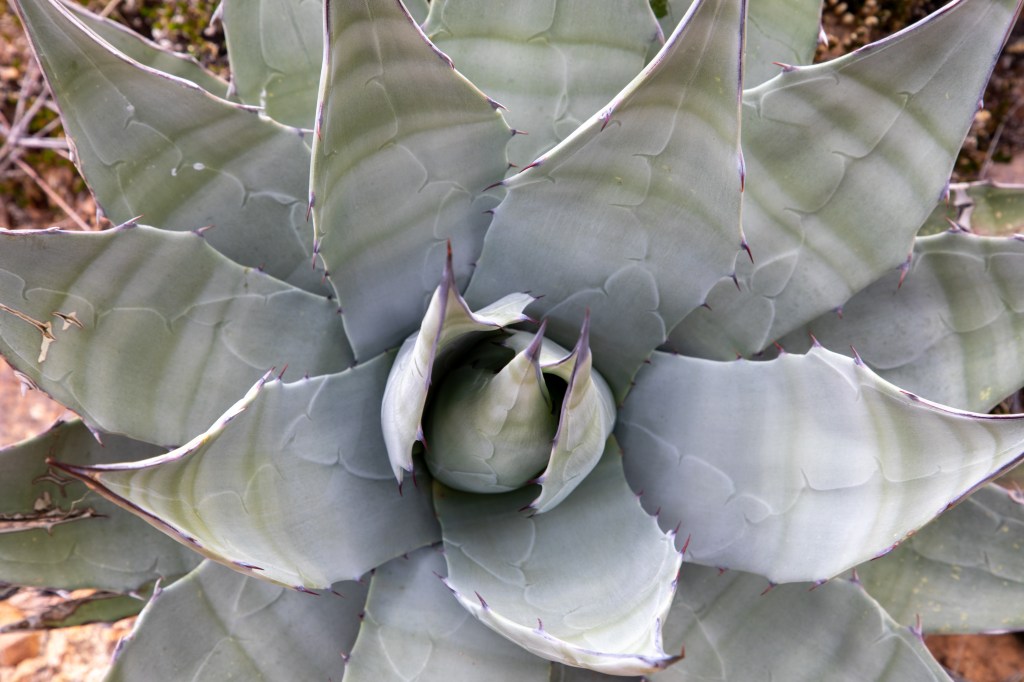
The Bull Pasture trail climbed about 1,000 feet. As we ascended, the Desert landscape changed – gone were the Organ Pipe Cacti and in their place were Agave and other more frost-tolerant plants.
A gentle rain started to fall as we were hiking, which actually turned out to be really nice. It was very peaceful.
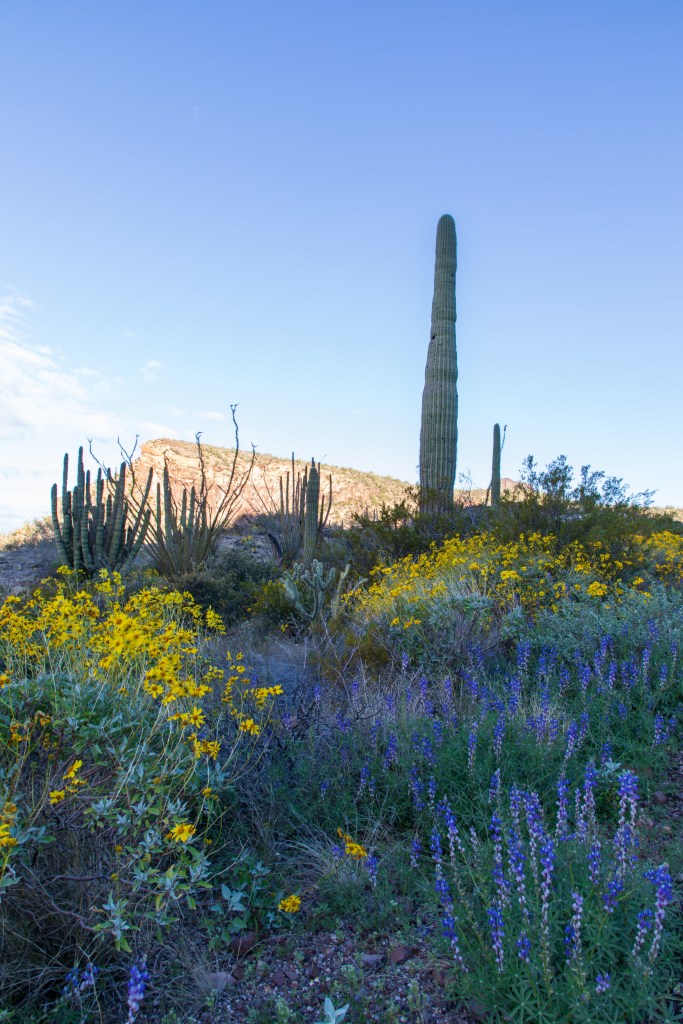
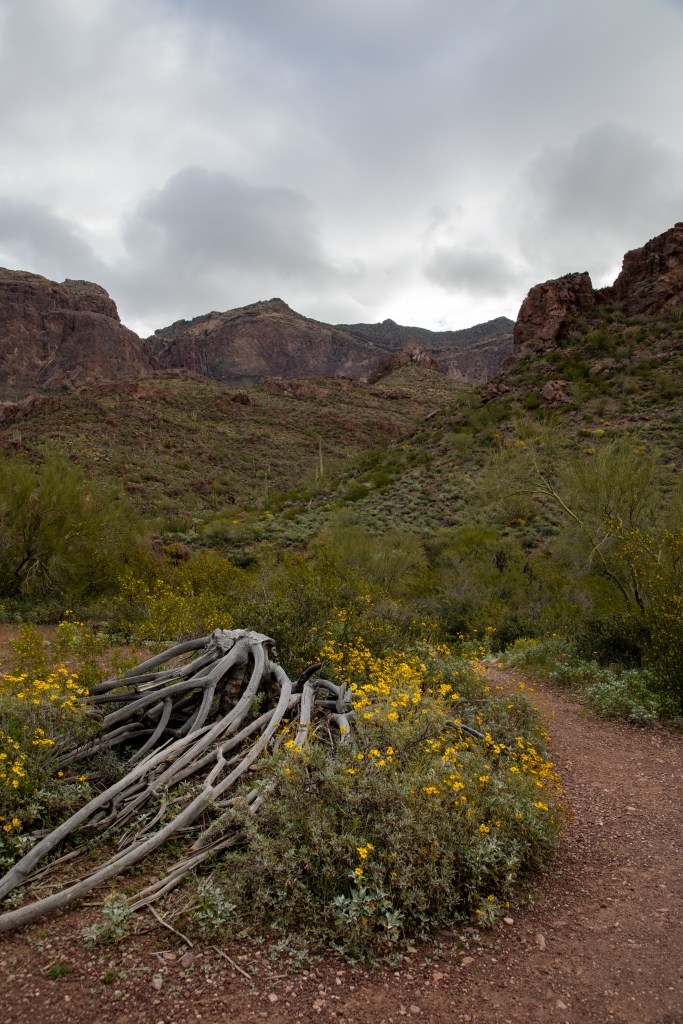
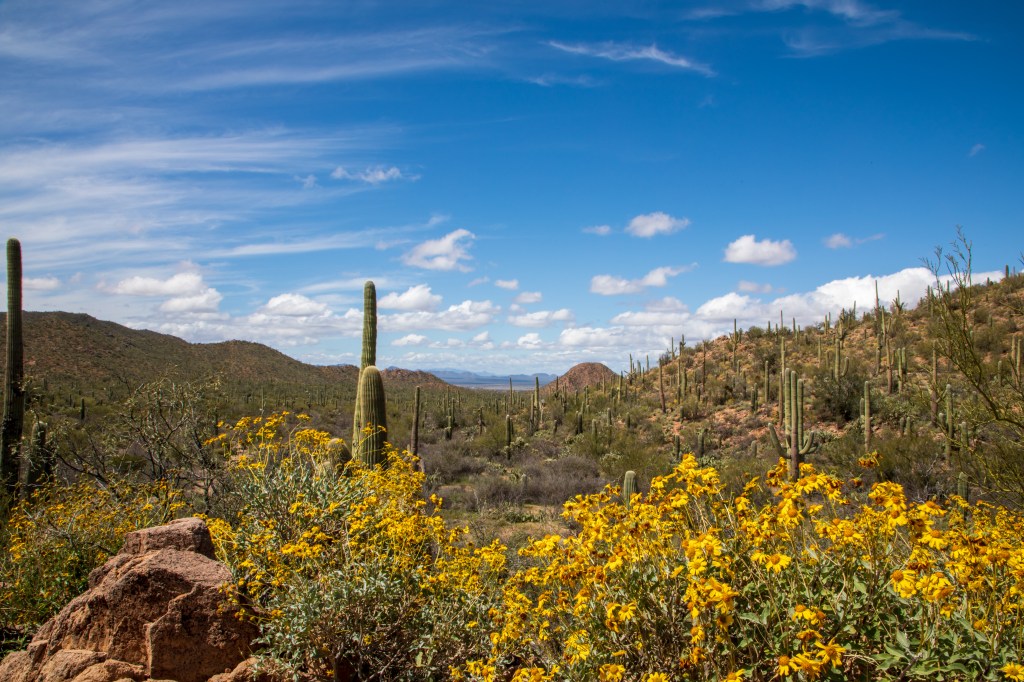
Brittlebush (the yellow flowers in all these pictures) was in bloom everywhere. I have never been in a desert in Spring before, and I was just overwhelmed with all the unexpected life.
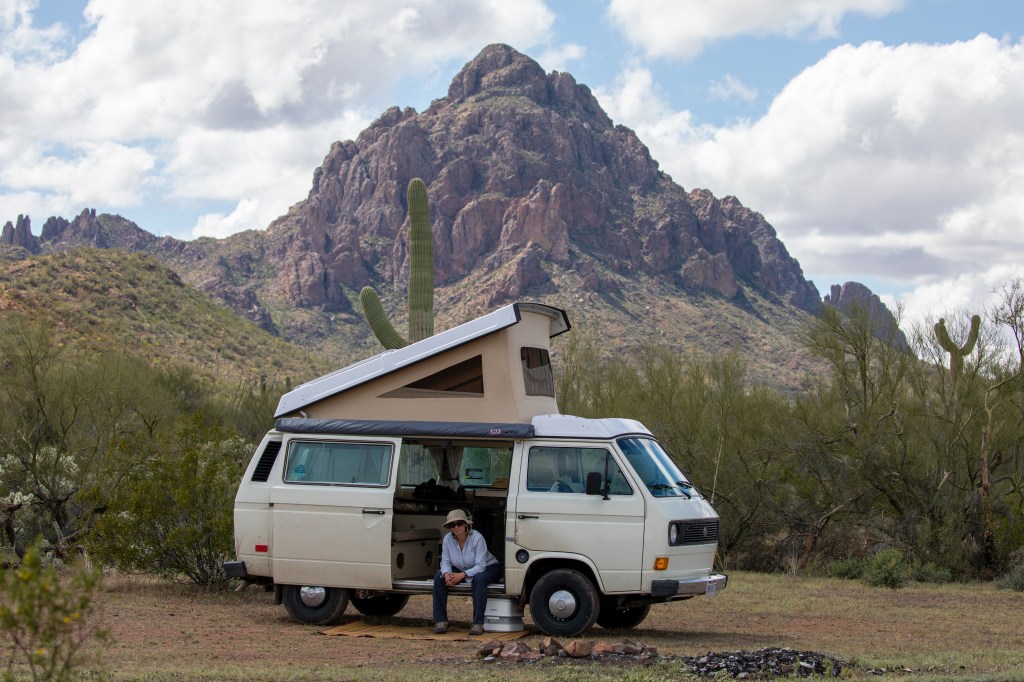
Ironwood Forest National Monument is another gorgeous area. Abbey and I drove down some very remote roads and then onto a pipeline track to find our next dispersed campsite. I continue to be impressed by how well Evelyn does on these rough roads – the high clearance and mushy suspension really help. Having the weight of the engine right over the rear wheels helps too. There wasn’t another soul around, and we had gorgeous views of the desert floor and Ragged Top Mountain. This is how you practice social distancing.
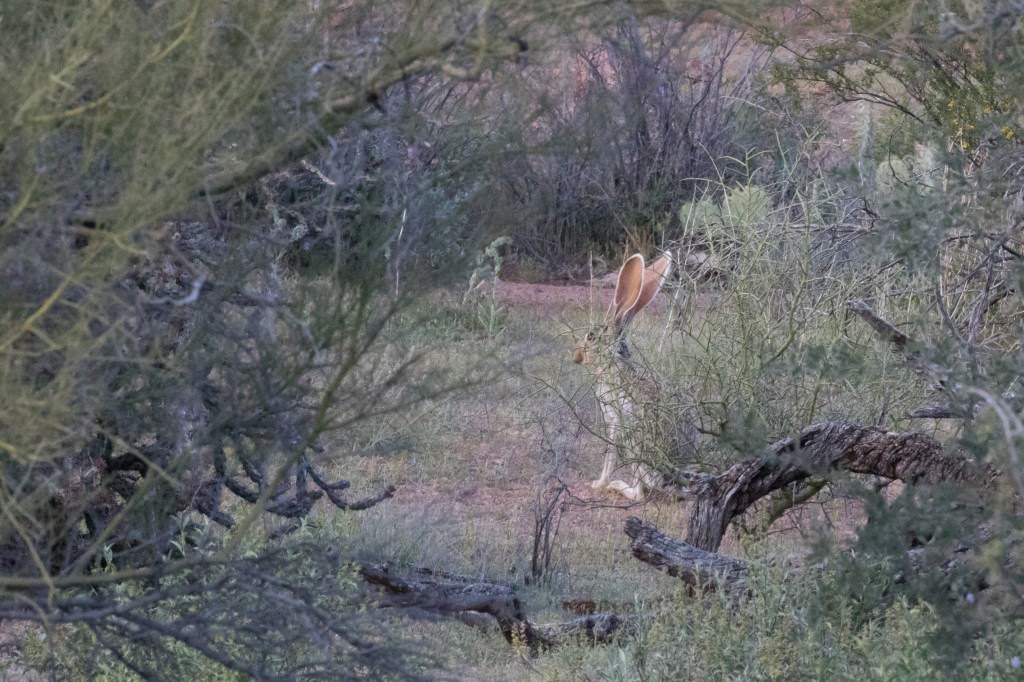
We saw lots of jackrabbits, but they were pretty good at not letting me get a decent picture. Their ears are so big they look fake. Not just for hearing, the large ears are used as cooling fins to keep the rabbit cool.
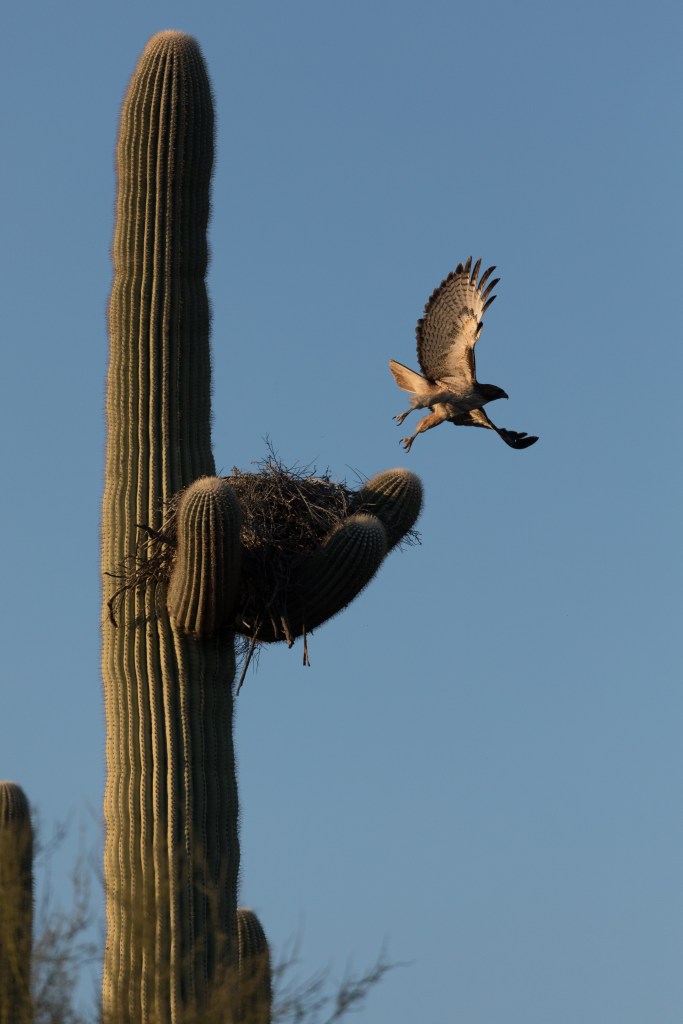
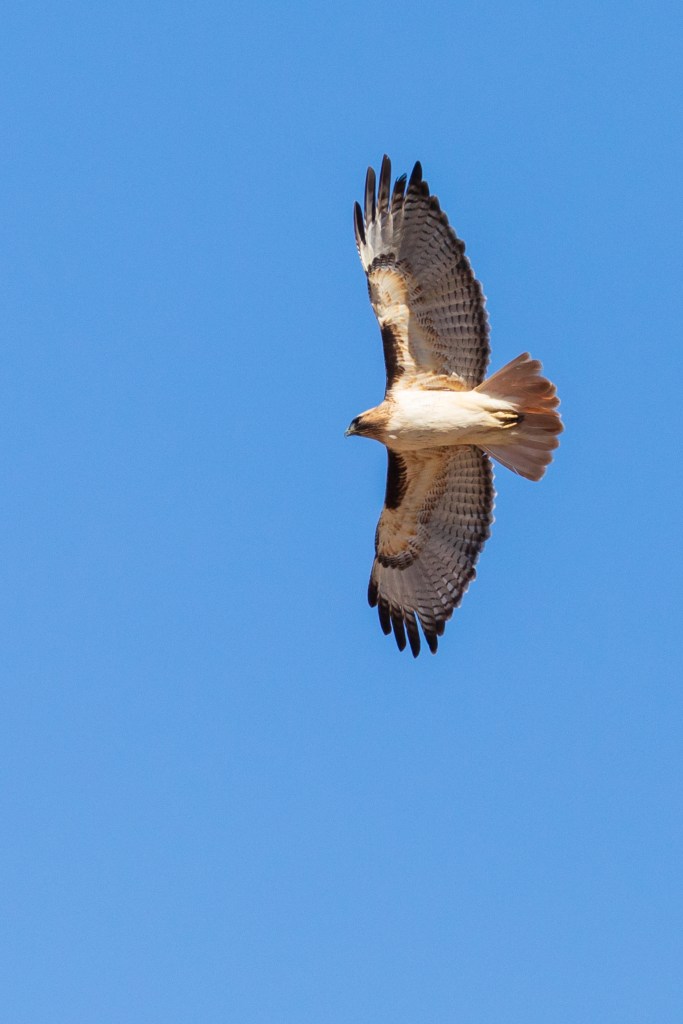
Red-Tailed Hawks are highly adaptable and can be found all across America. I was still impressed by the lovely nest built in this Saguaro, though.
So where are Abbey and I headed next? It’s difficult to say. After leaving Ironwood Forest we were met with a closed National Monument and closed visitor’s centers before reaching Phoenix. Now we’re staying with Chris and Kelley and helping to watch their kids. We want to go to the Utah National Parks next, but we’ve read that they are being overrun at the moment and many of the services have been shuttered. We’re in a holding pattern now and doing the whole social-distancing thing, just like everyone else. I’m excited to play a bunch of video games in the interim.
Abbey and I had been contemplating a trip South of the border for a while. Our apprehensions were mostly centered around the language and cultural barriers – I speak virtually no Spanish and Abbey is only marginally better. We finally decided to go for it when our friend Janell said she’d fly out and do Mexico with us. Janell is an extrovert and speaks fluent Spanish – just what you need for such a trip.
Oh, and if you don’t already know – Janell is my college roommate’s wife. She is the one who introduced me to Abbey on a last-second backpacking trip to Glacier National Park in 2014.
We picked Janell up at the San Diego airport in the evening and headed to Potrero County Park, just North of the Tecate border crossing, for the night. The campground was sort of a let down – it was expensive and the camping spots were really just a parking lot. Also, it was raining and cold.
In the morning, we drove to the Tecate border crossing and were over the border in seconds. There were no signs (in English or Spanish) saying we needed to stop and check in at a building, but we knew we needed to get our tourist visas approved somewhere. The Mexican attendant made small talk as he stamped our passports and tried to sell us hot sauce and honey.
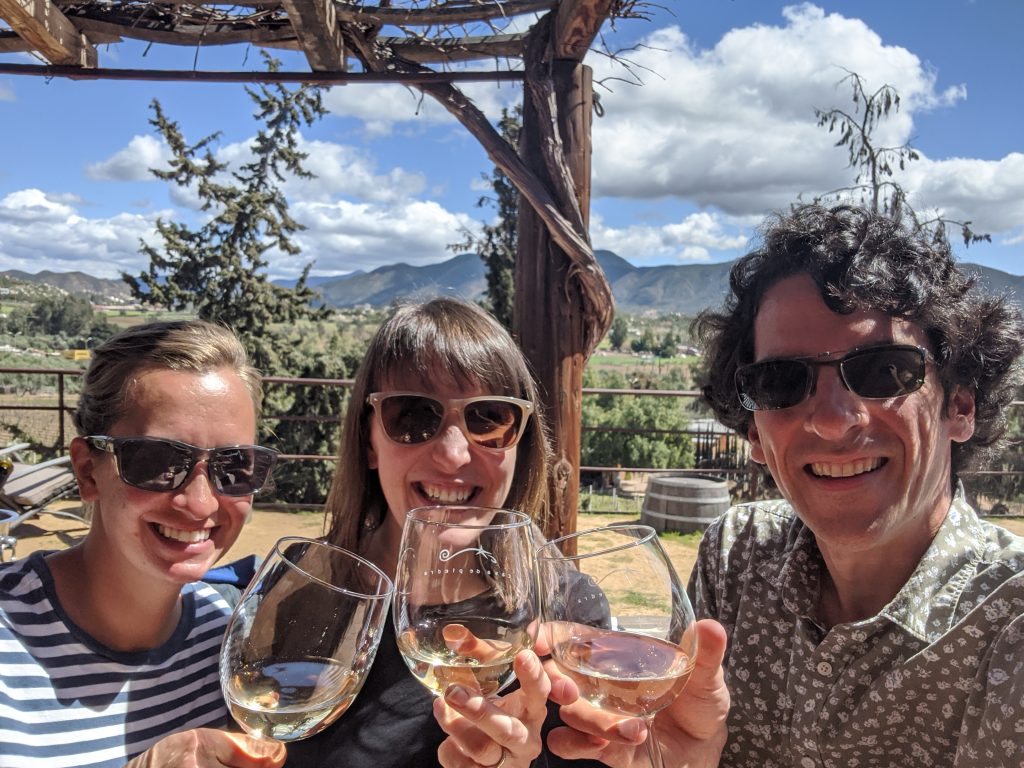
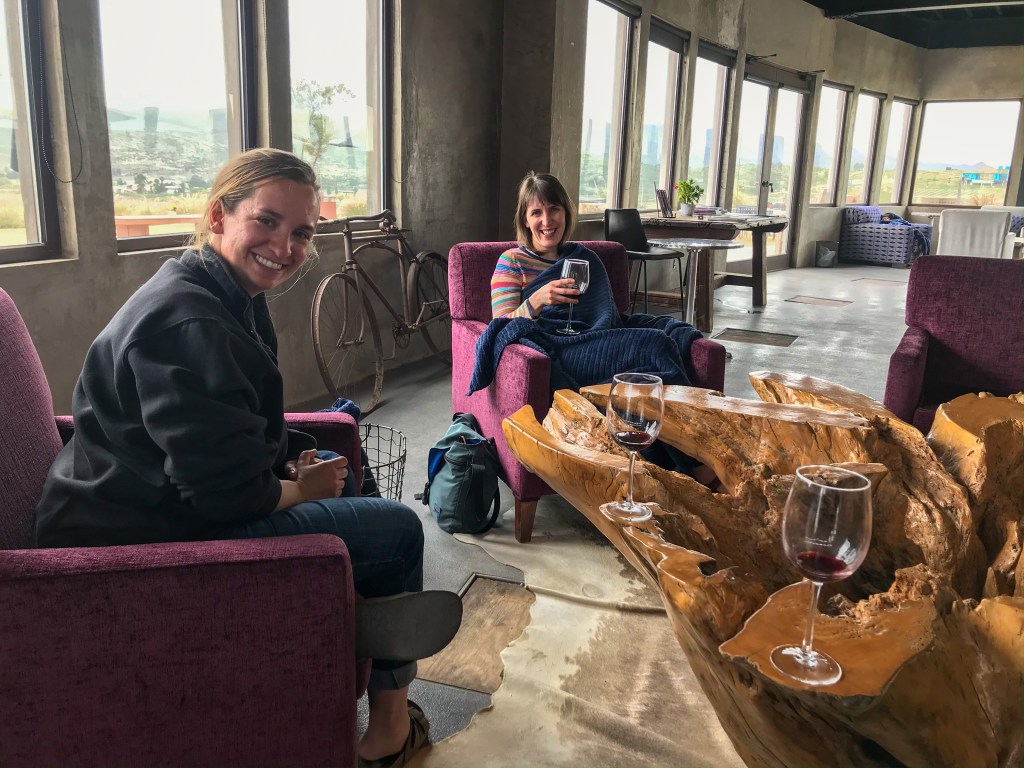
We drove South into the Guadalupe Valley and wine country. The region is known for some really good wineries, and we indulged in several.
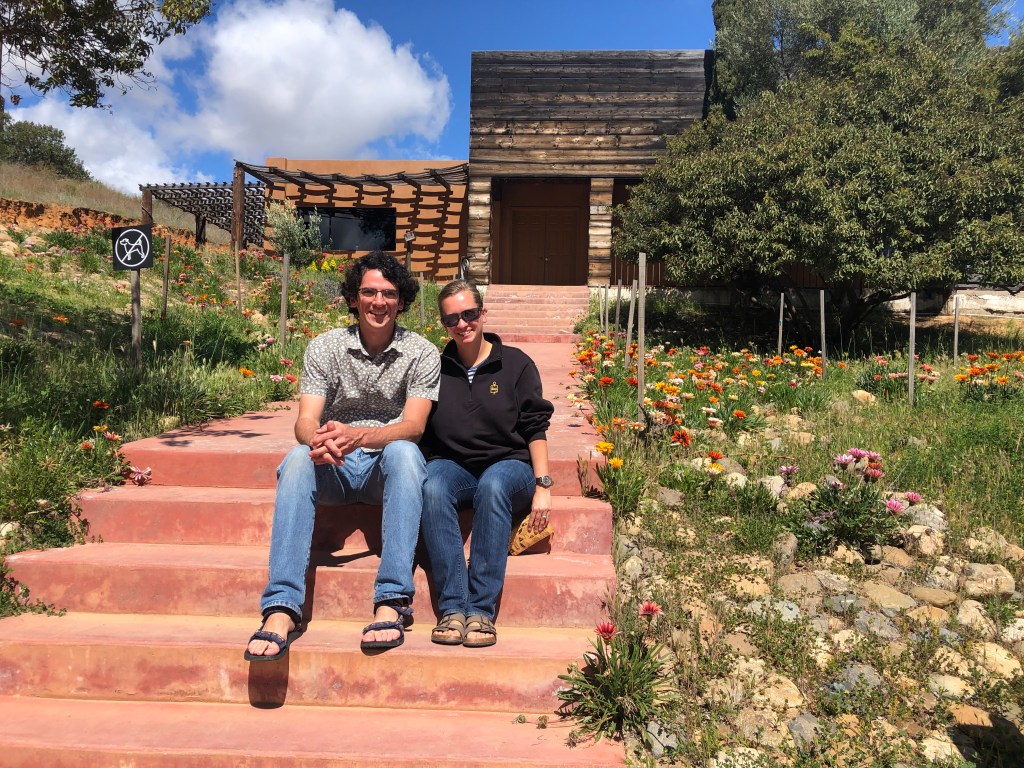
I don’t know much about wine, but I’ve seen the movie Sideways, so I like to think I know what I’m talking about. Our first stop was Casa de Piedra, and the combination of warm sunny weather, beautiful views, and good conversation made for a great day. Janell led some great banter with our host, Noa, and everyone was just soaking up the day. Salud!
We originally were going to stay at Playa Salamanda for the night, but when we got there, the host said it was closed because it was going to rain. Bummer, because the location was beautiful. It never did rain.
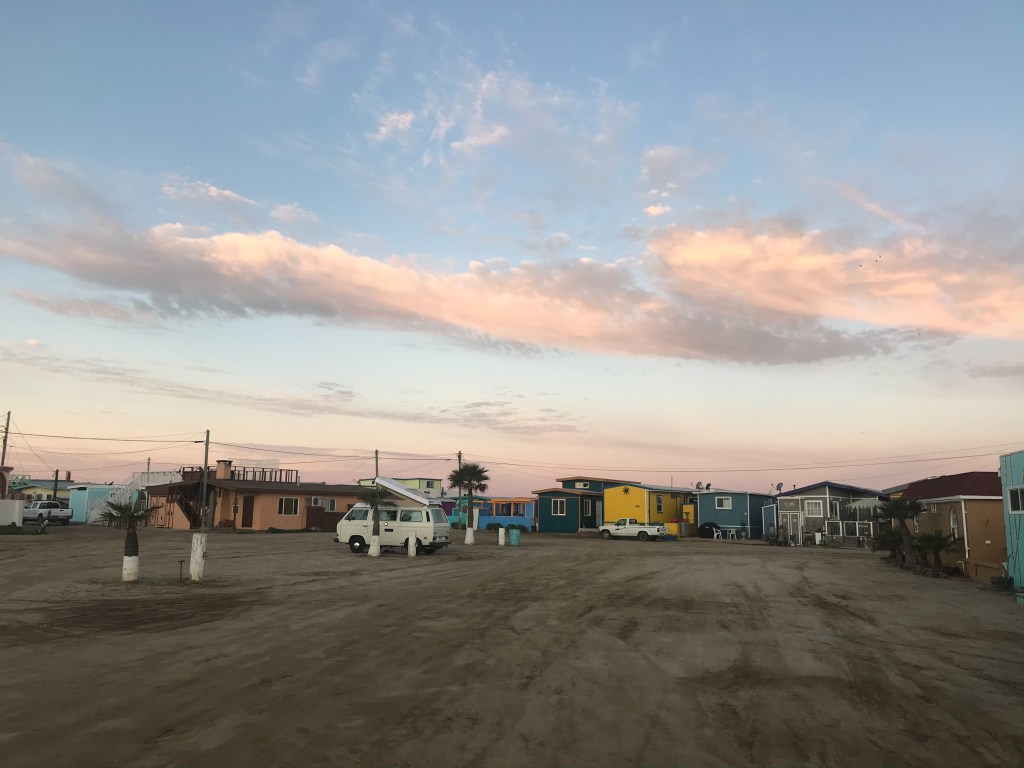
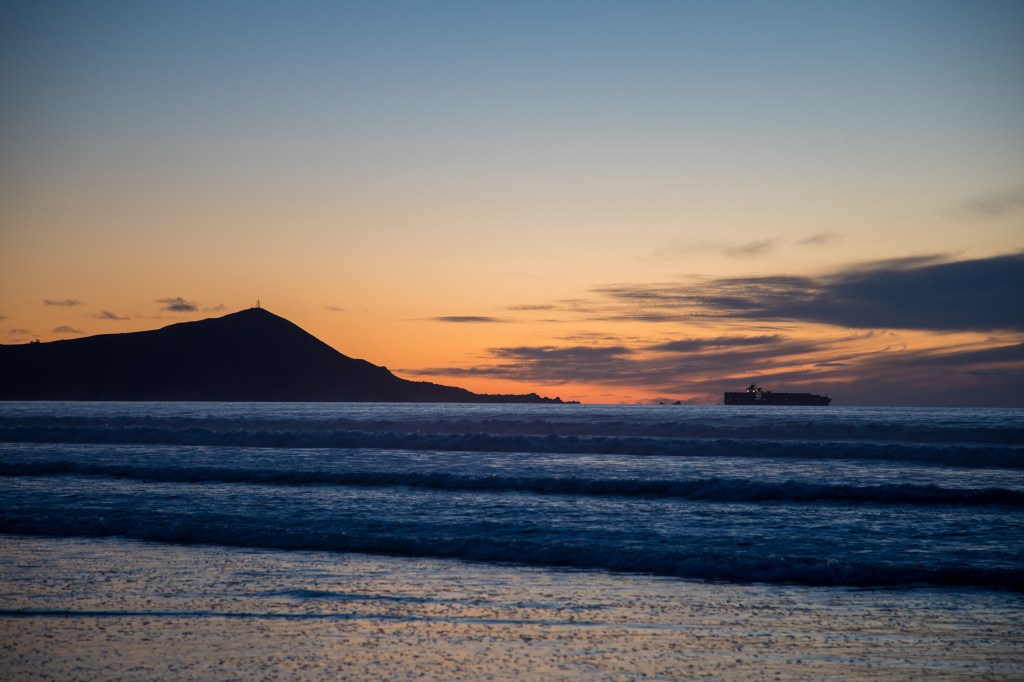
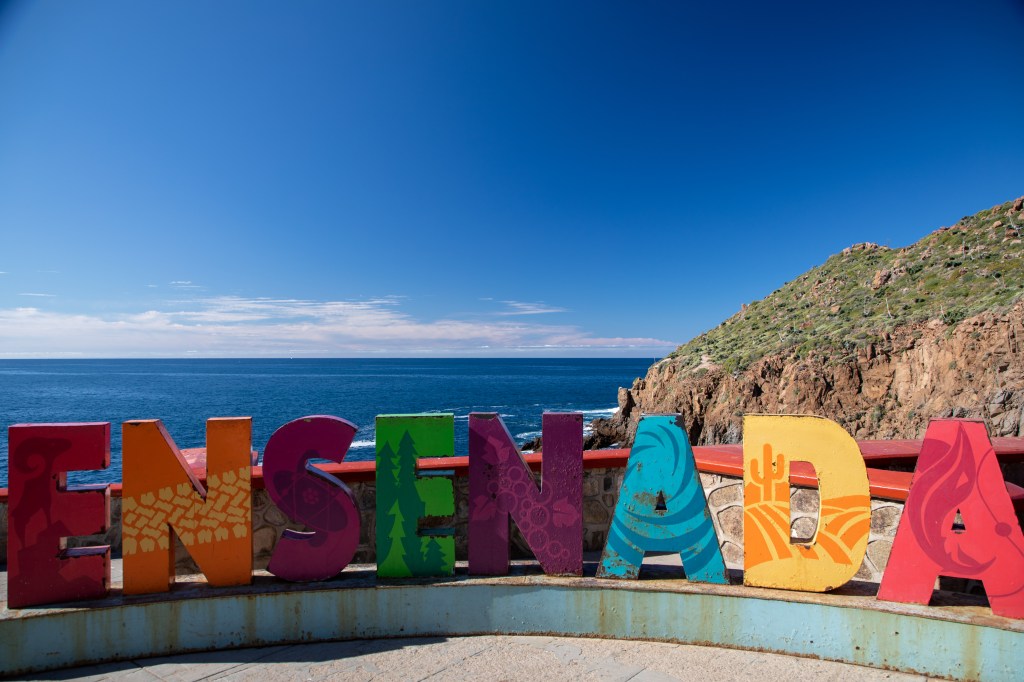
We eventually got to a campground on the South side of Ensanada that was sort of a dirt parking lot, but it was on the Pacific Ocean and we were the only ones there. We drank cheap Mexican beer and walked down the beach at sunset. There were sand dollars everywhere (or are they sand pesos?).
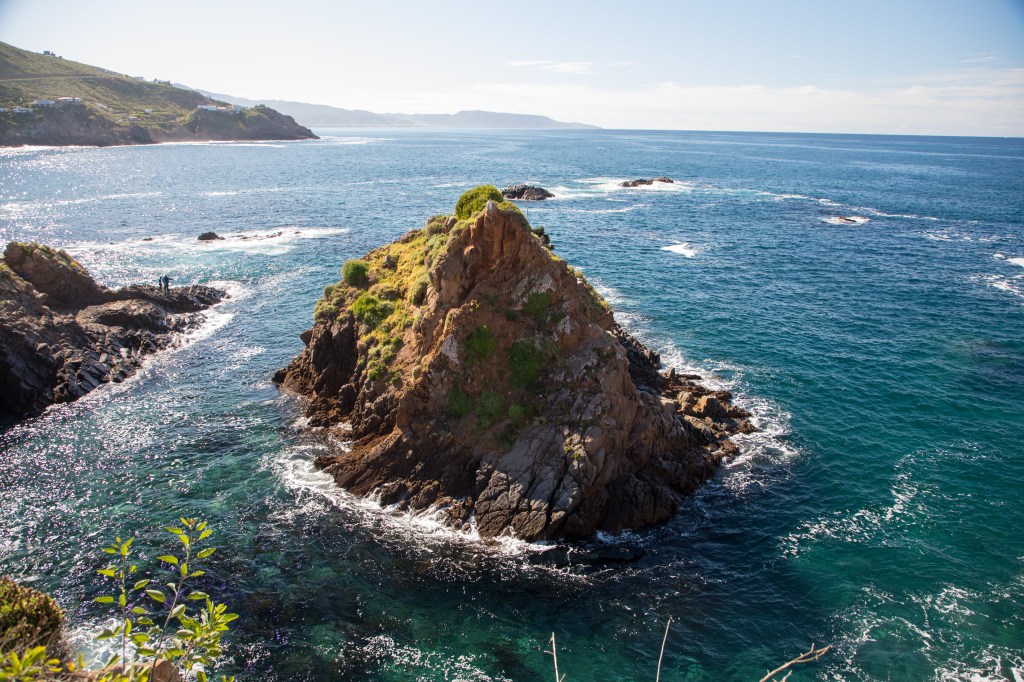
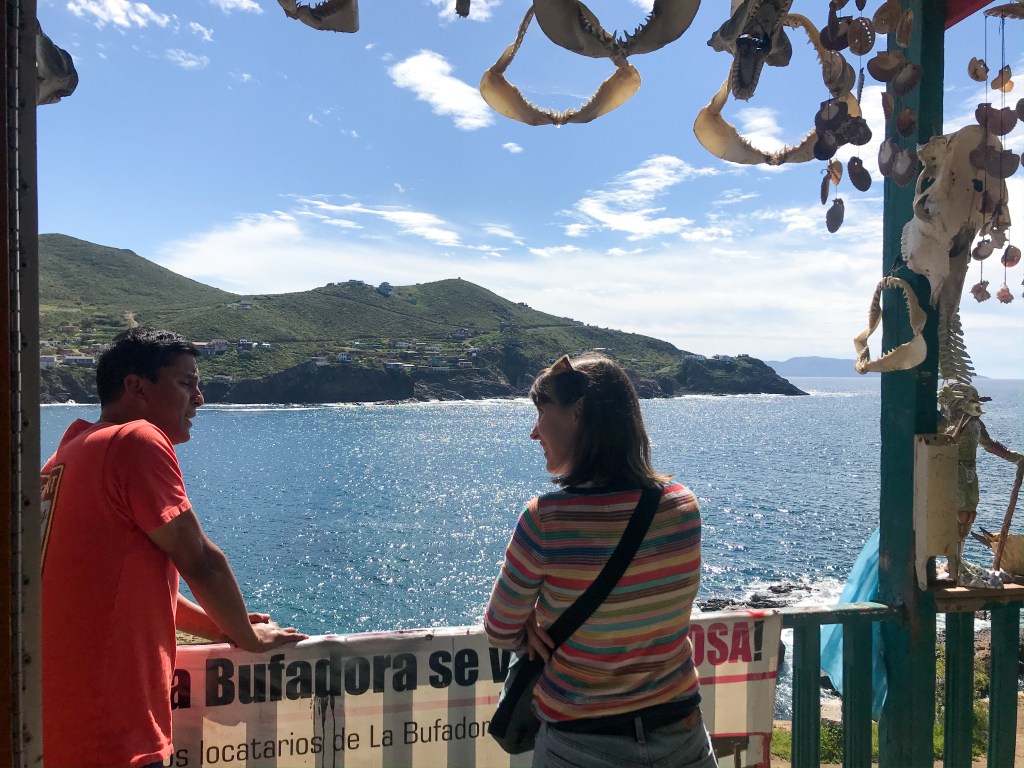
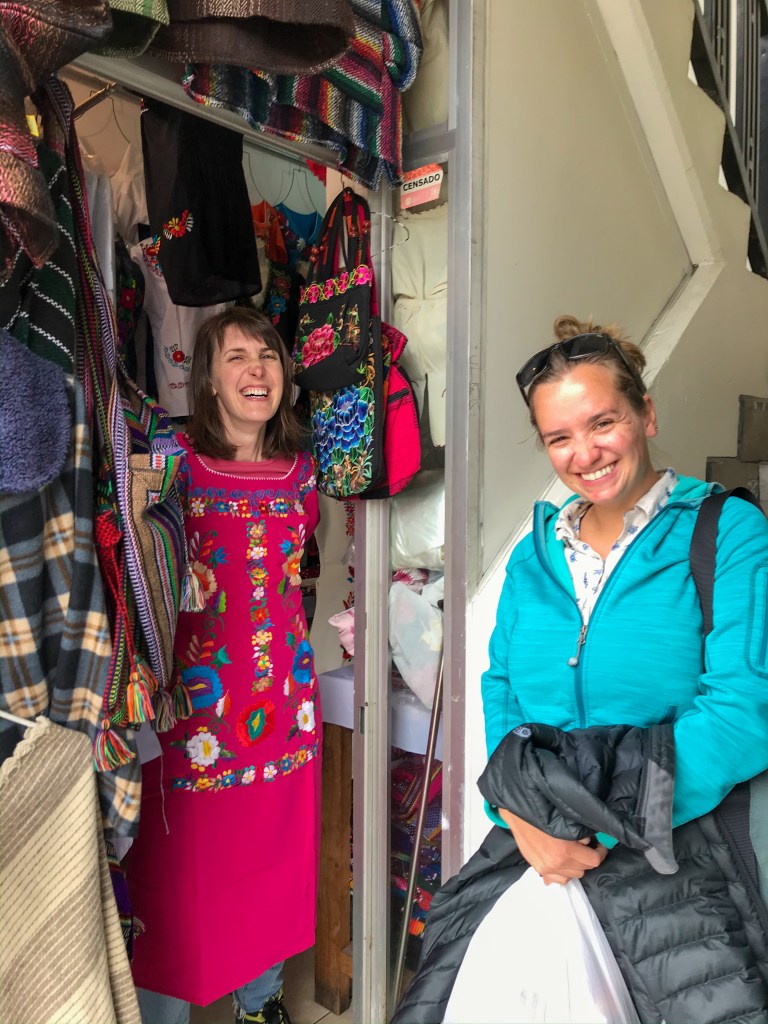
In the morning we drove to La Bufadora (The Blowhole), a gorgeous area on the coast where water funnels into a rock slot and geysers up into the air. There were also little shops set up with a variety of souvenirs.
Janell talked up one of the souvenir shop workers and discovered that we had just missed seeing whales. This is the view from his office. He kept calling Janell “Mi Reina.” Abbey and I just rolled our eyes.
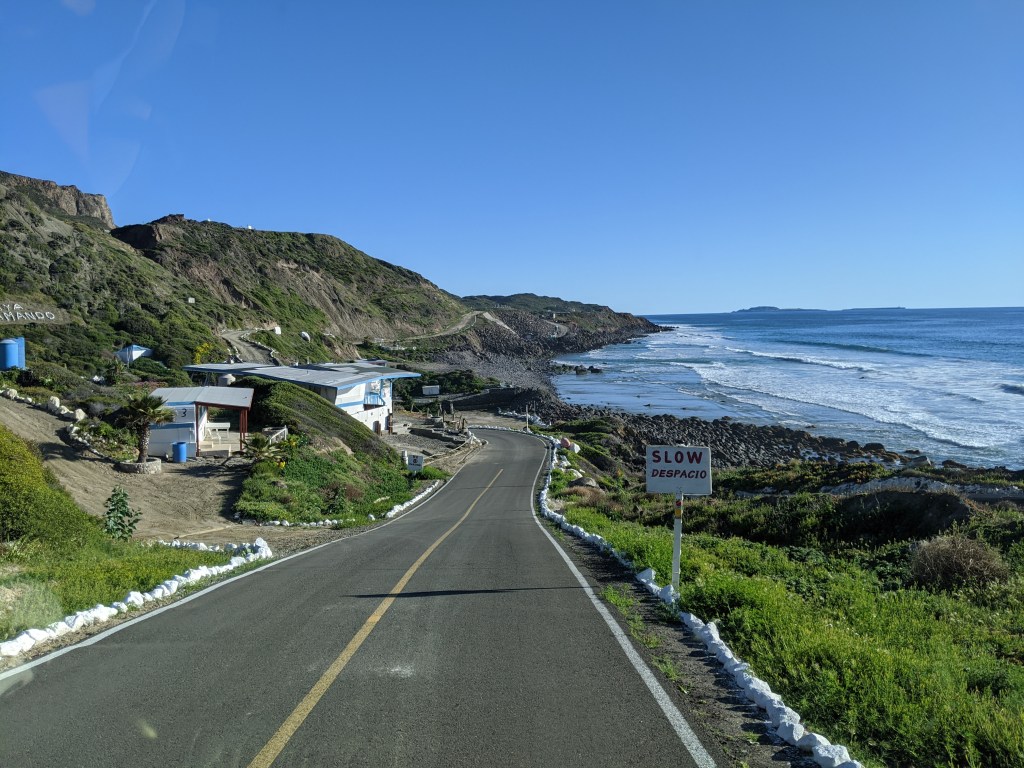
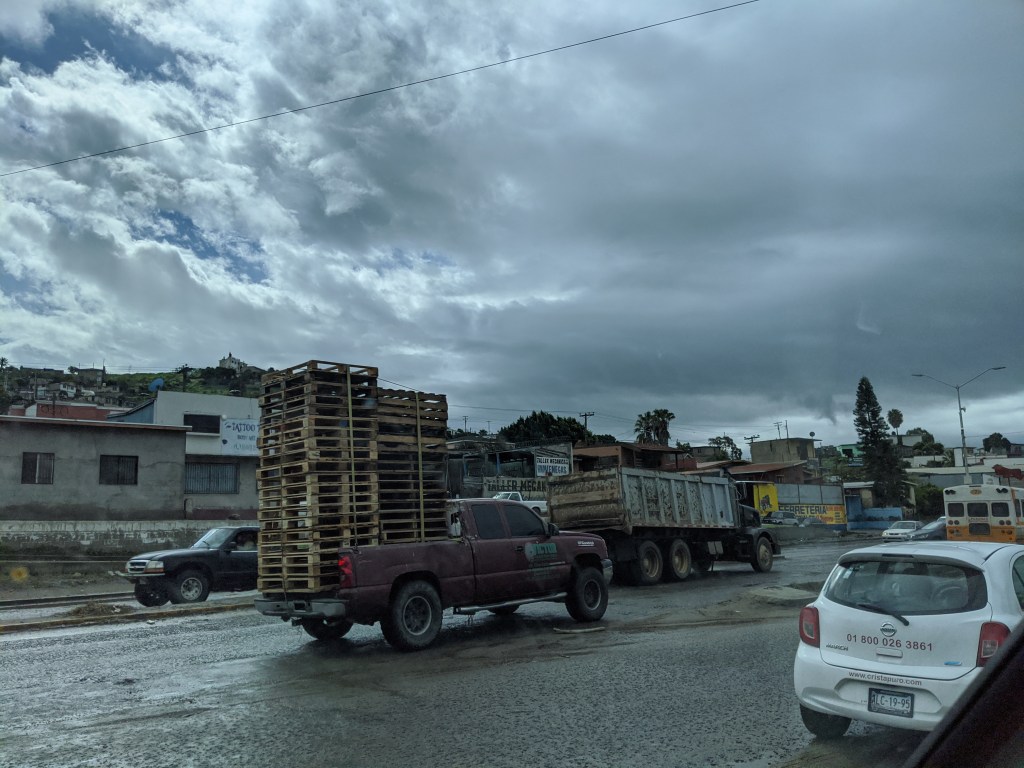
Driving in Mexico was about on par with my expectations. The roads are really, really bad in some places, laws are more like guidelines, and people can be fast and reckless. I learned all the local nuances pretty quickly and we didn’t have any significant issues. Evelyn was a champ.
Interestingly, many, many cars in Mexico have California or Texas plates but it’s obvious the car hasn’t been in the US in years. One shop owner we talked to was boasting about the newer Texas SUV he bought for just $1,500. I don’t know how many stolen cars end up in Mexico, but now I’m curious…
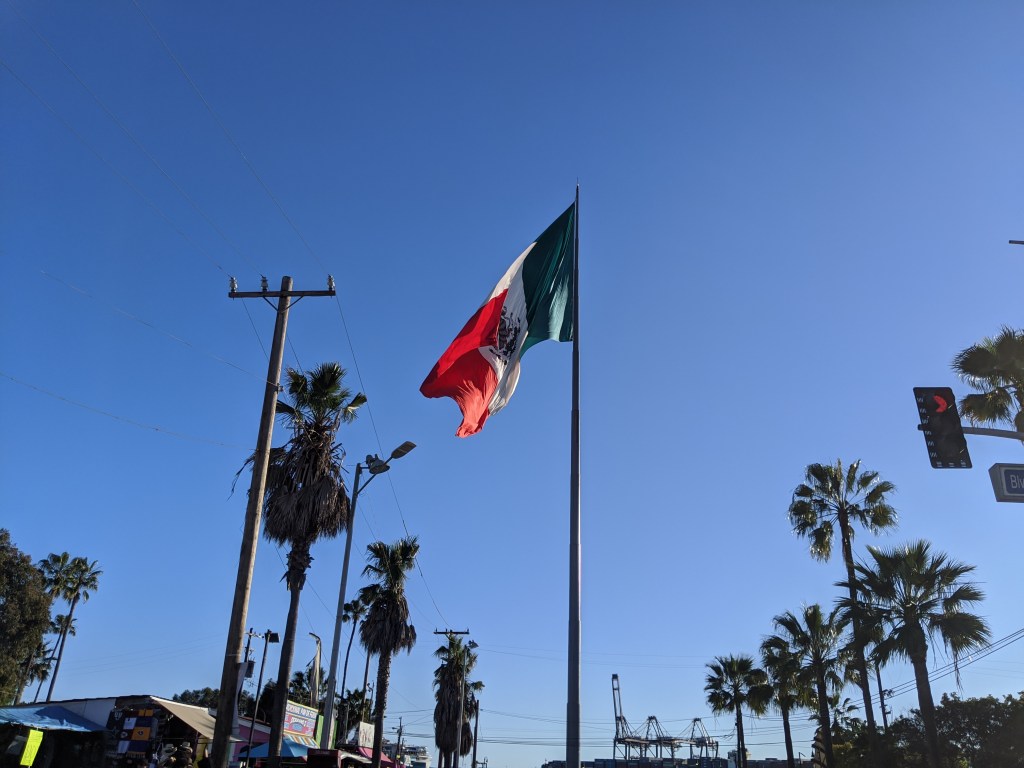
Mexico likes their gigantic oversized flags. Ensanada had a massive one in their town square. The US should do this more, and not just at car dealerships.
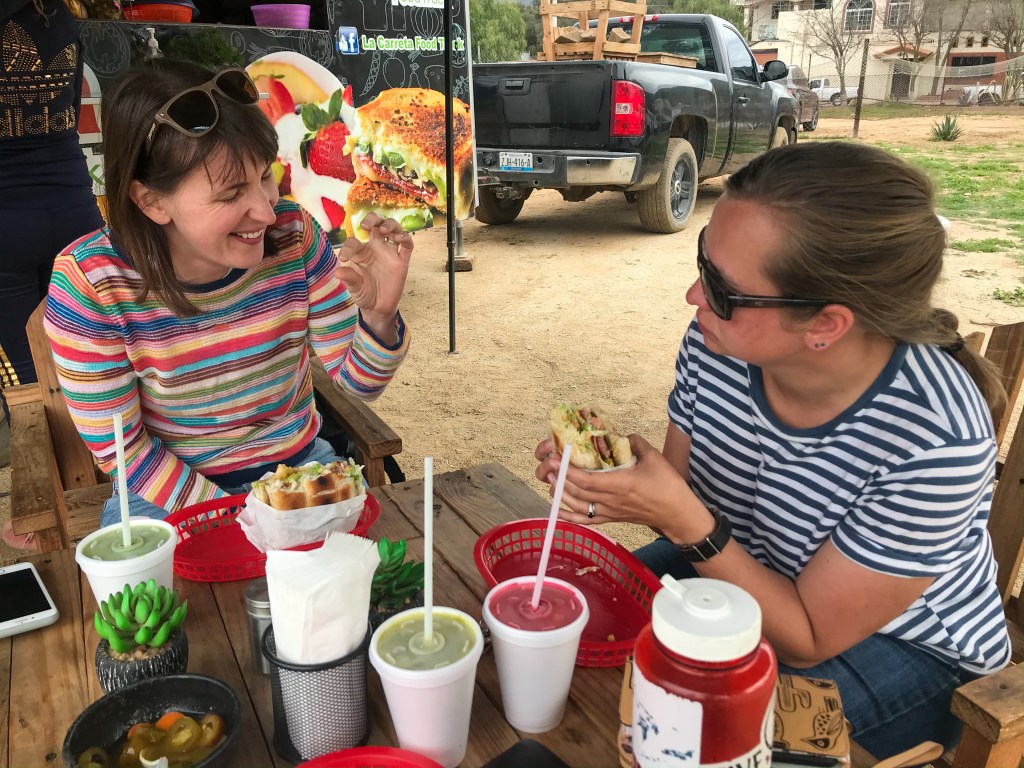
For lunch, we stopped at a food truck selling Cuban sandwiches. It was the best sandwich I’ve ever had in my life. No exaggeration.
After lunch it was time for more wineries! We went to a couple before heading onward.
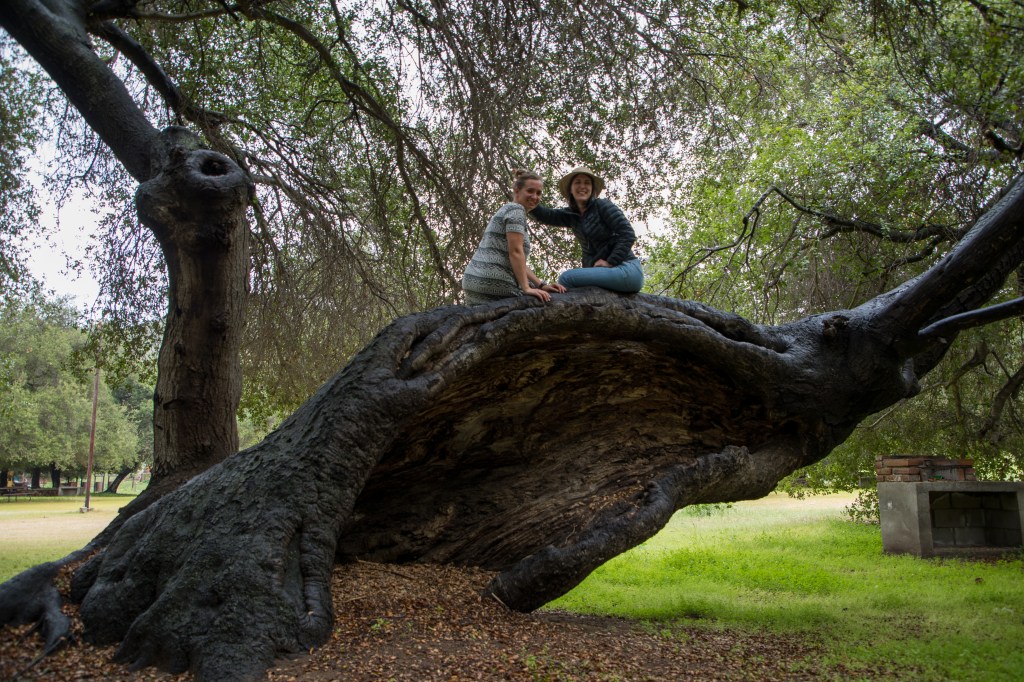
We drove down some pretty remote dirt roads in search of a campground (a real campground and not a tourist campground). Tree branches were scraping on Evelyn and I think Abbey and Janell were getting nervous, but then we found it. We were the only ones at the campground (which cost something like $3) and it was a beautiful grass opening with interspersed Live Oaks. Some of them were quite large.
The campground was next to a farm so we were deafened by roosters and cows in the morning. It was sorta cool. Sorta.
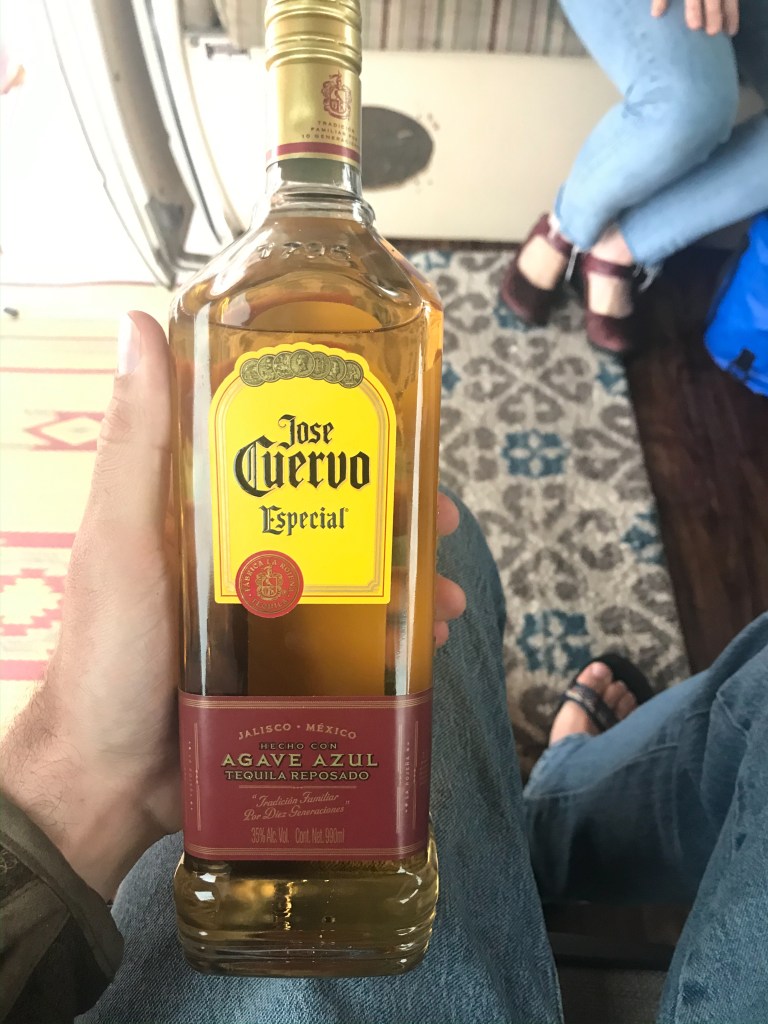
The next day we drove to the East side of the Baja peninsula near San Felipe. We also stopped to pick up more groceries and discovered that tequila is very cheap in Mexico. This bottle was about $6. Uh-oh.
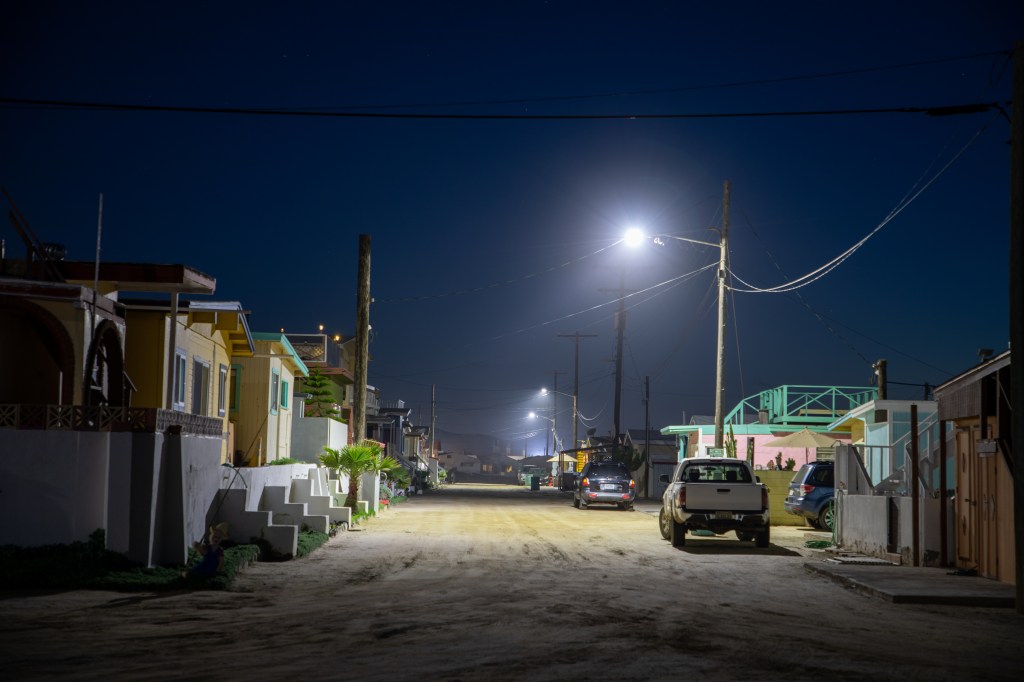
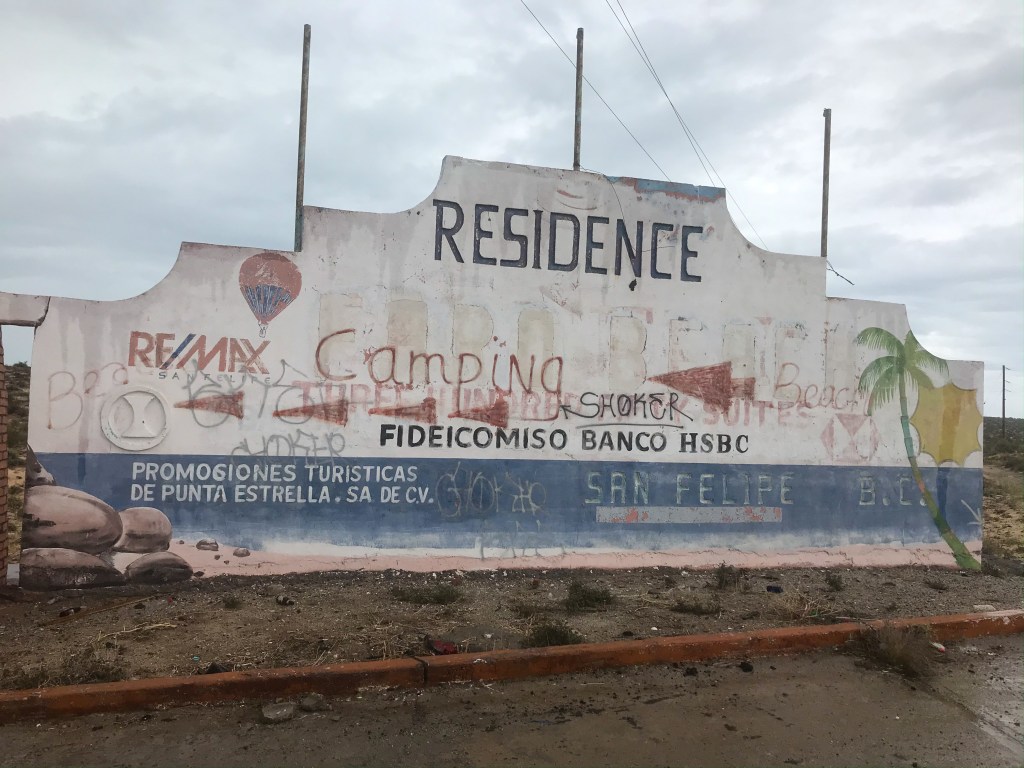
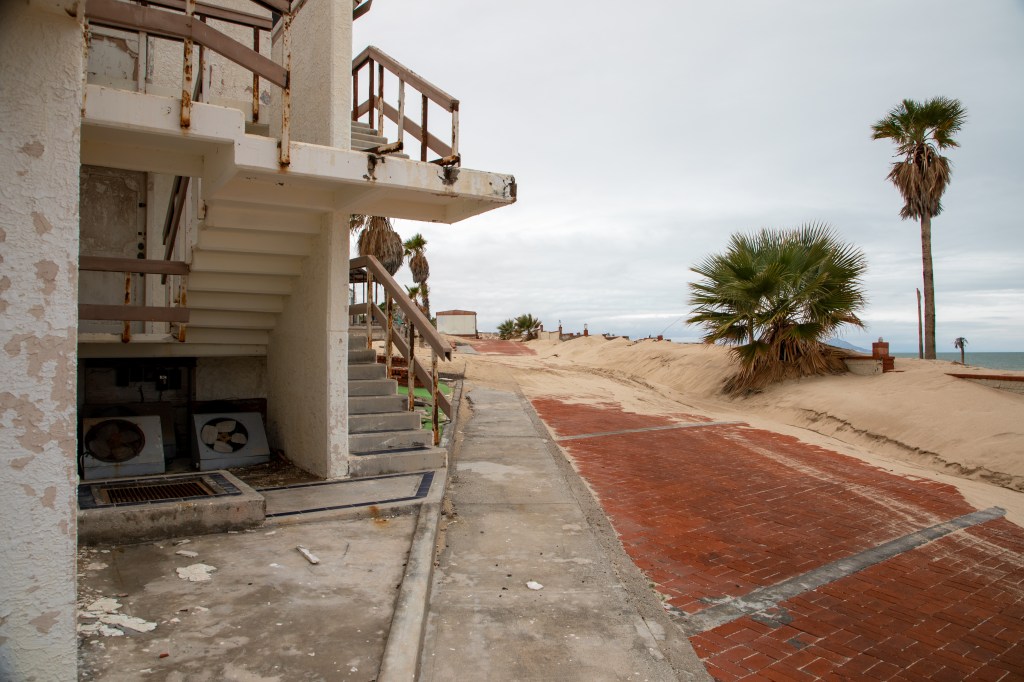
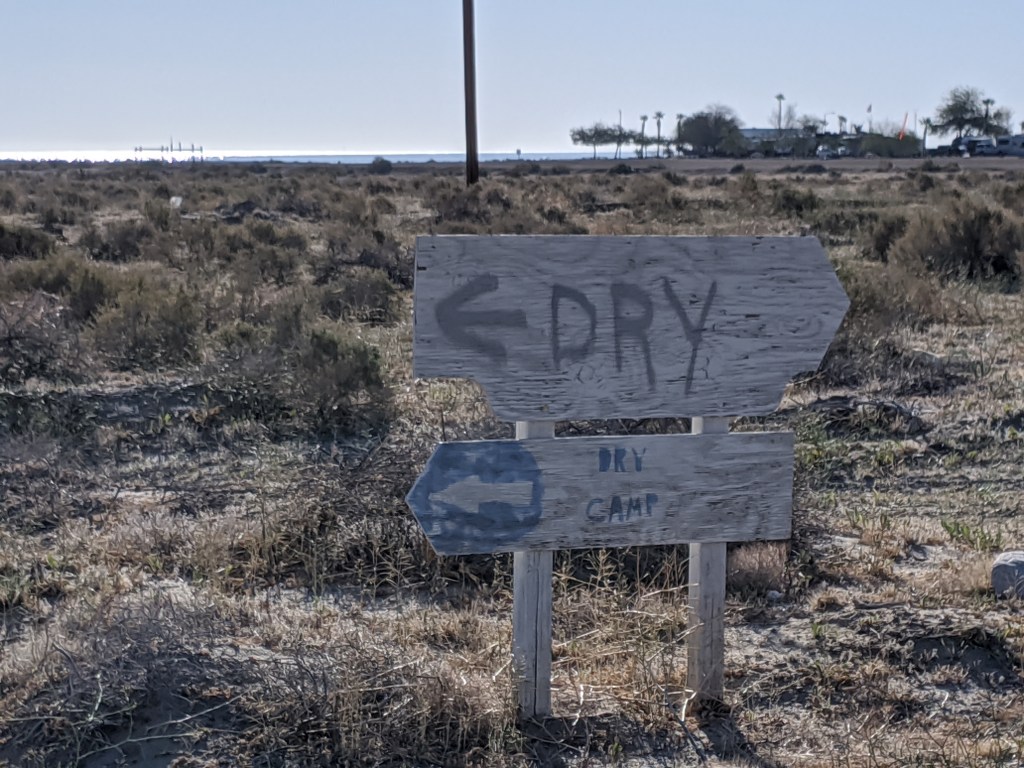
We drove South out of San Felipe and then saw this sign of an abandoned beach community with “camping” spray painted on it. Seems legit.
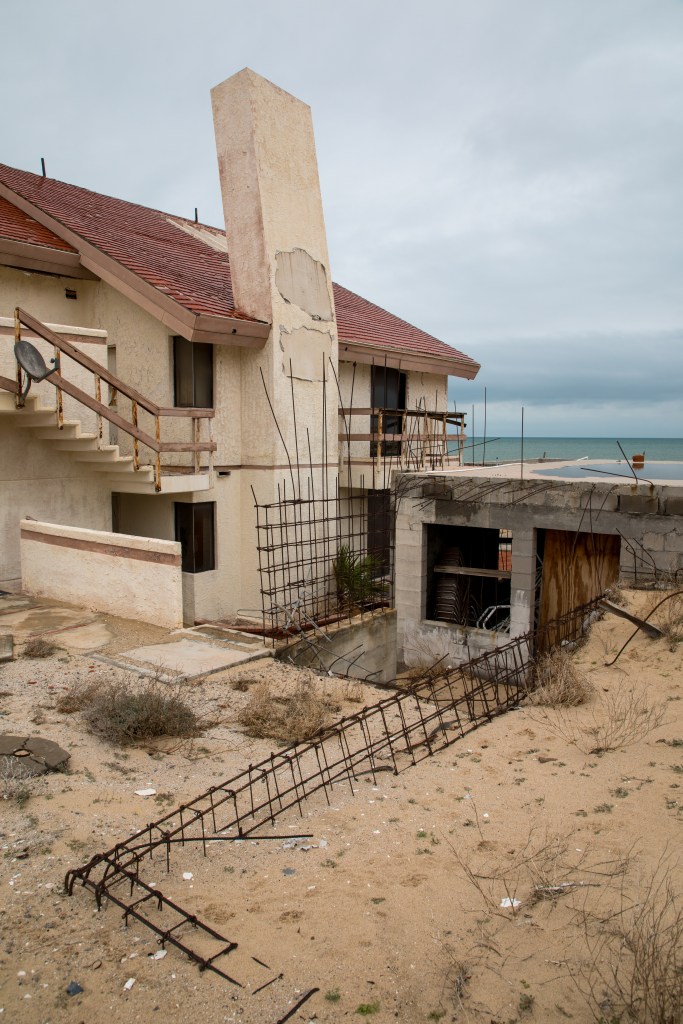
We followed the sign to an abandoned RV park on the Sea of Cortez. The place was maintained and run by a guy named Reuben who lived in a camper at the top of a hill. He was exceedingly friendly and talked to us for about 15 minutes (in Spanish, of course). I understood maybe a quarter of the general topics that were discussed between Janell and Reuben, but I still found myself laughing since some humor transcends language barriers. I’m pretty sure Reuben is just squatting on the property, but no one seems to care. We certainly didn’t.
The abandoned RV resort had a very post-apocalyptic vibe. We decided to stay for two nights. The first night, we opened up our $6 bottle of tequila and polished off the whole thing. That’s saying something for three lightweights who don’t drink much. It was a fantastic night.
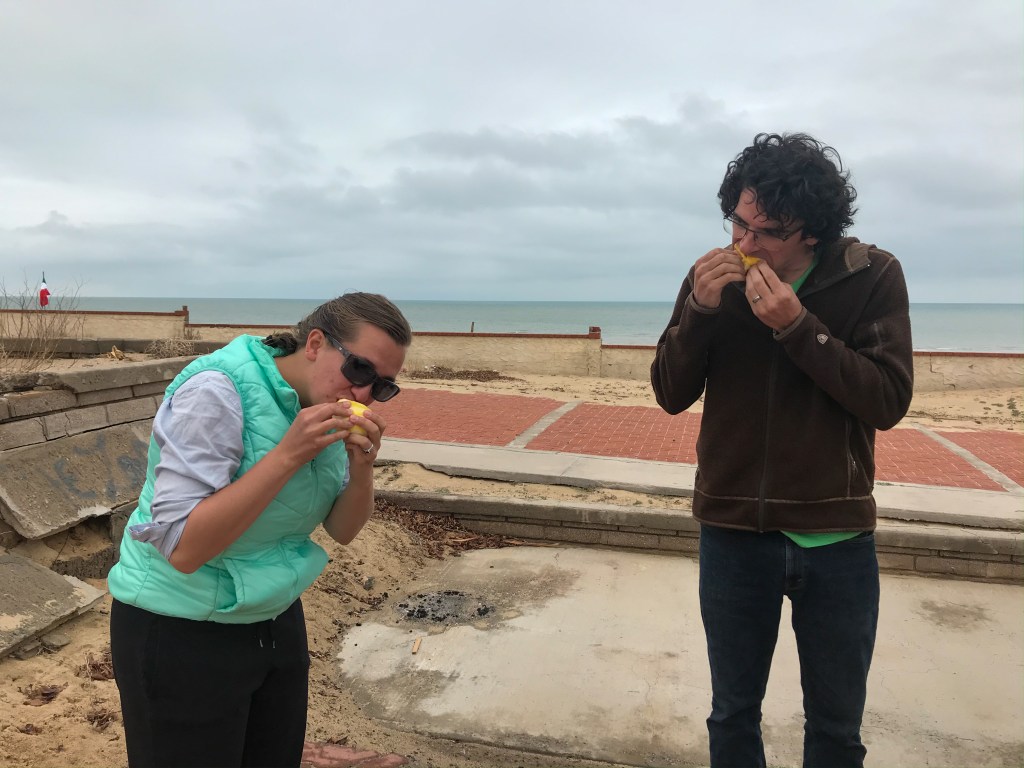
Janell taught us the right way to eat an orange – or rather – the right way to drink one. If you peel off the skin but leave the pith, you can cut a hole in the top of the orange and sort of squeeze the orange while sucking up the juice. It was yummy.
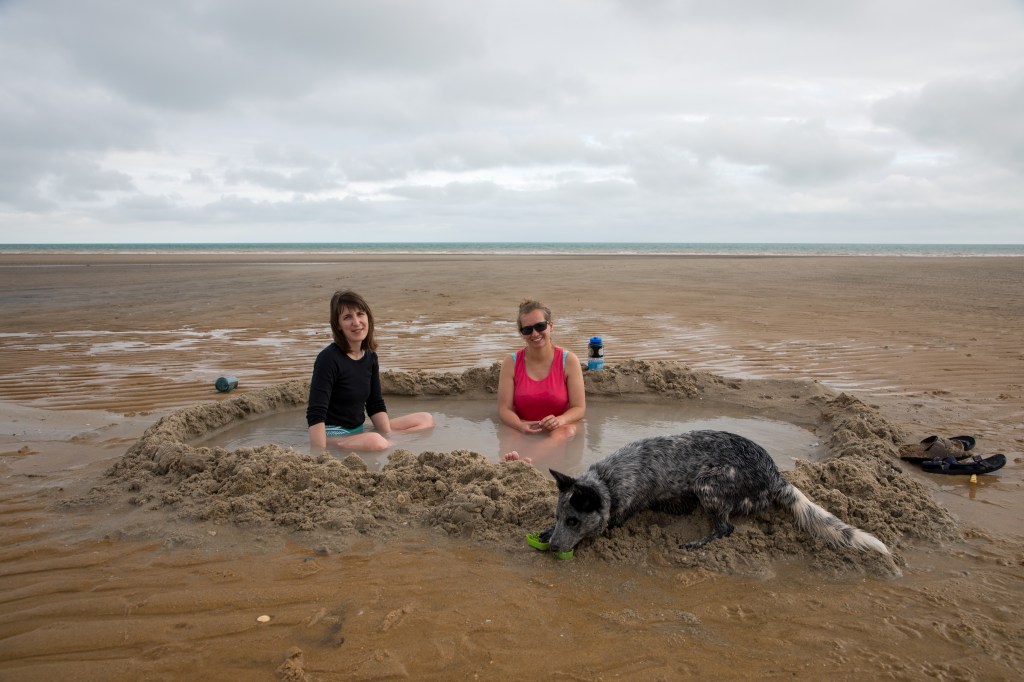
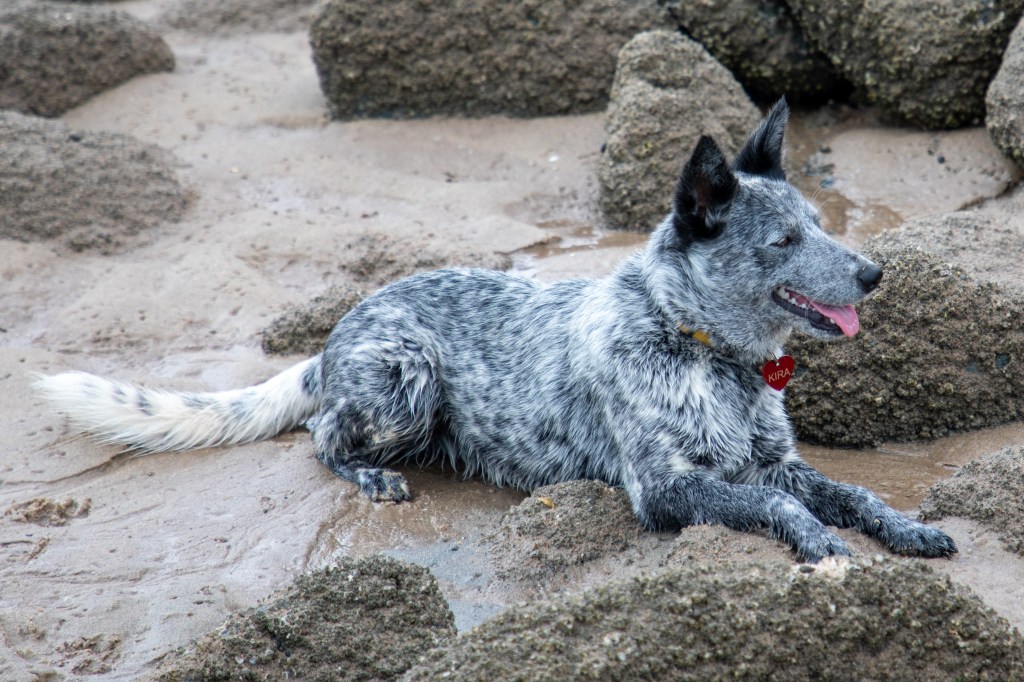
Not far up the beach from our campsite was a natural hot spring. It emerged from the sand, and was only accessible at low tide. We found it and walled it off to make ourselves a little hot tub. Kira the dog came and joined us. She mostly wanted to play fetch with a little green shovel and chase the birds. She was very friendly and smart.
Kira was completely deaf (her collar said so), and just started following us when we made our way back to camp. Her owner ended up coming down the beach on an ATV to pick her up and drive her back home. He said something to the effect of “She’s deaf and all she wants to do is play!”
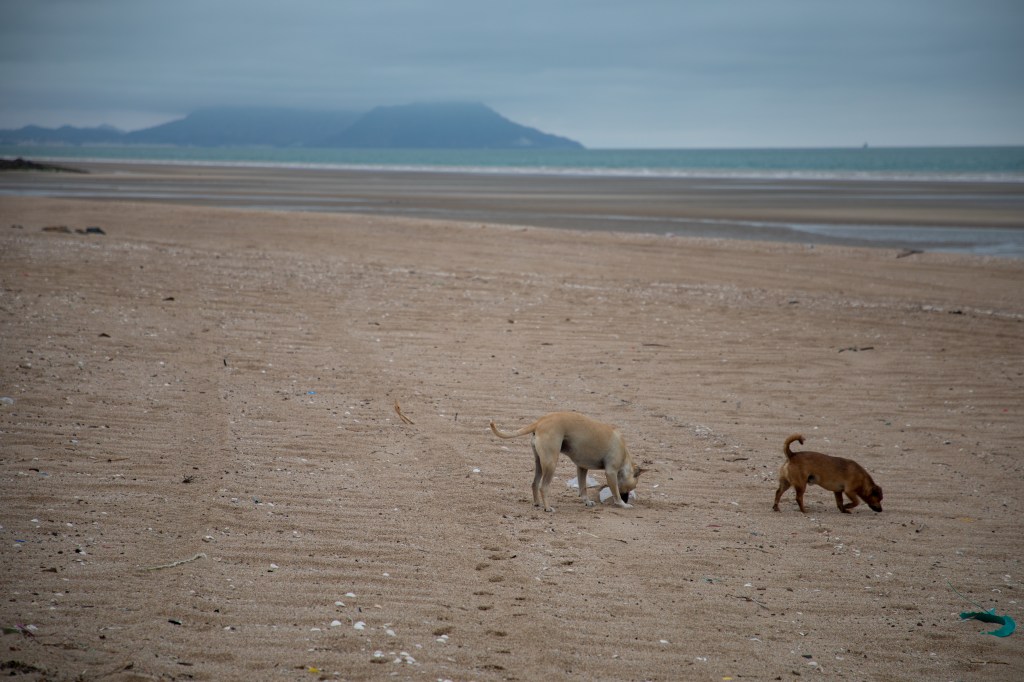
There are lots of dogs just out and about in Mexico. Many are owned, but some are just street dogs.
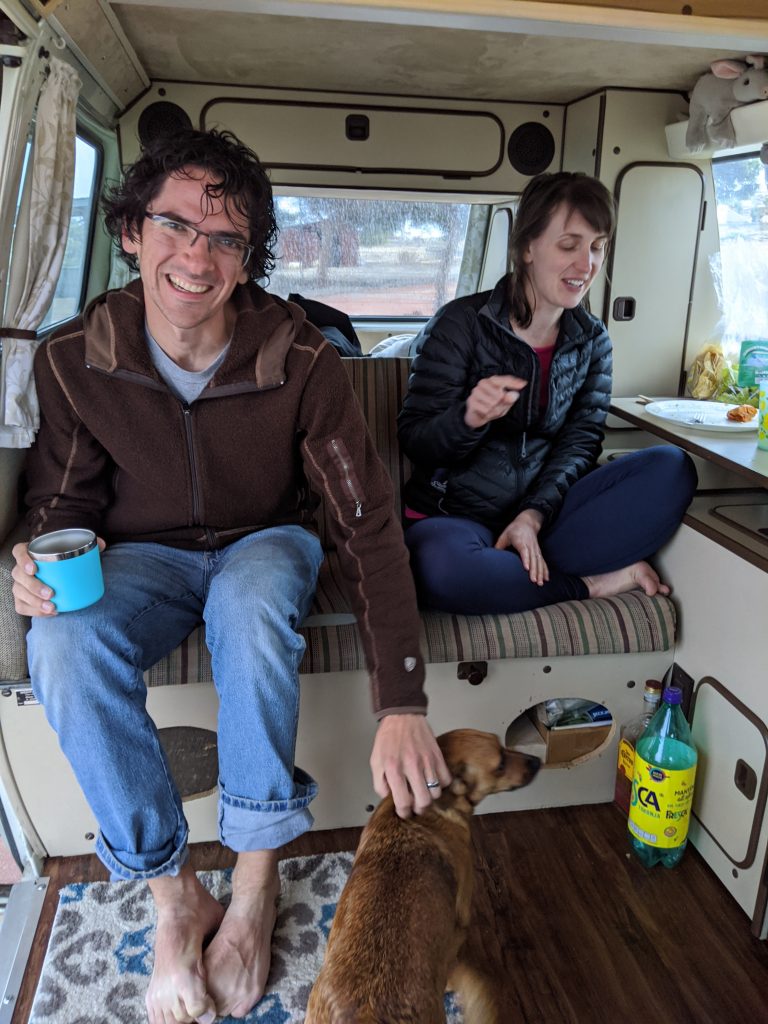
Janell wasn’t thrilled when a Mexican street dog came up into the camper.
San Felipe looks like it used to be a booming tourist hot spot but now… isn’t. The streets were quiet and the only people on the beaches were local fishermen putting in their boats. We swung through the town center on our way out of the abandoned RV park.
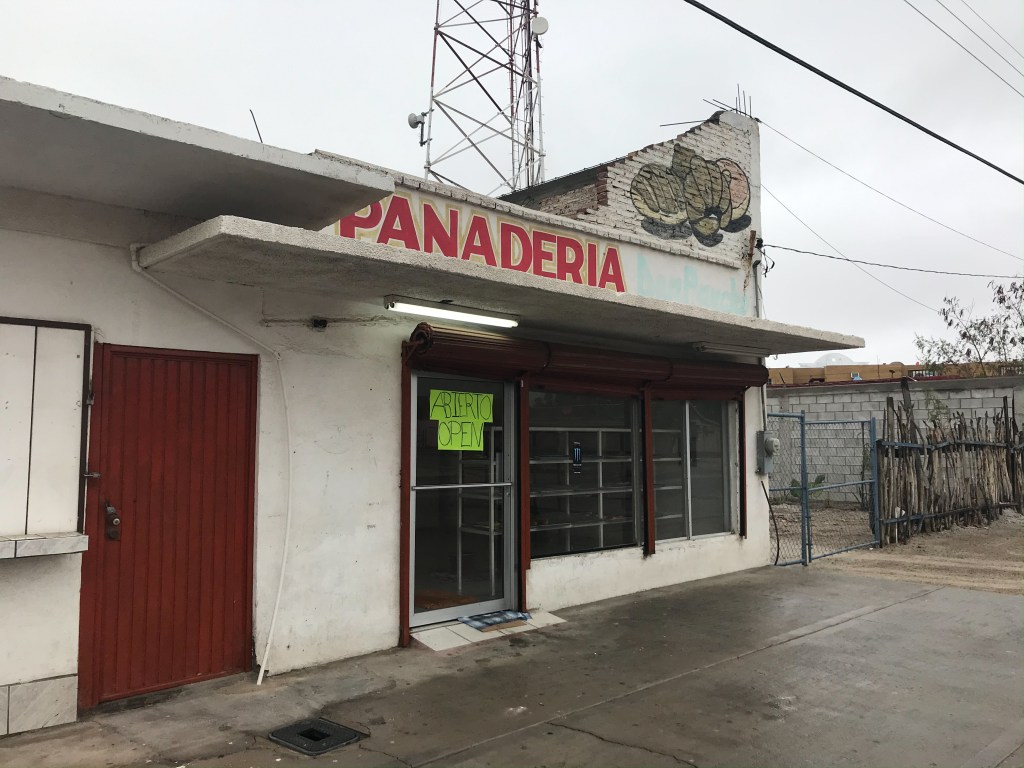
We stopped to get breakfast pastries at this panaderia. The roof was actively leaking through a light fixture in the ceiling which made me uneasy – I generally know that water and electricity don’t play nice. I hoped that the pastries would make up for it, but they were only OK.
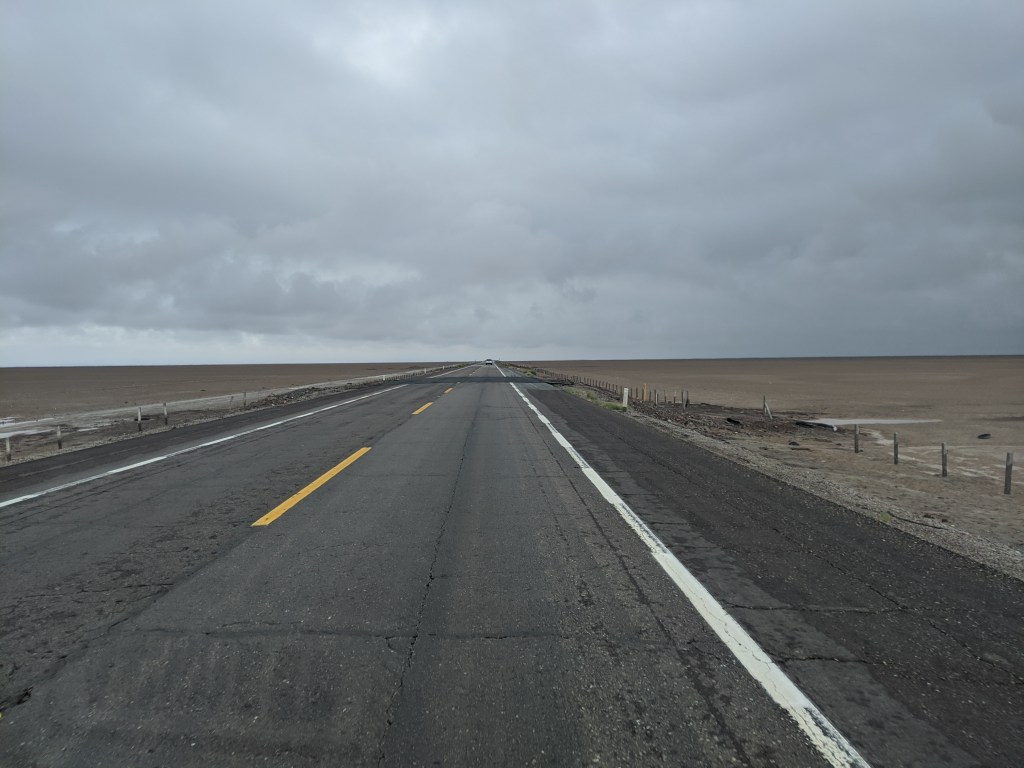
Leaving San Felipe, we headed North towards Mexicali. The roads were actually pretty nice here.
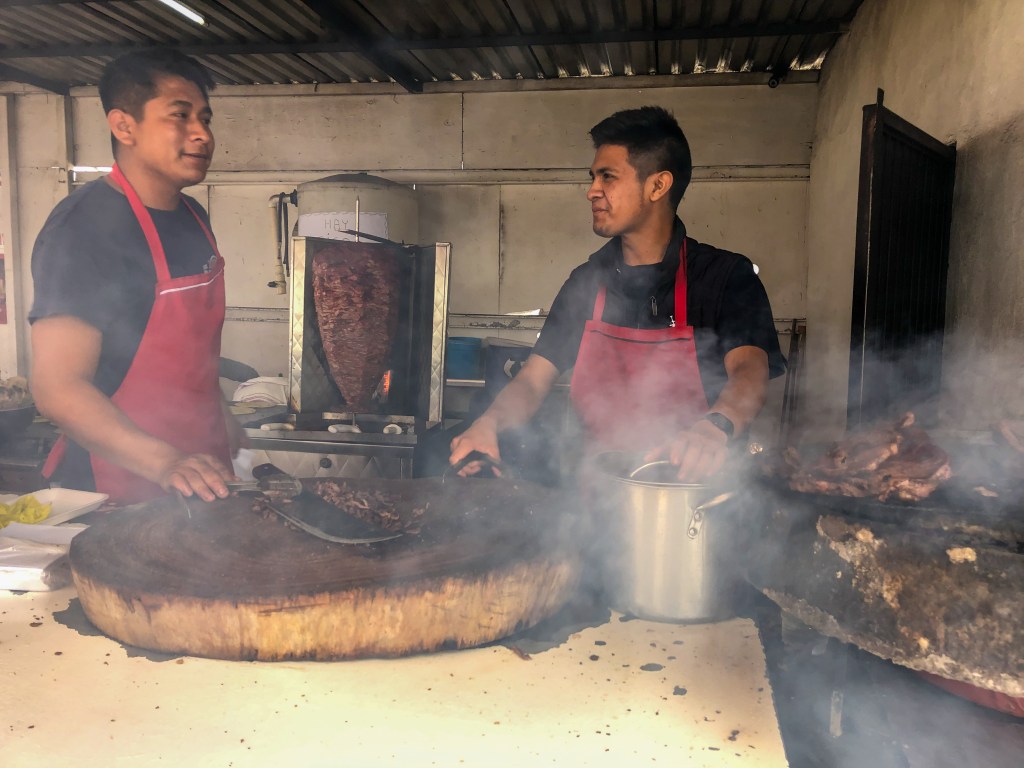
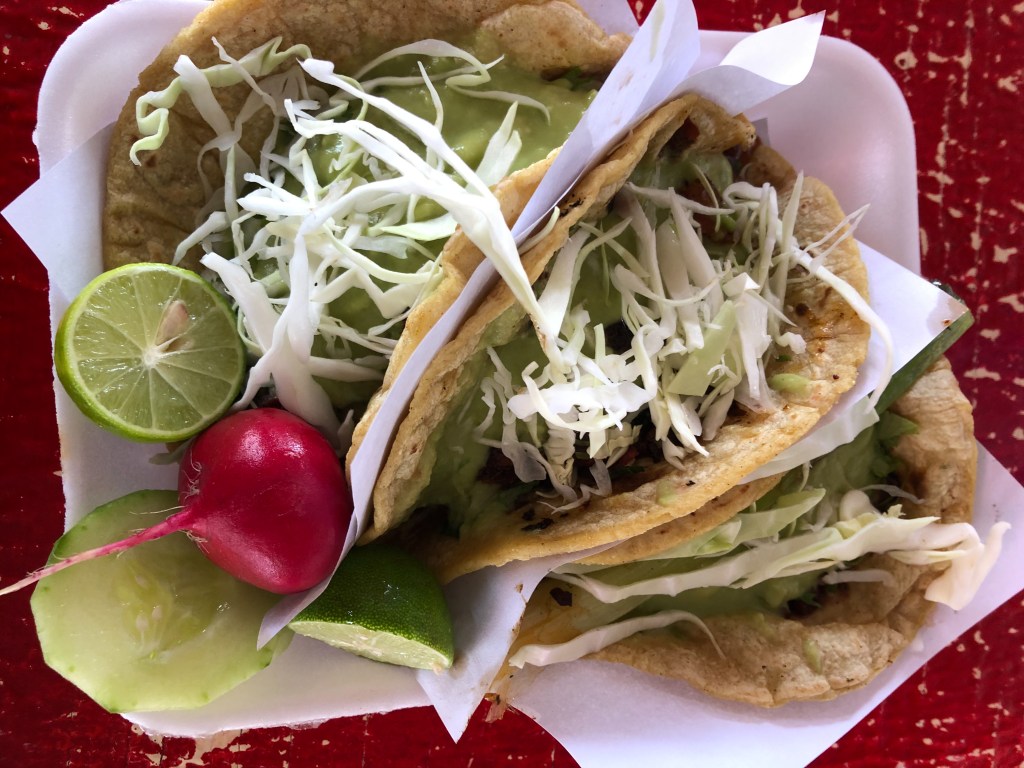
Janell saw a roadside taco place with a ton of locals around it. We U-turned to see what the hubbub was about. Good thing we did. I love that Mexico doesn’t have fast food on every corner. Rather, they have these little food shops with food that is better and less expensive.
Janell asked if she could take this picture and I think the guys got a kick out of it.
After staying at a campground that used to be a KOA, we drove into Tecate to do a little souvenir shopping before crossing back over into the United States. Abbey and Janell got some stuff for various small children.
The wall with Mexico, as seen from the Mexican side. It’s tall! It was about an hour wait to get back into the United States, which I guess isn’t too bad. The worst part was actually the road – there was a steep uphill portion and it was pretty miserable with the manual transmission and the stop-go waiting.
So, what are our overall thoughts?
The peak in Northern Baja tourism was about 15 years ago, and since then most places have fallen into decline and disrepair. Many campground water taps have turned salty. Only one campground we stayed at actually had hot water. Bathrooms anywhere are questionable. Litter is a problem. Drivers are reckless. Many places aren’t well marked or advertised and signs (if any) are ambiguous. Ethics can be questionable.
All that said, though, we had a great time. Baja is beautiful, the food is fantastic, the wine lovely, and the people friendly. An added benefit is the cost – it’s cheap!
Probably one of the biggest factors is the language/culture barrier. If Janell hadn’t joined Abbey and me for this trip, it would have been harder and probably less fun. You learn a lot from talking and interacting with the locals. Thanks for coming, Janell! Also, thanks for making all the young army men at the military checkpoints envious – A guy in a VW campervan traveling through Baja with two pretty ladies!
In Phoenix, I put down my camera and spent time hanging out with the best of friends. Greg and Erin flew out from Columbus, and we all stayed with Chris and Kelley. We went on various escapades: played games at an arcade bar, rode on a real steam-driven train, visited the Frank Lloyd Wright Taliesin West compound, played with small children (Chris and Kelley’s, not random ones), and we even had time for board and video games. Good times. I miss my friends already.
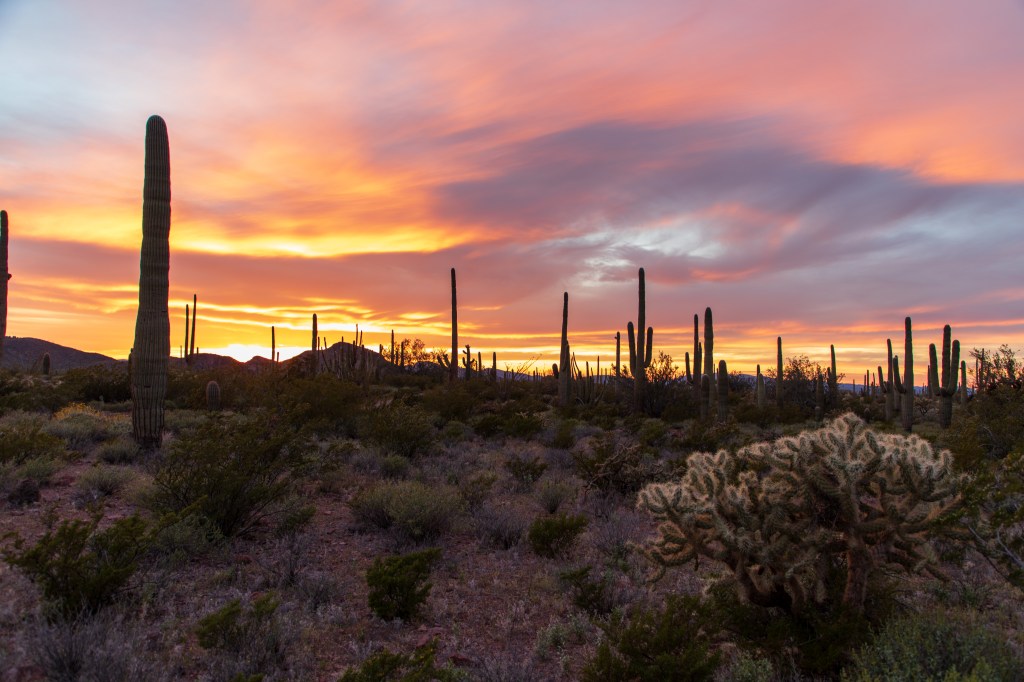
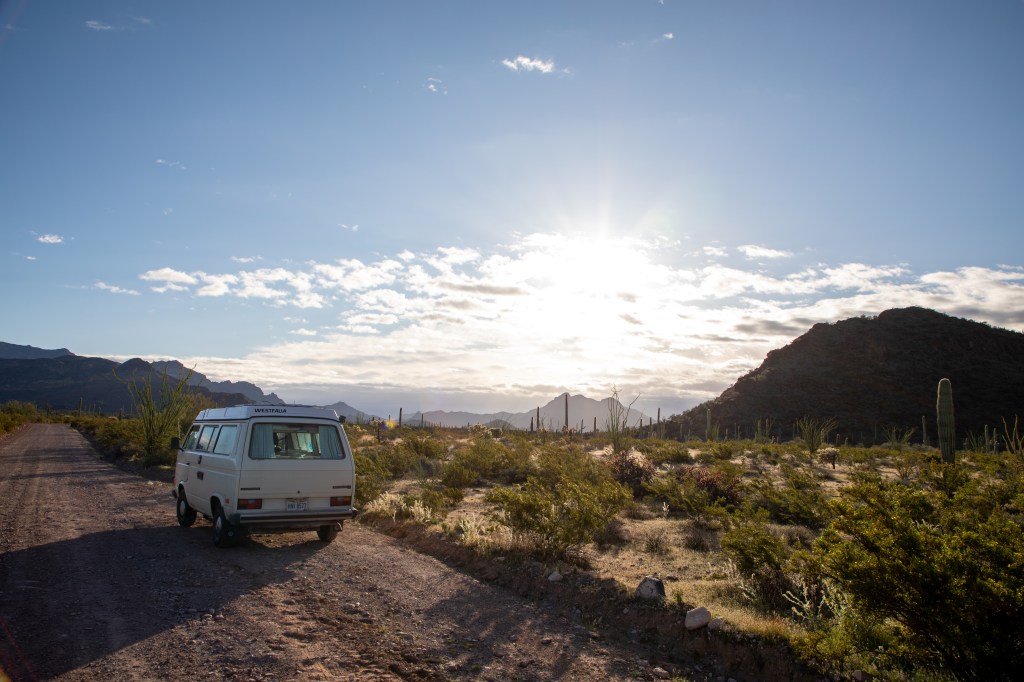
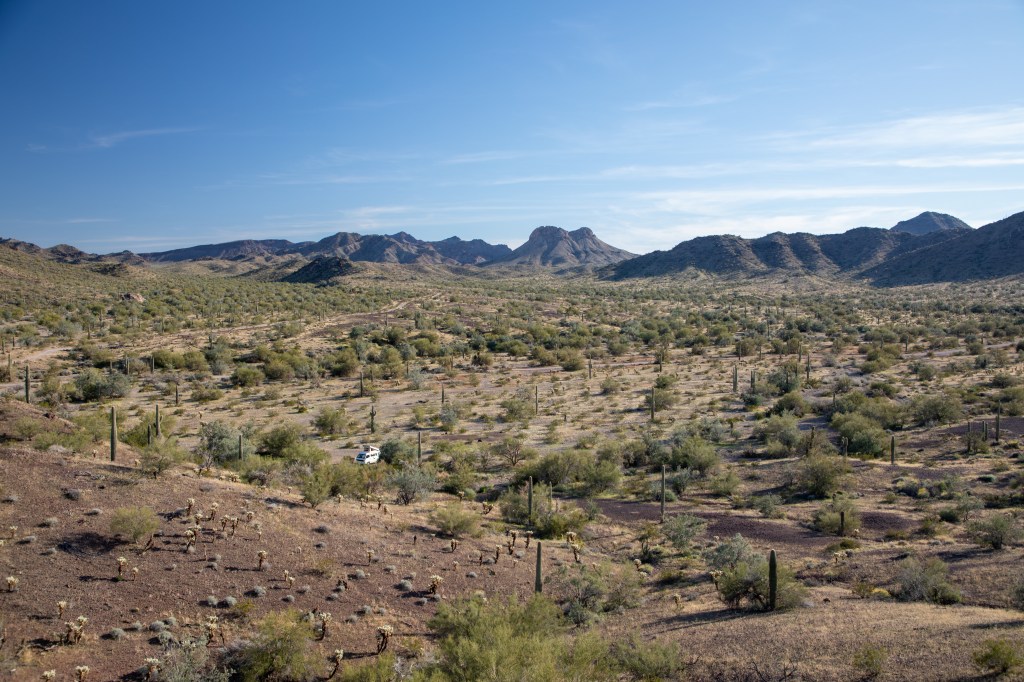
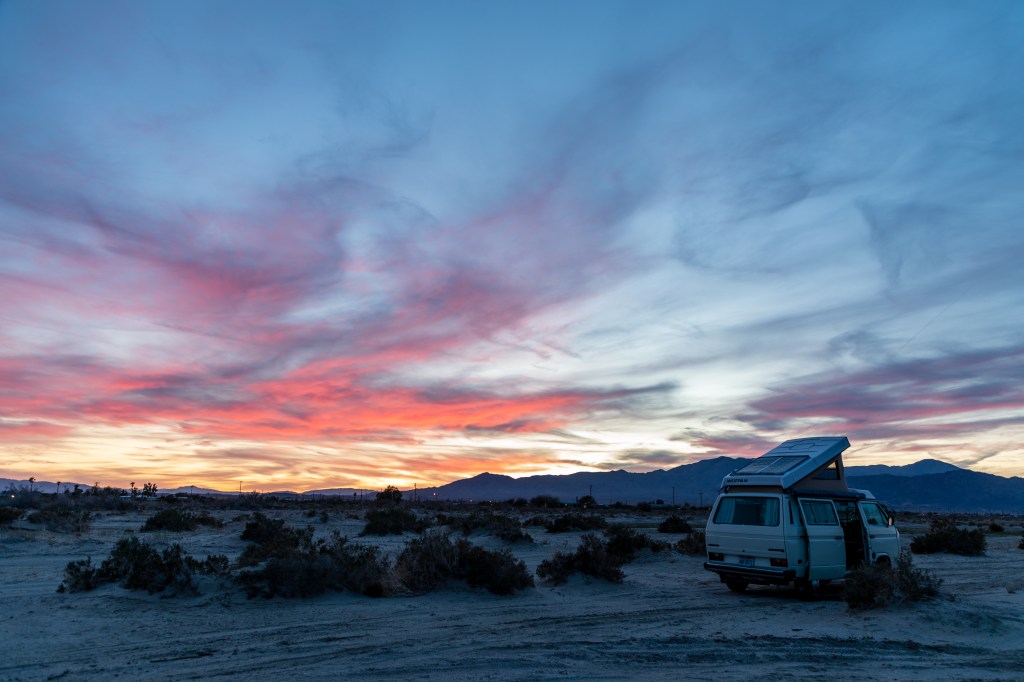
After Phoenix, we headed West a short distance to spend a night on BLM land in the Sonoran desert. Flowers were starting to bloom, wildlife was coming out, and we had a lovely sunset. There was no one else in sight, making it a pretty sweet spot. At night, we heard both Great Horned Owls and Screech Owls – confirming this desert is very much alive.
In the picture below you can just make out Evelyn.
After the BLM land we continued West to Joshua Tree National Park. The park is unique and beautiful, and like many other National Parks, it’s pretty obvious why it was given the designation. In the Southern region of the park you’re still in the Sonoran Desert, but as you climb North, you enter the Mojave. This desert is brimming with wildlife: we saw birds, hawks, lizards, and dozens of squirrels, chipmunks, and rabbits. Joshua trees are everywhere, too, but they’re actually a type of yucca, not a tree.
Being California, there were lots of signs warning you that cacti are sharp and pokey. There was even a spine removal kit stationed at the front of the trail into this Cholla Cactus forest.
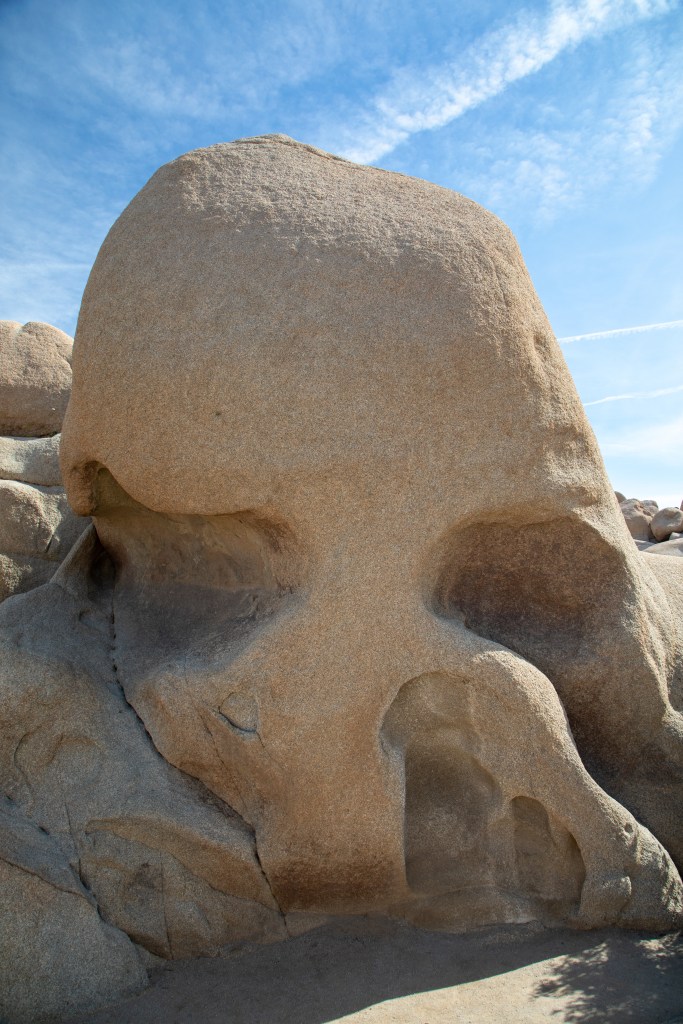
Skull Rock is a popular spot in the park. It’s right next to the road so there are lots of people around, but it’s still worth seeing.
It’s been warm enough that reptiles are starting to come out more, like this whiptail lizard.
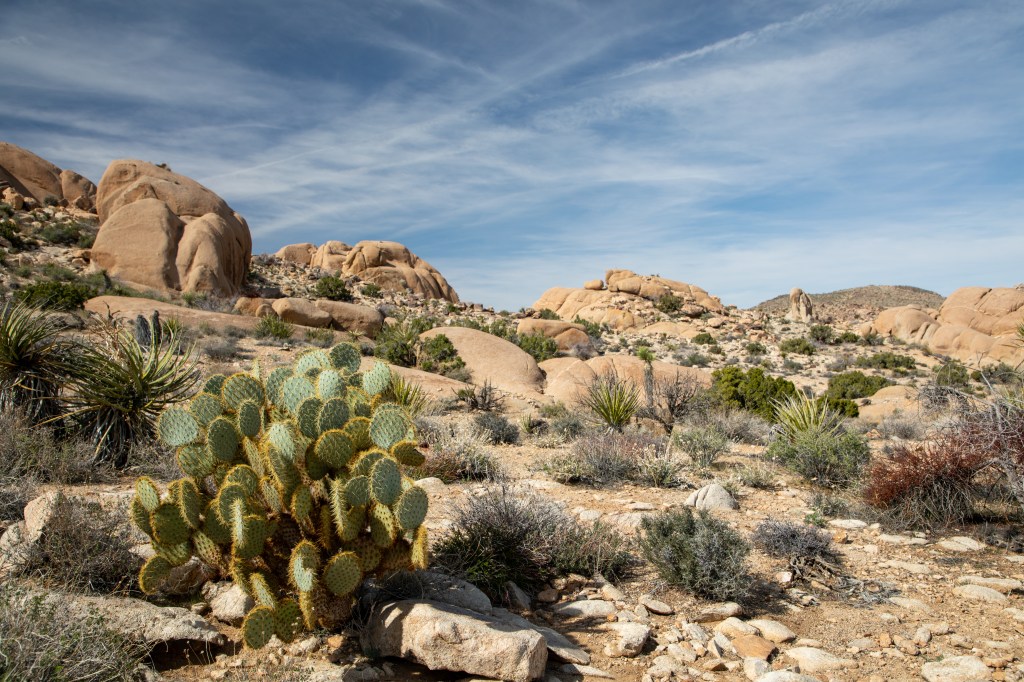
Prickly Pear cactus is far less common here, but you can still find them if you look.
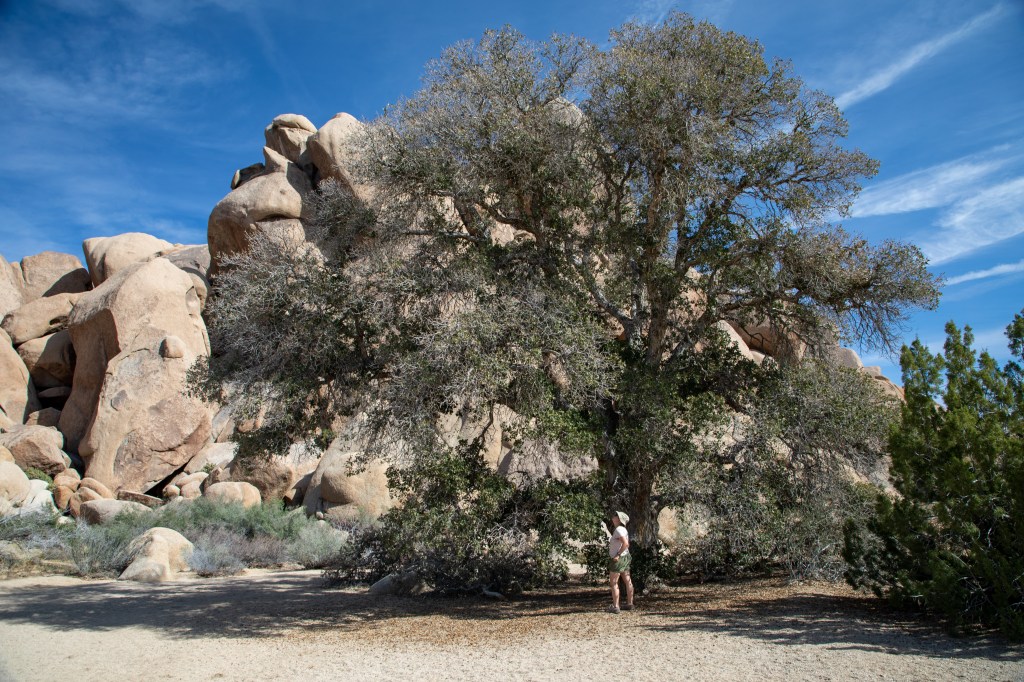
Abbey and I had intended to camp in Joshua Tree, but all the campgrounds were full. We were surprised by this since it wasn’t even 3PM on a Thursday. As we continued on in the park, though, we started to see just how popular of a park this is: hoards of people stopped at the more popular easy-to-see sights, full parking lots, and people stopping in the middle of the road because they saw a squirrel. Joshua Tree has the unfortunate problem of being too close to Los Angeles, Phoenix, and San Diego. It’s still easy to enjoy the solitude of the park, though – just hike 1/2 a mile away from the parking lots and you have it to yourself. Abbey and I hiked the short “Live Oak Trail” and were stunned to find Live Oaks in some of the more sheltered valleys of the desert.
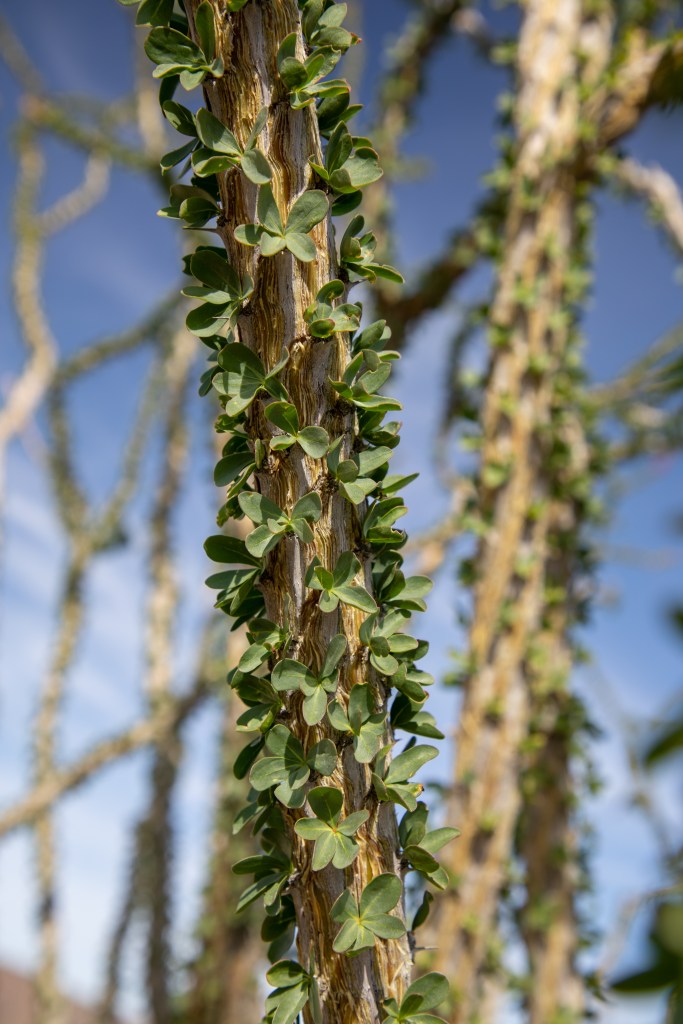
Ocotillo can grow and drop leaves several times a year – it all just depends on water. They were leafing out when we visited Joshua Tree.
Not sure where we would camp, Abbey and I left Joshua Tree and headed Southwest towards the Salton Sea. The drive was beautiful, and Evelyn was flying since it was all downhill – in fact, the valley containing the Salton Sea is about 200 feet below sea level.
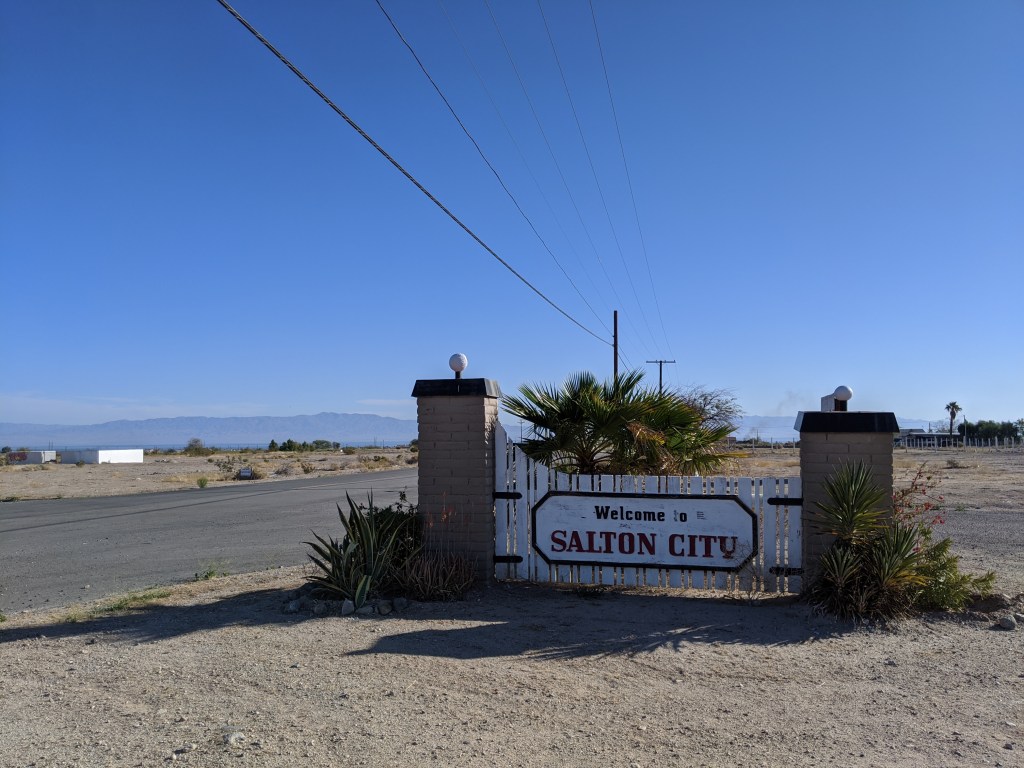
On the Western side of the Salton Sea is Salton City, a failed attempt at developing the region into a massive resort town. Originally designed and plotted for 40,000 people, the town has roads, street signs, water, and electricity run to thousands of lots – but few actual houses. Of those, many are abandoned. We drove into the deserted city, into an abandoned RV park, and out onto the beach of the Salton Sea.
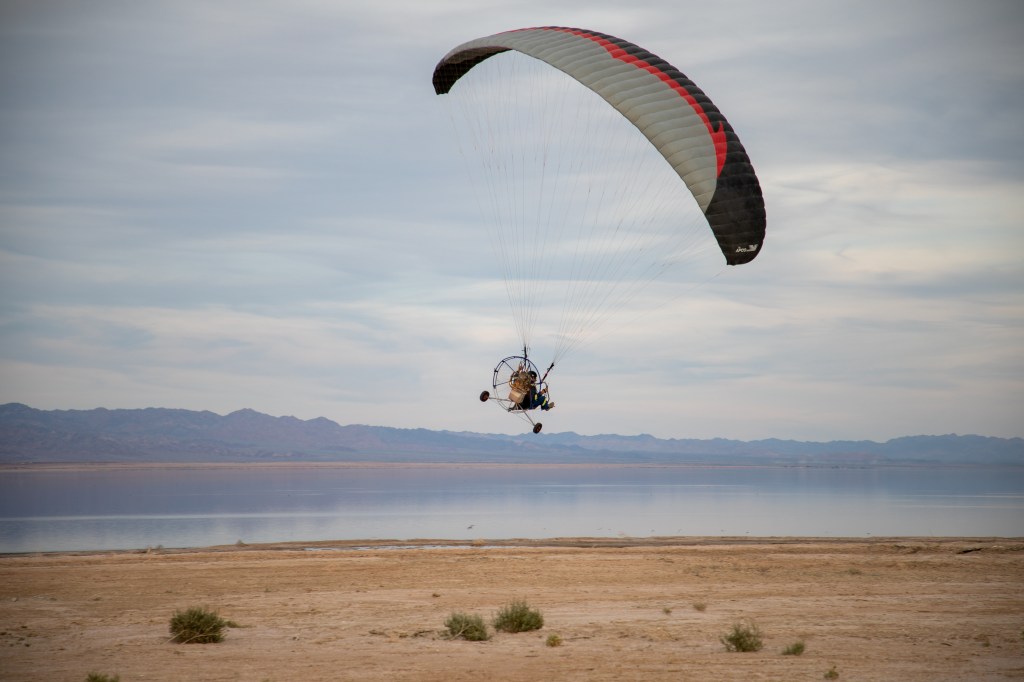
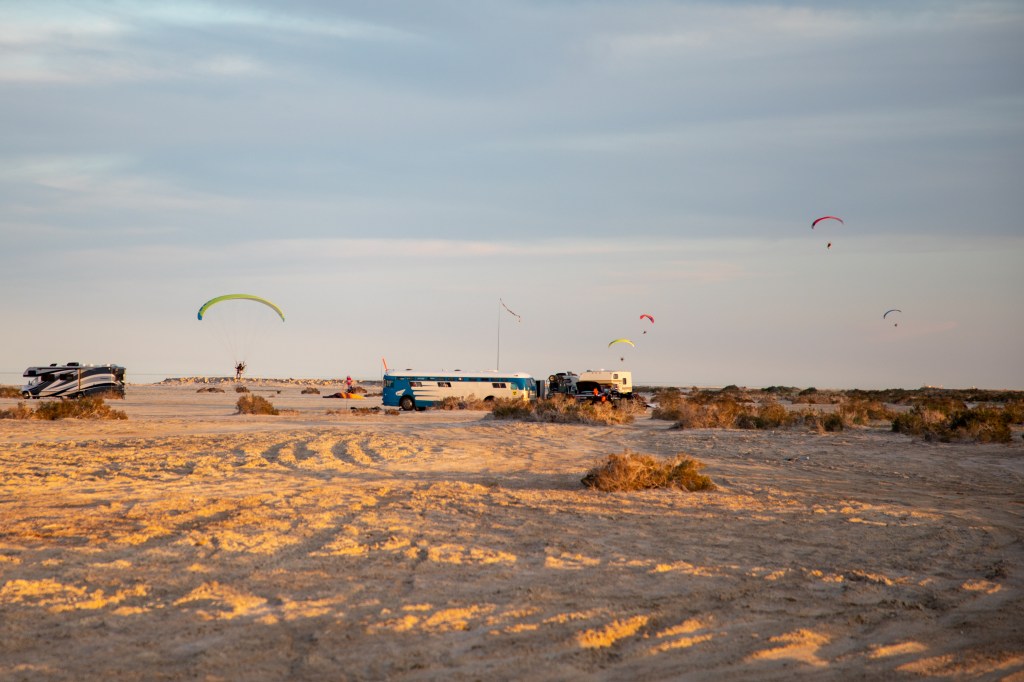
Out on the beach there was a small group of campers that were there to fly ultralights. Abbey and I set up camp on the beach and were soon greeted by the ultralights, who curiously flew over to see the new campers.
The ultralights were doing circles and stunts right around us, waving and smiling the whole time. Abbey and I were giggling with how surreal everything was.
We enjoyed the Salton Sea so much we decided to stay two days. We walked up and down the beach, read books, and relaxed. It was a great experience.
After the Salton Sea we drove into San Diego, where we will be picking up our friend Janell from the airport and going down into Mexico!
I was going to title this post, “Stuck in Albuquerque,” but that had too negative a connotation. Abbey and I had the pleasure of exploring Albuquerque and the surrounding areas for two weeks while we waited for Evelyn to be fixed. We were very fortunate that my cousin and his wife live in the city, who were more than willing to share their one bedroom apartment with us.
Side note: I now know how to spell Albuquerque.
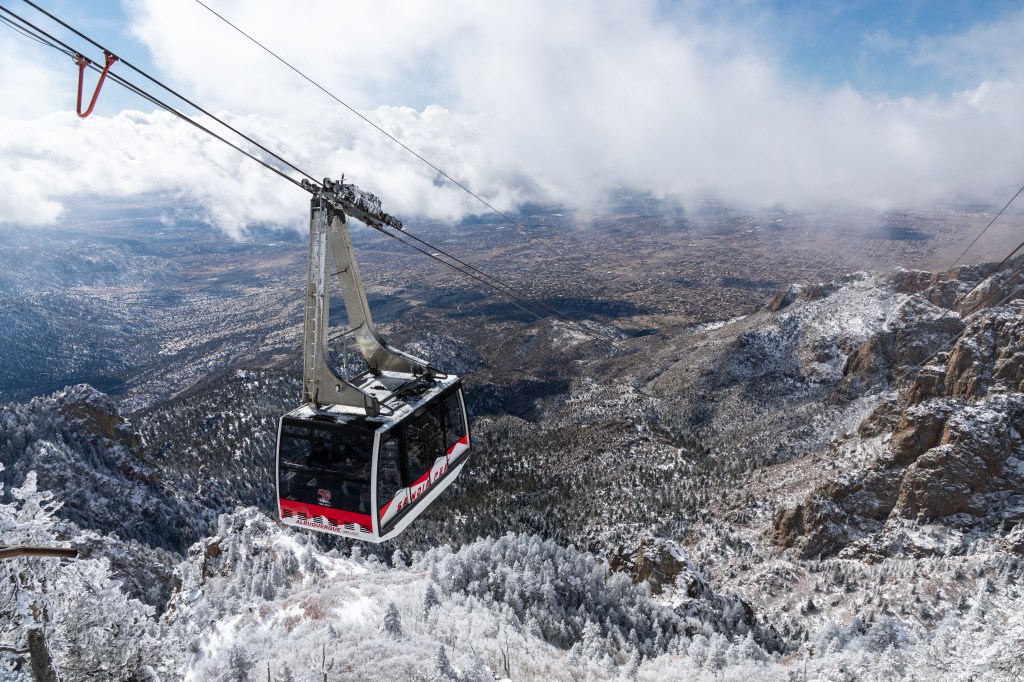
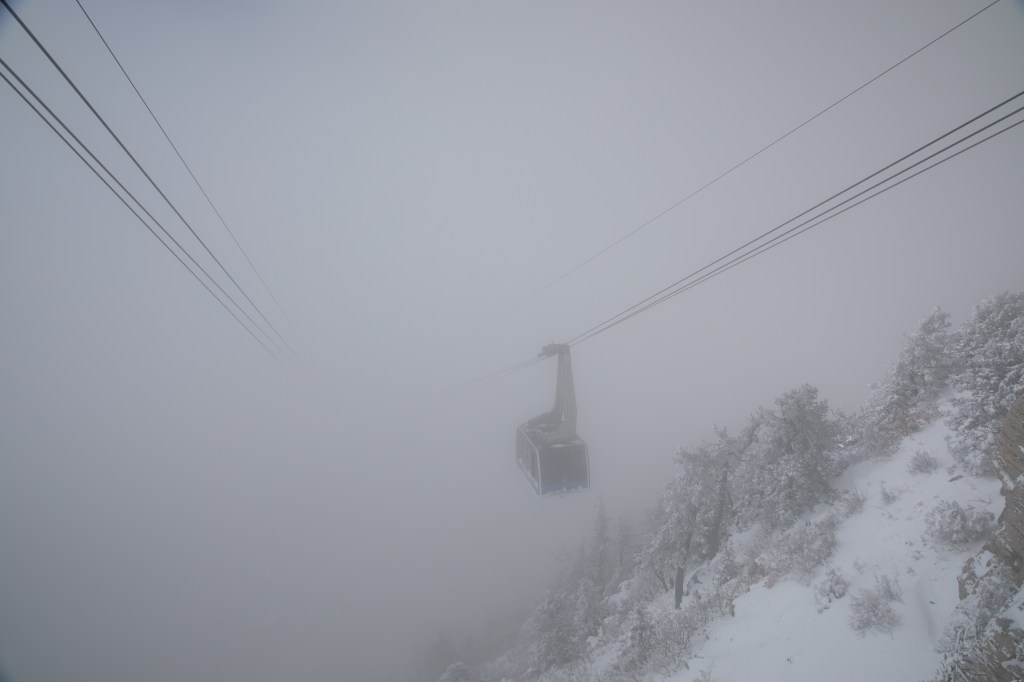
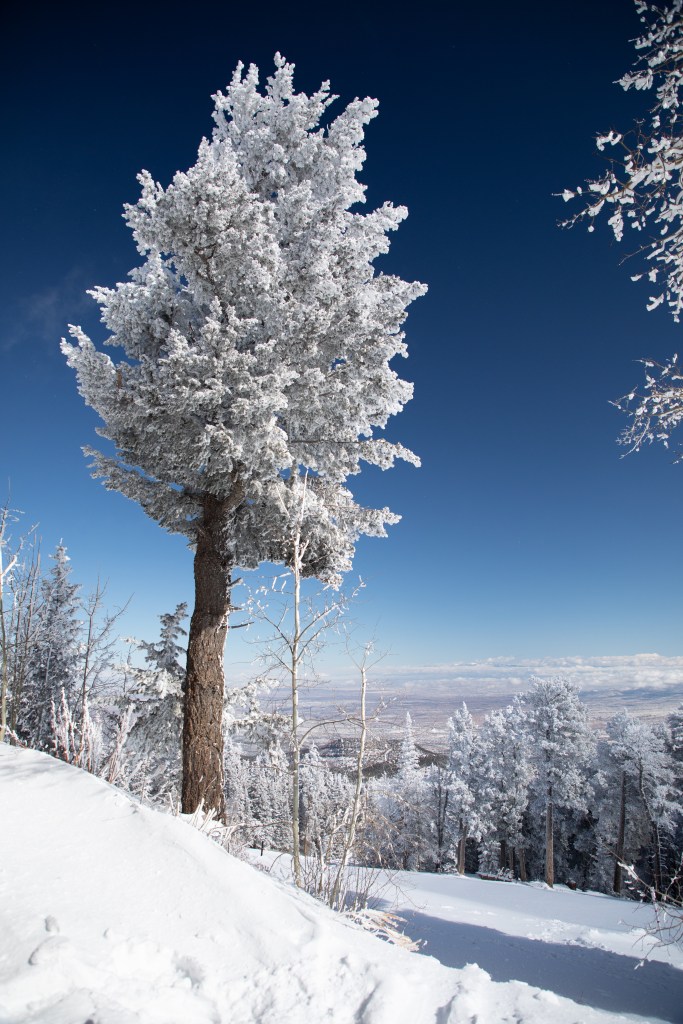
The Sandia Mountains loom over Albuquerque. More than just an easy landmark for navigating in the city, these mountains are home to great hiking, great views, and even skiing if you’re into that sort of thing. We chose to take a tram up the 10,000+ ft ridge the day after a snowstorm. It was 15 degrees up there, and clouds were rolling in and out so quickly that the views were radically changing. I took the following two pictures within minutes of each other.
We hiked a trail that went along a ridge to an old CCC hut. We were the first ones on the trail since the fresh snow, so we had the pleasure of 1) trying to figure where the trail went, and 2) wallowing through several feet of snow. At one point I kicked something with my shoe only to realize it was the very top of a trail sign post.
We also spent time in some of Albuquerque’s Open Spaces. This includes arroyos, river banks, and foothills. Sandhill Cranes were everywhere – enjoying their winter before returning to their nesting grounds in the arctic.
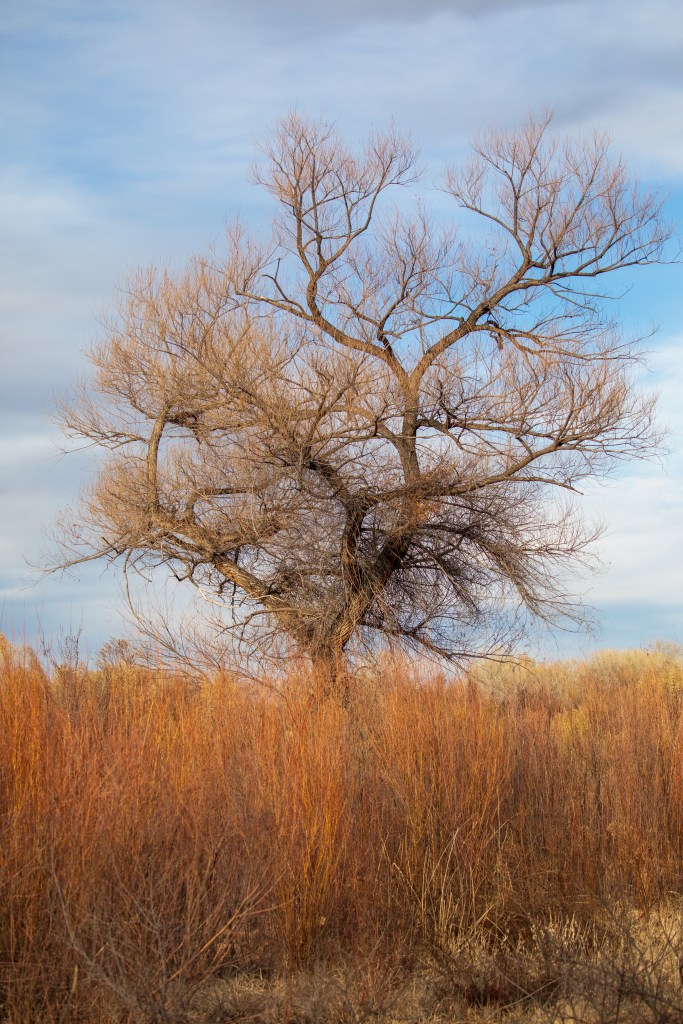
Gnarly old Cottonwoods cover the Rio Grande river basin. It’s an unexpected habitat in the West. Supposedly there are porcupines living here, but I only saw their poop.
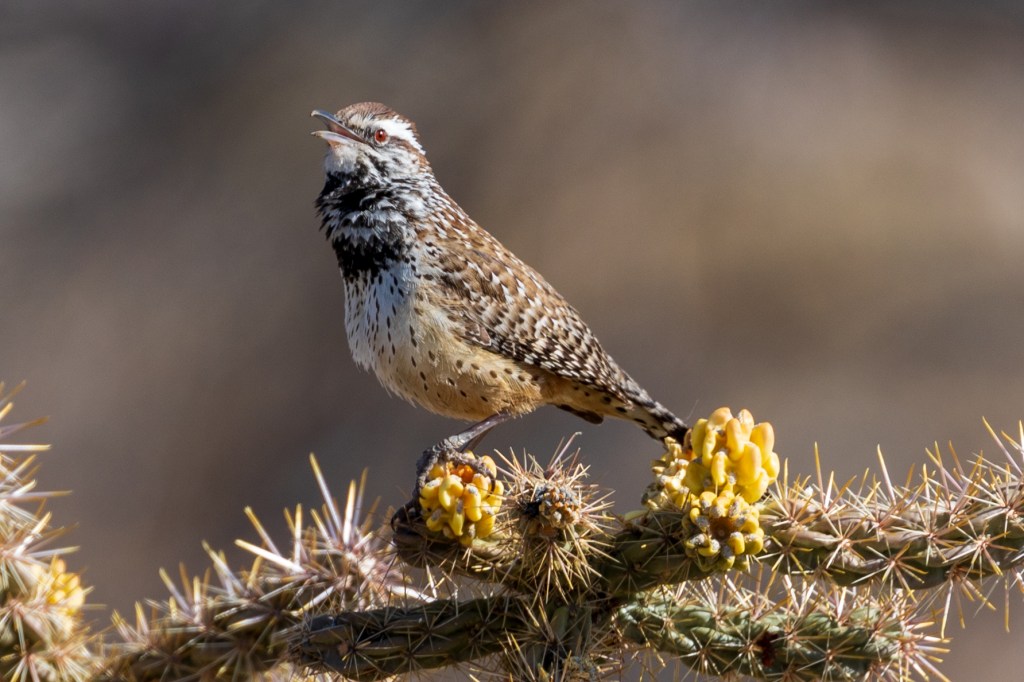
Cactus Wrens are very common out here, but I think they’re really cool birds and I like to stop and watch them. We saw two calling back and forth to each other.
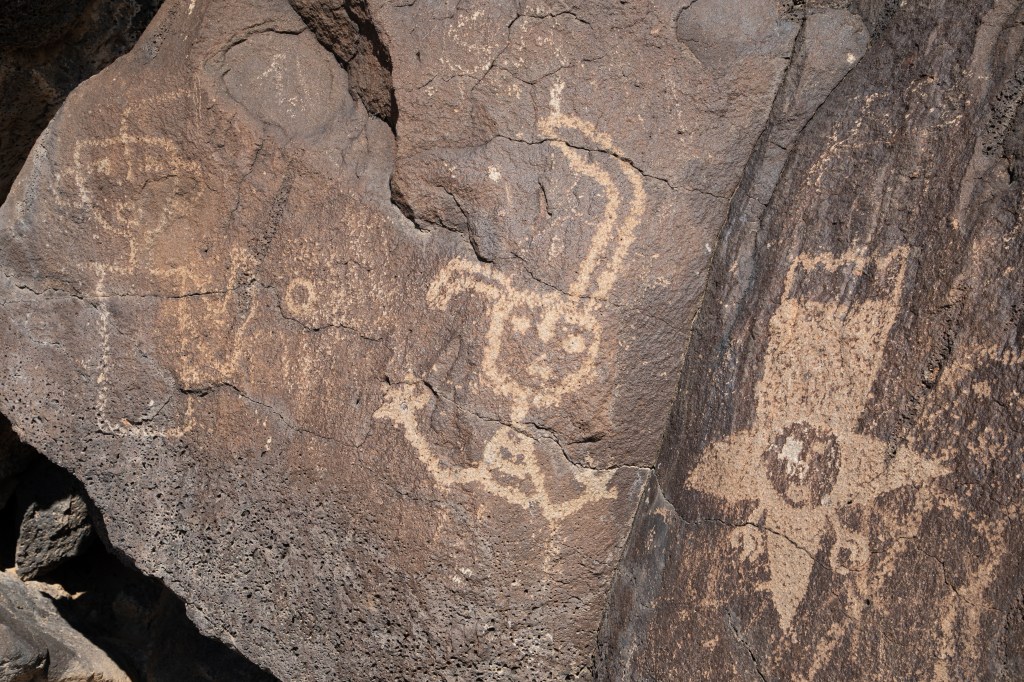
Petroglyph National Monument is just West of Albuquerque. Many of the images look like robots or aliens or snorks or a combination of the three. Sometimes I try to imagine the person that carved the image 600 years ago, and find it fascinating that I’m now standing in the same spot.
If you want to know the details of the Evelyn saga:
After we dropped Evelyn off at a shop late Friday night, she sat until they had a chance to look at her on Wednesday, at which point they said, “Oh, we don’t have an exhaust sniffer, you should take it to this other shop.” Ugh. Why didn’t you say that in the first place.
The second shop was likewise overbooked and couldn’t look at it until Saturday, at which point they found a badly worn distributor, an out-of-spec AFM, and a couple vacuum leaks. I had to hunt pretty hard to find the parts. I managed to track down the correct distributor (albeit European-spec), but the AFM is unobtanium. The shop put in the distributor and fixed the leaks. They tweaked the AFM to the point that Evelyn is running well, but not perfectly. Abbey and I decide to press forward towards Phoenix, two weeks to the day after we arrived in Albuquerque.
Meanwhile, I did more research on the AFM (a Bosch unit) and found that a Renault Fuego from the early ’80s has almost the same Bosch part number. It also looks identical. They’re also only $30, so I bought one and had it shipped ahead of us to Phoenix. When we get there I’ll decide if I can use it, or at worst scavenge parts off it to repair my damaged one.
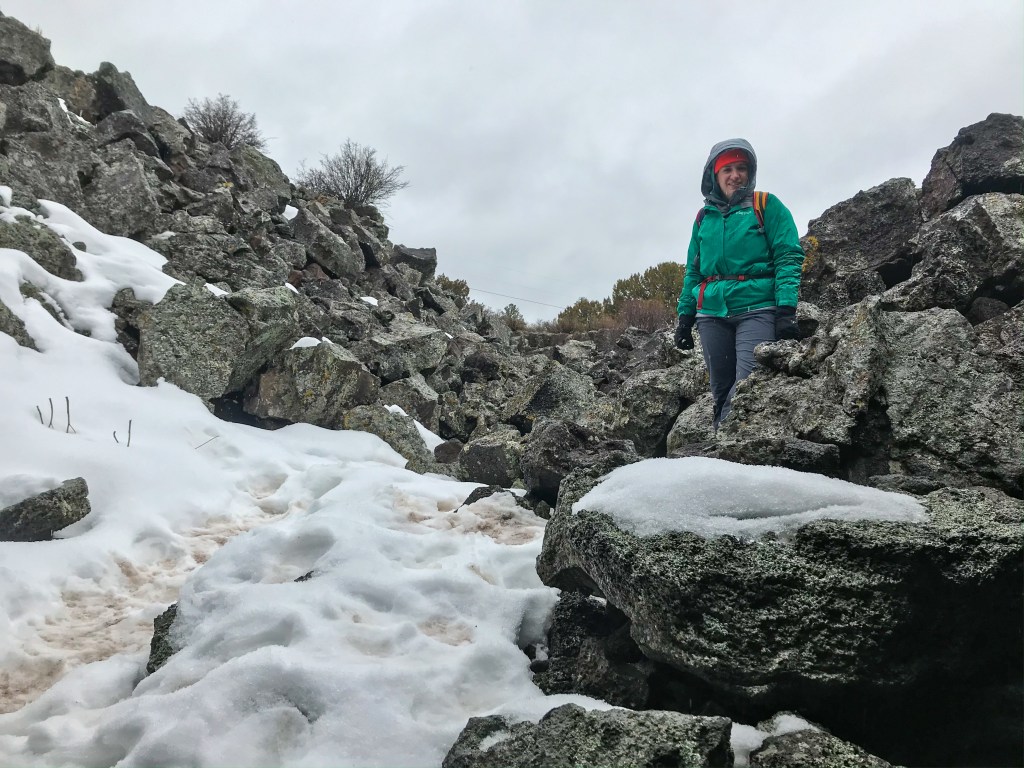
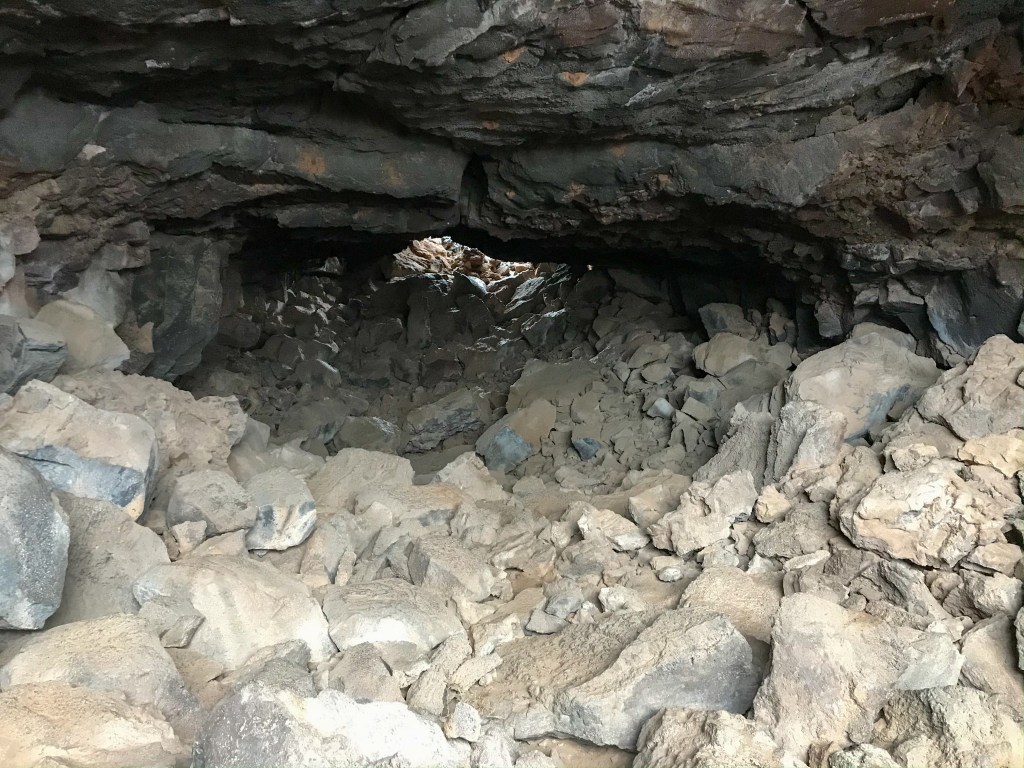
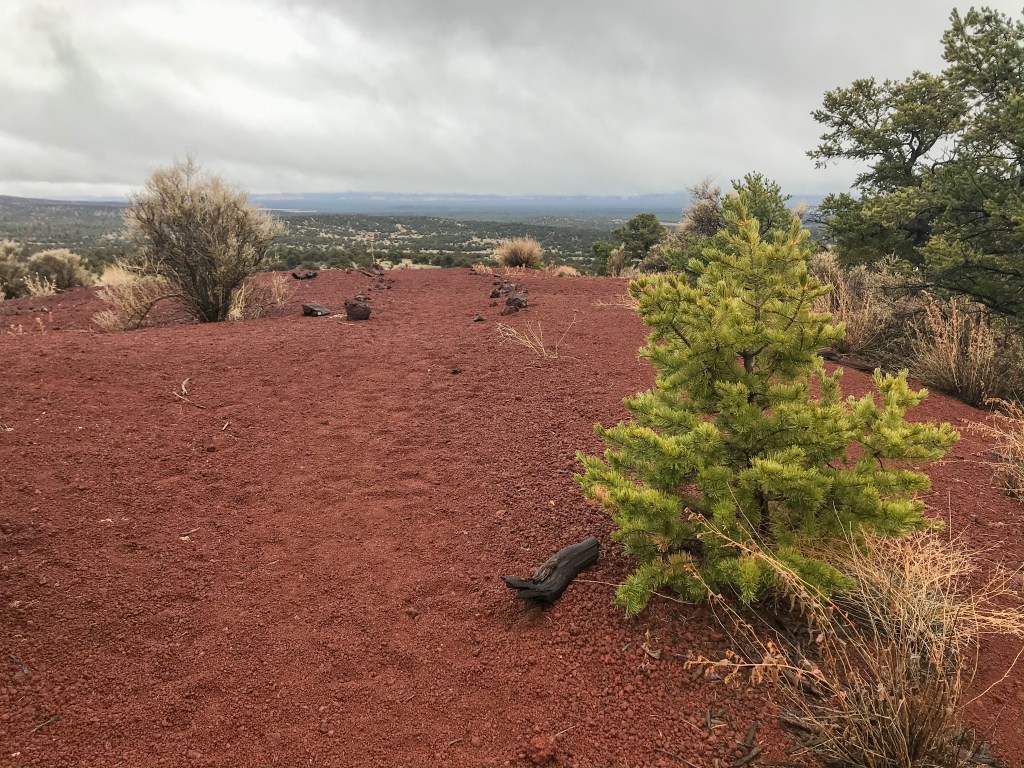
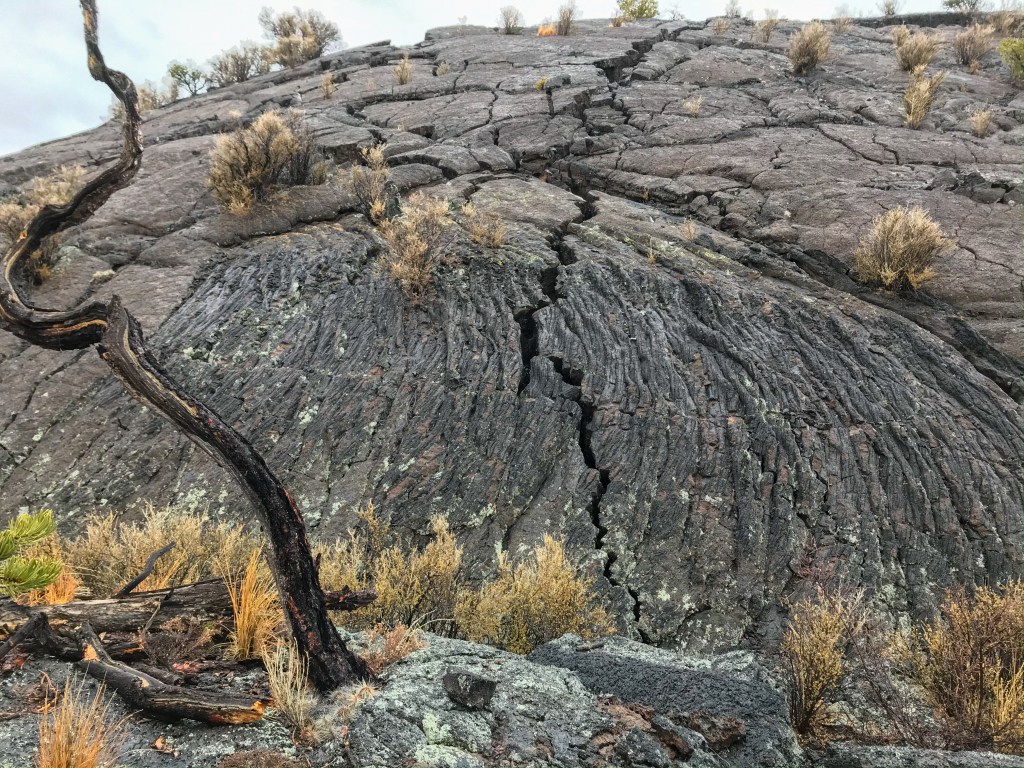
After we left Albuquerque, our first stop was El Malpais National Monument for a couple days. The area is unique because of volcanic activity; the most recent being about 3500 years ago. You can hike on the lava fields, around cinder cones, and through lava tubes!
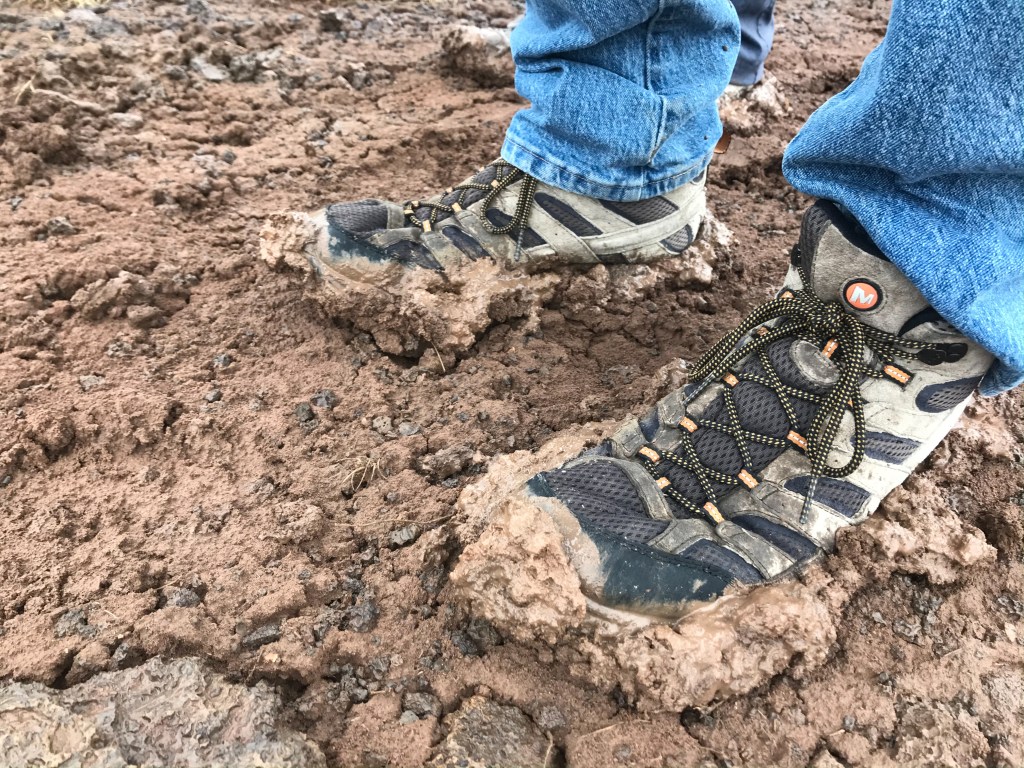
It was cold, rainy, and muddy when we were here, but we still loved the varying landscape. A lot of it reminded me of Volcanoes National Park in Hawaii (geeze, I sound like such a snob).
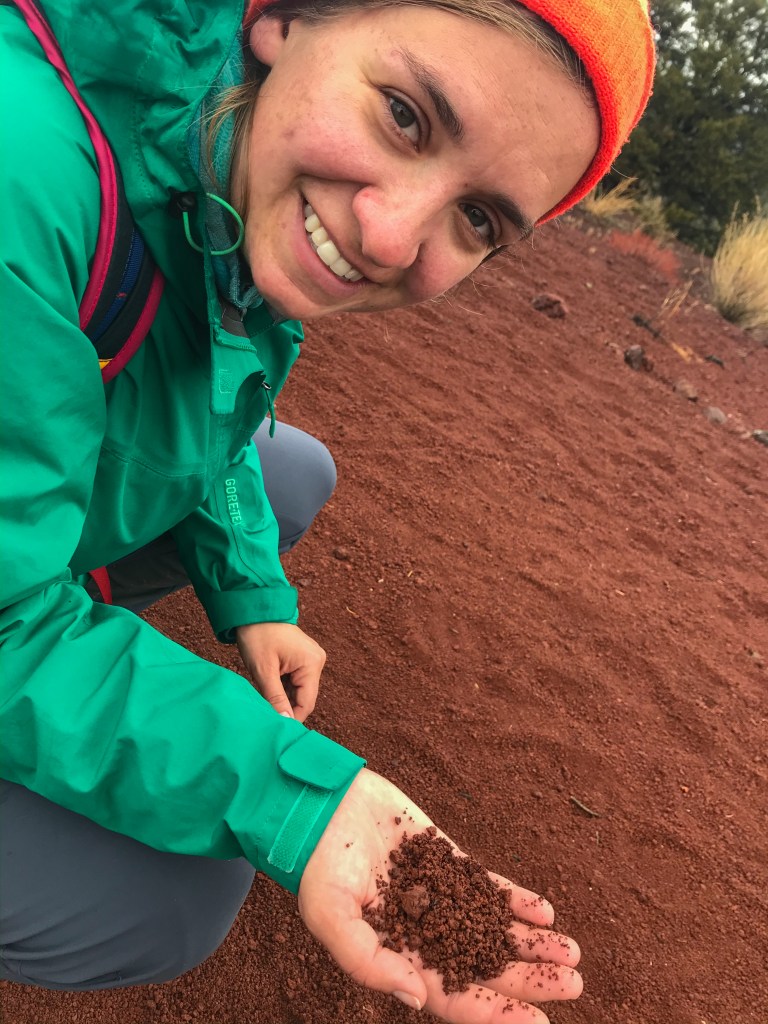
Abbey the geologist really enjoyed this park too!
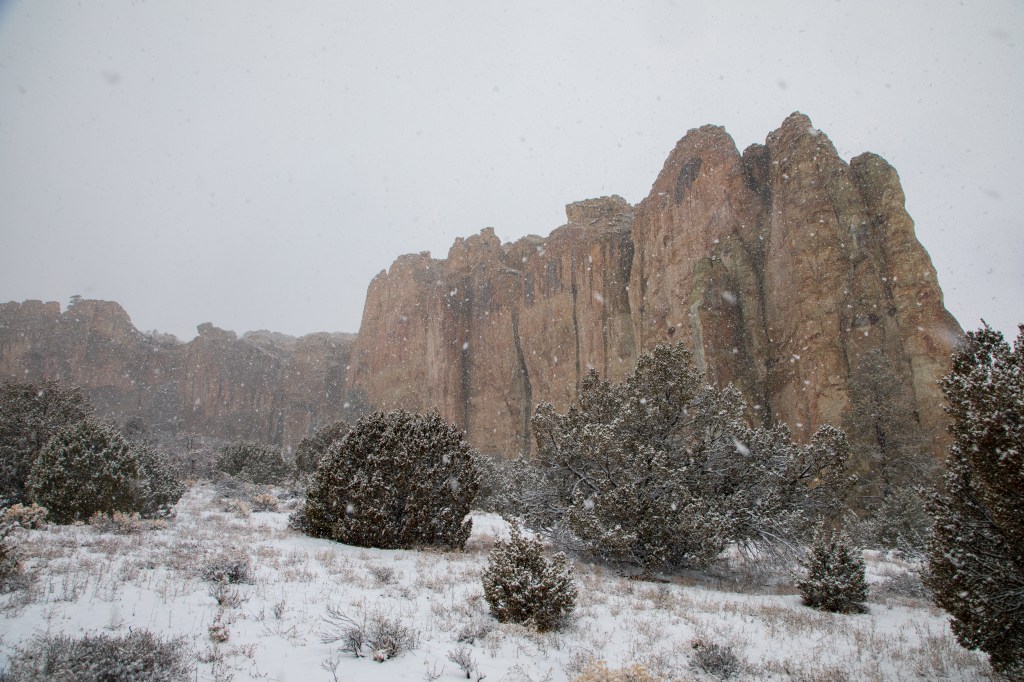
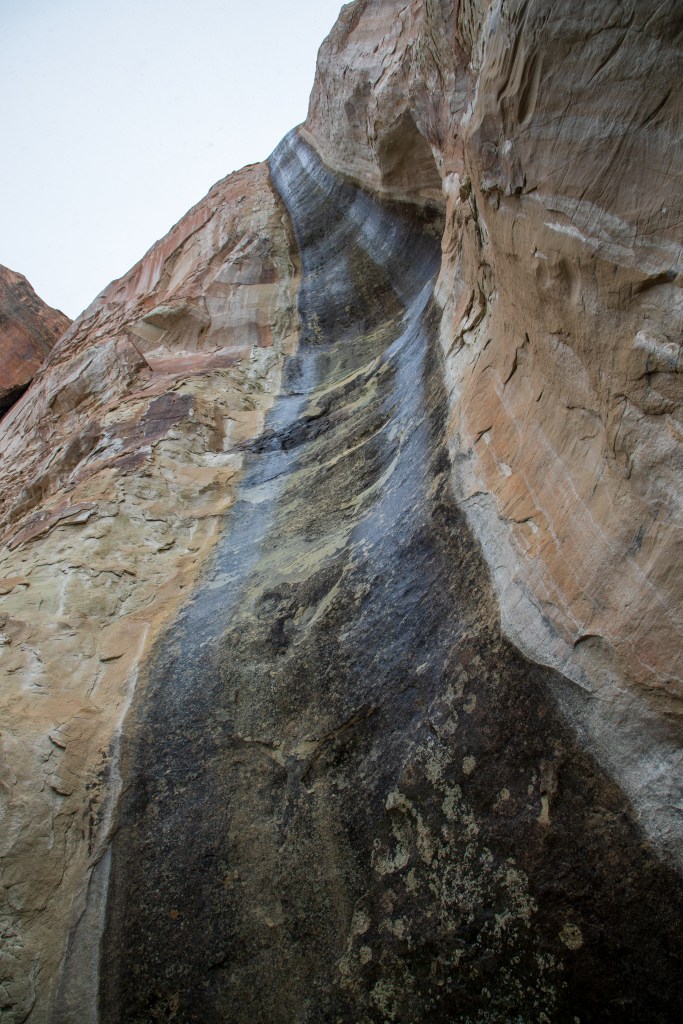
It’s a short drive from El Malpais to El Morrow National Monument, which is entirely different. El Morrow is home to a large sandstone bluff known as Inscription Rock, where hundreds of people have added their names and messages over the years.
It was snowing when we arrived. Besides the Park Rangers, Abbey and I were the only ones here!
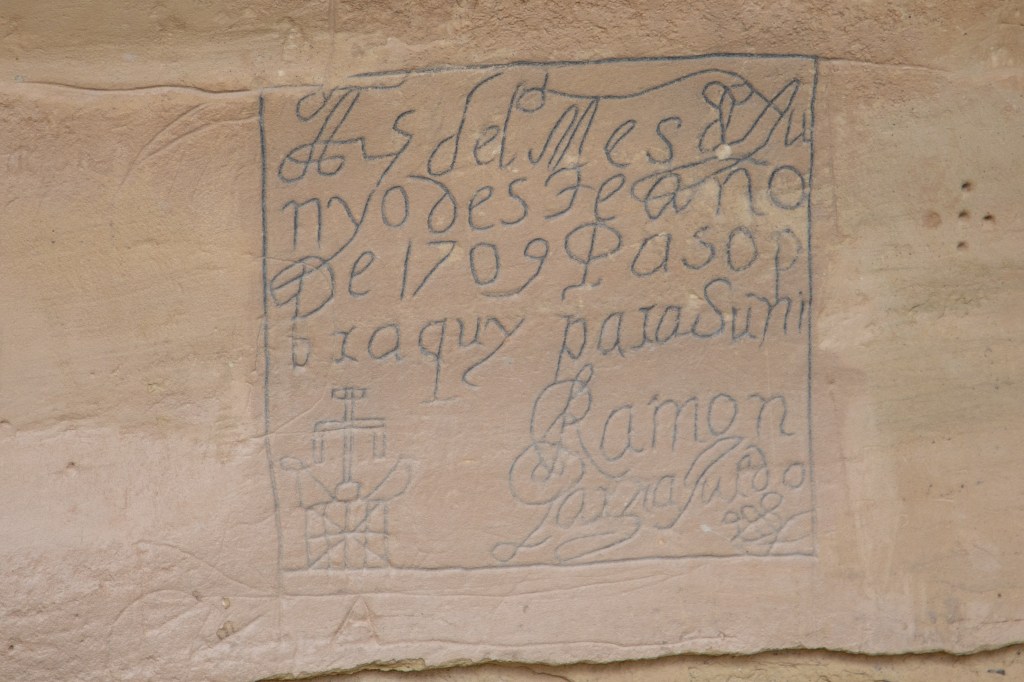
People passed through this area because it’s home to a large natural basin of water – the only reliable water source for many miles. The petroglyphs are cool, but honestly I found the inscriptions from early Spanish explorers more interesting. This one says “Paso por aqui el adelantado Don Juan Oñate del descubrimiento de la mar del sur a 16 de Abril del 1605.” Yeah, that’s right, 1605. Fifteen years before Plymouth and the Mayflower Pilgrims, Don Juan Oñate was leading an expedition through New Mexico in search of gold!
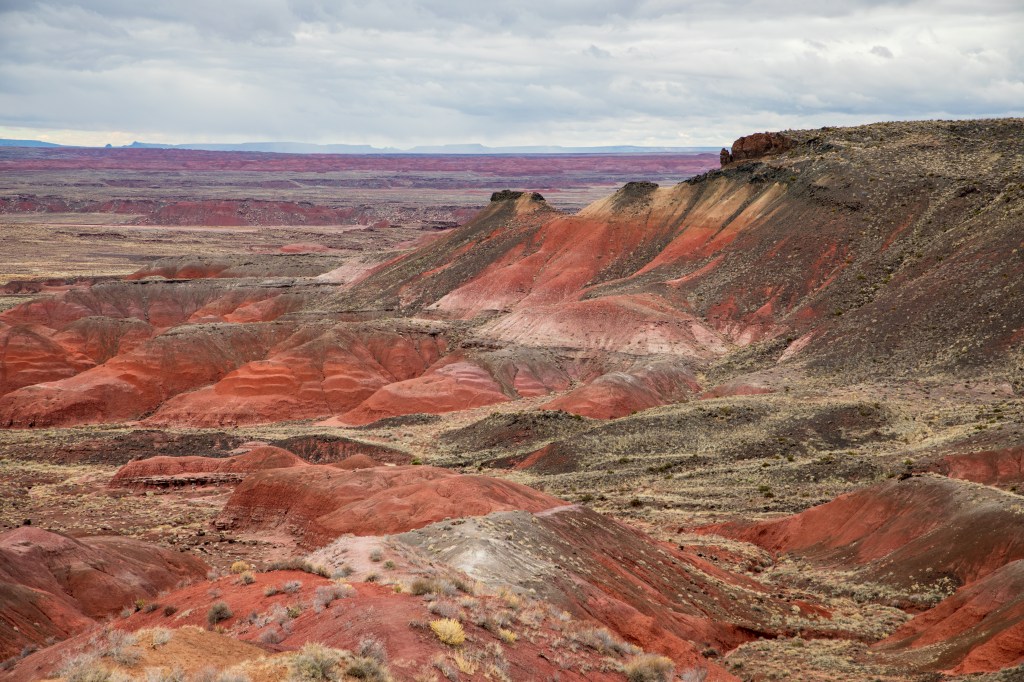
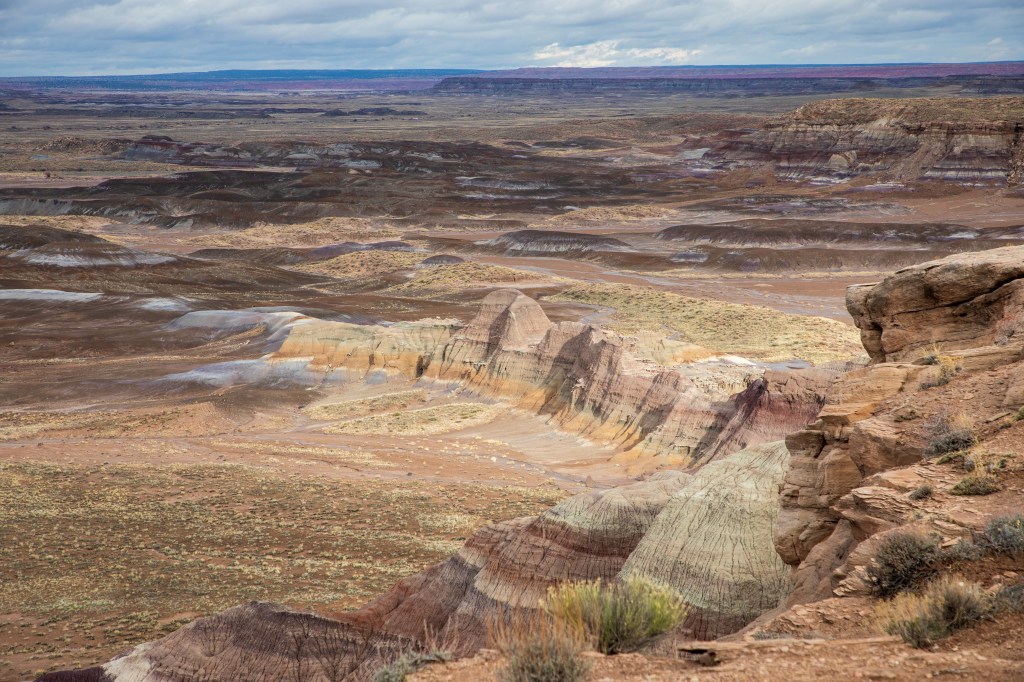
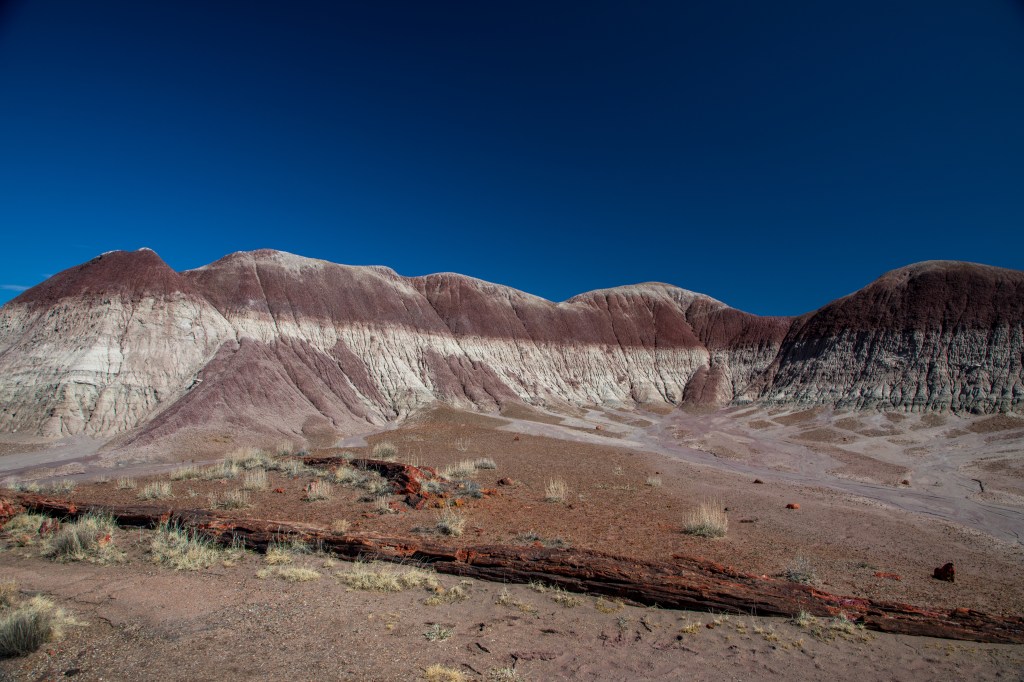
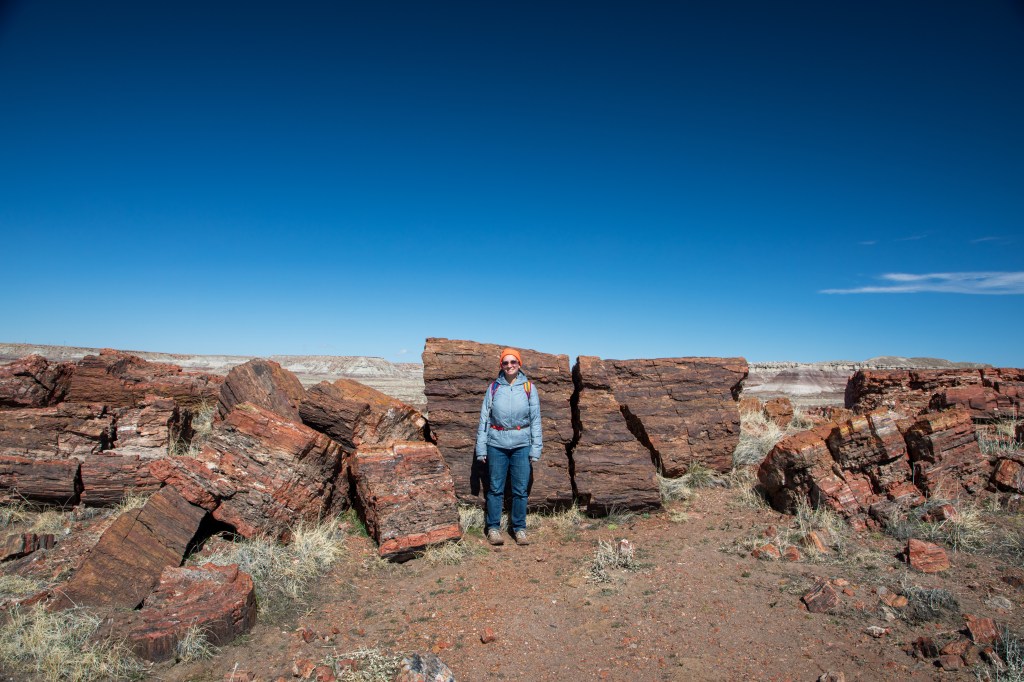
Petrified Forest National Park was next. It’s a badlands-esque environment with brilliant colors and stark beauty that make your jaw drop.
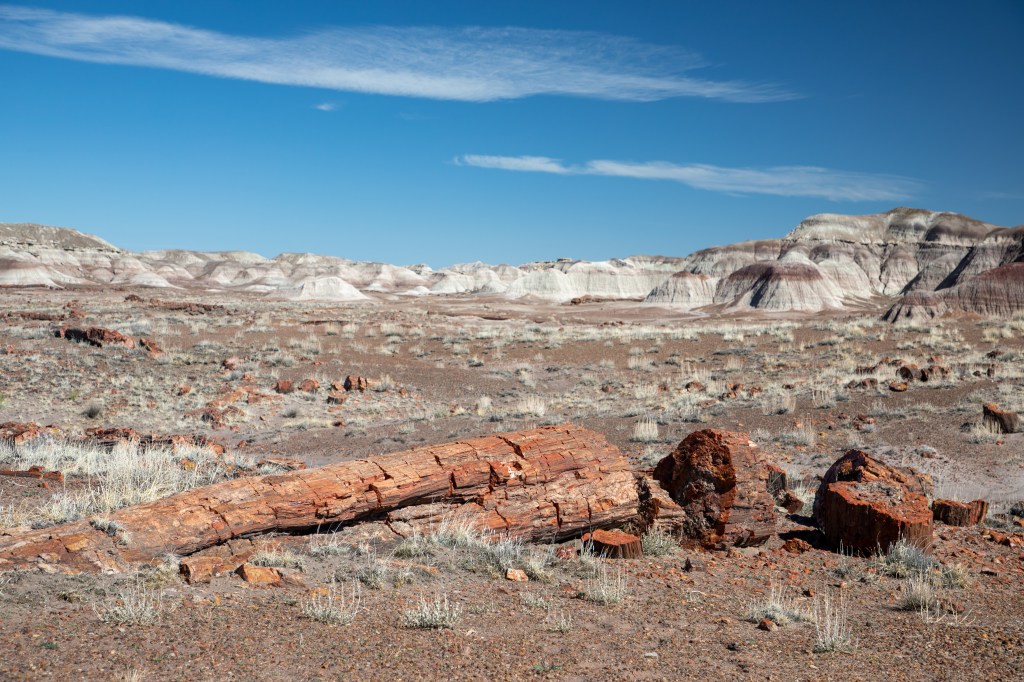
200 million years ago, this part of Arizona was near the equator in Pangea, and was a lush tropical rainforest with massive trees. A tremendous logjam formed in a large river basin, and the logs were quickly buried and covered so they never had a chance to rot. The trees then slowly turned to rock, and then were uncovered by erosion. They are laying everywhere in the National Park. And once again, 200 million years old!
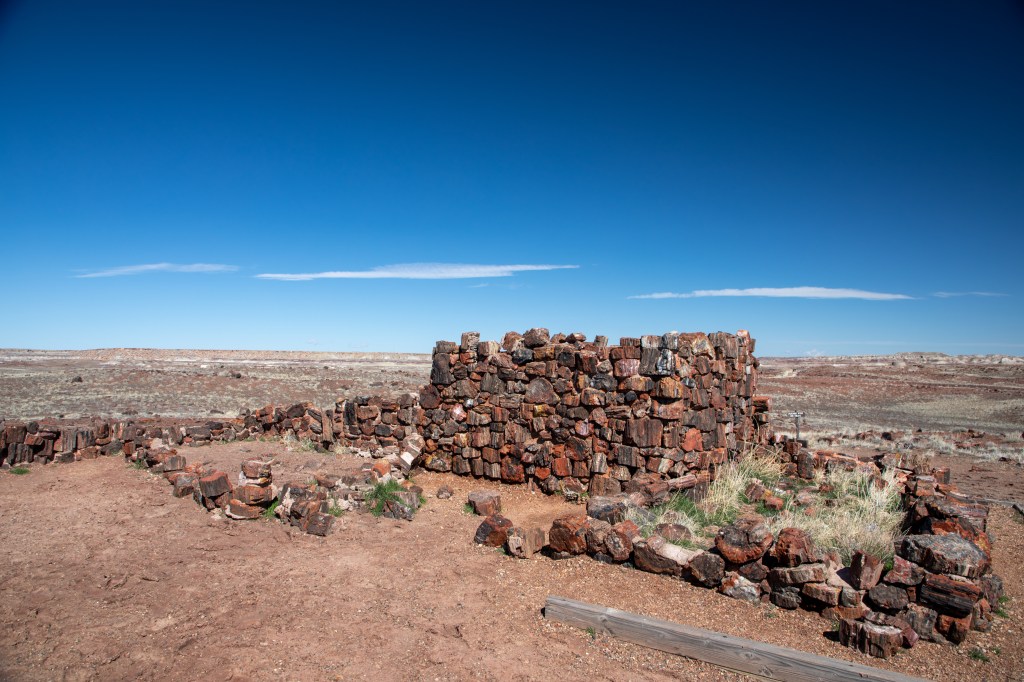
There is so much petrified wood here that indigenous people used it to make houses; this one is from the 1200’s.
There are some pretty large trees here. Abbey for scale:
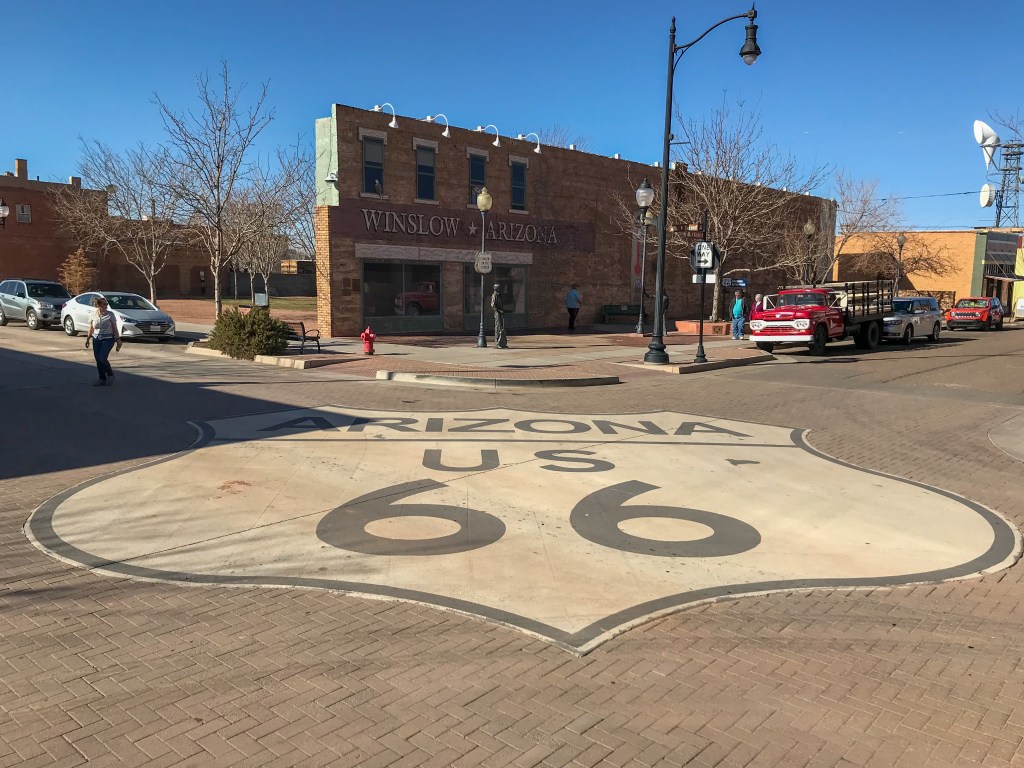
After a couple days in Petrified Forest, we headed towards Coconino National Forest. Part of our route took us through Winslow, Arizona via Route 66. They have a pocket park dedicated to the lyrics “Standing on the corner in Winslow, Arizona” by the famed Eagles. We stood on the corner.
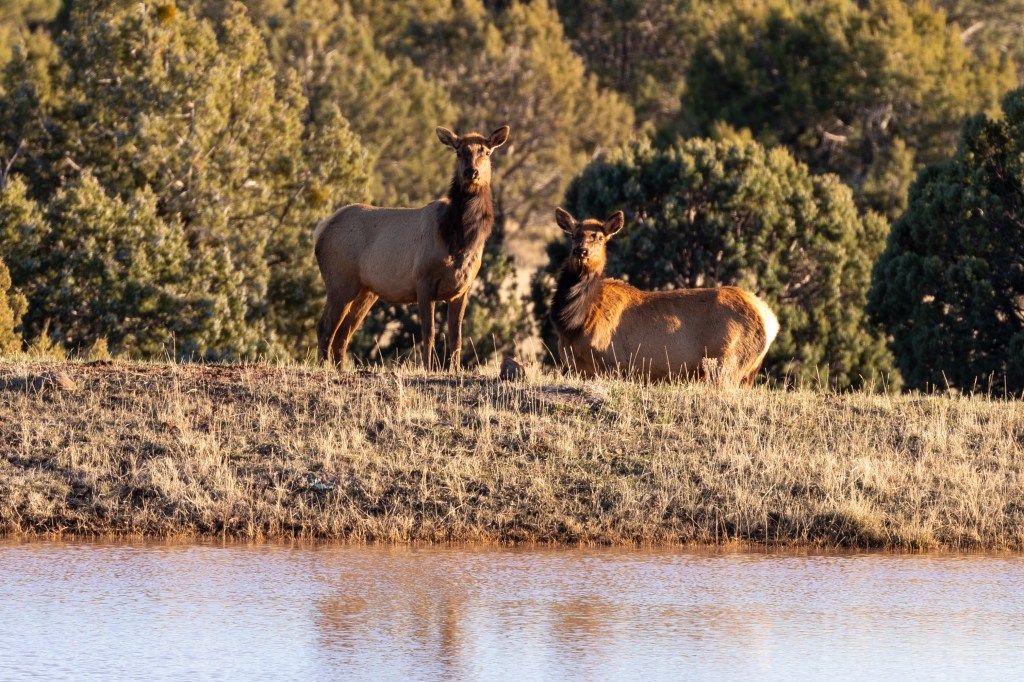
Outside of Winslow, we saw our first Elk of the trip as we entered Coconino National Forest.
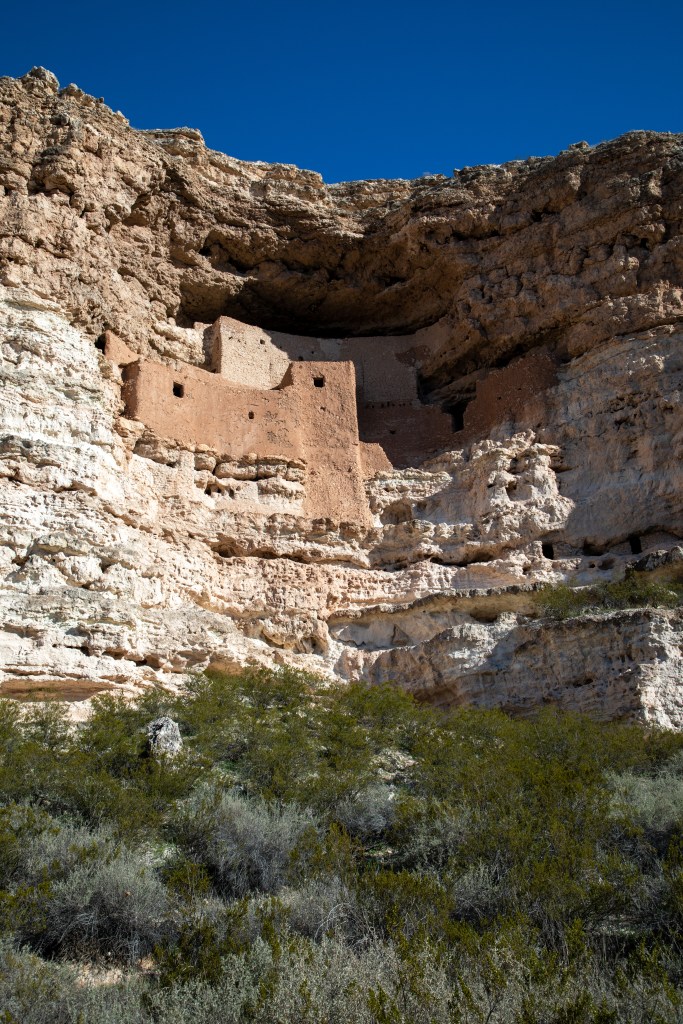
Montezuma Castle National Monument is a settlement that was inhabited from about 1100 to 1400. It’s built into a sheer wall and is inaccessible except by ladder. It’s a stunning sight.
Abbey and I are currently camped out in Coconino National Forest. We’re in a remote site down a forest service road with no one else around. We’re heading to Phoenix next, where we’re meeting up with good friends for good times.
After the Very Large Array, Abbey and I stayed at the Datil Land Management Campground where we were the only ones there. The temperature got down to 12 degrees during the night, but Abbey and I stayed warm by keeping the top on Evelyn down and running our small heater all night.
In the morning, Evelyn was exceedingly difficult to start. I had to parallel the house battery to the starting battery, and the way she coughed and sputtered once she fired up was moderately disturbing to me. We set off West and started to have problems immediately. Evelyn was momentarily cutting out and “bucking” as we tried to drive, but under idle and no-load conditions she was OK. Introduce the slightest bit of acceleration or hill though, and the intense bucking was so bad I wasn’t able to get over about 15 mph. It figures this was the day we were cresting the continental divide in the middle of nowhere, with no phone reception, in February.
I immediately suspected a fuel issue. We had just filled up the day before at a somewhat seedy gas station, so I wondered if there was a bunch of sediment in the gas or maybe water that had frozen overnight. The fuel pump also seemed to be unusually noisy, and I wondered if the original unit, with 290,000 miles on it, was finally giving up the ghost.
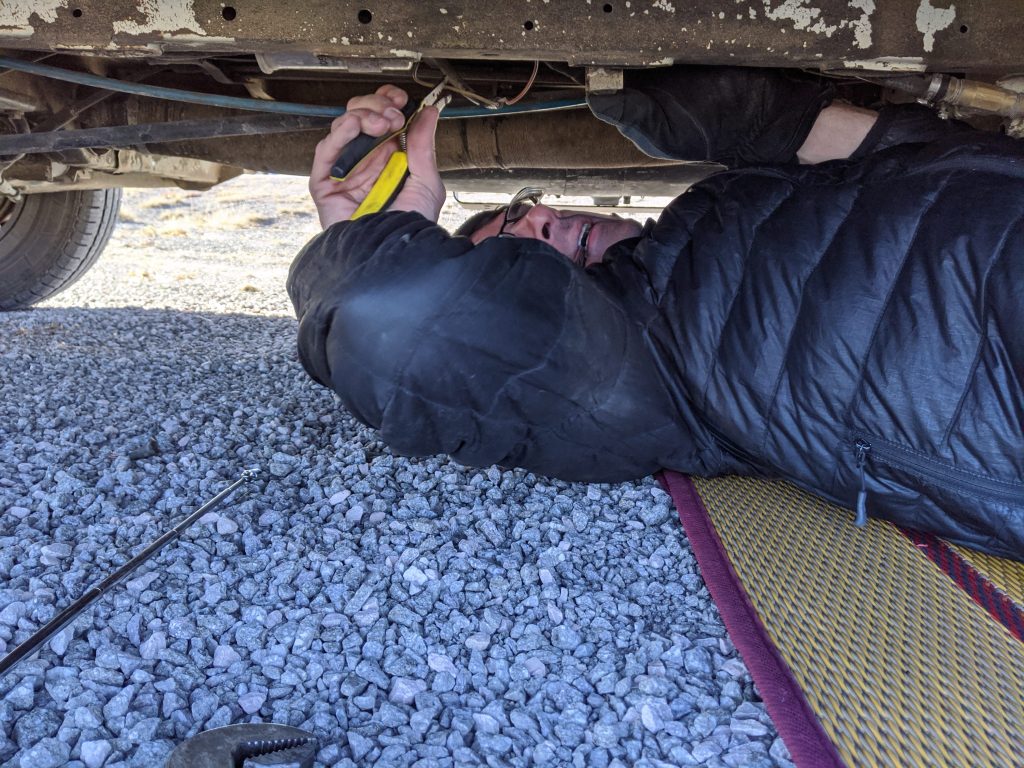
I pulled over on the side of the road and prepped myself. It had warmed to about 16 degrees outside but the howling winds were so fierce I bet the windchill was subzero. I mentally went through what I was going to do outside and prepped the tools. With a deep breath I jumped outside and crawled under the van. I disconnected the fuel line from the tank and got free flow of gas. I rodded the line back to the tank with bailing wire, but the amount of gas that came out had me convinced I didn’t have blockage before the pump.
Next I disconnected the fuel filter and poured out the gas – there was some sediment, so I hooked up the filter backwards and then gave the pump power to backflush the sludge onto the ground (sorry, environment). The gas that came out was pretty clean, though. I then reinstalled the filter in the correct orientation.
Since I carry a spare fuel pump, (but not a filter, oops) I decided to put that in. The new pump had different electrical connectors so I had to cut and splice the wiring a bit. Regardless, I got through all these efforts in maybe 10 minutes. The evaporative cooling powers of gas plus the windchill meant that my hands were quite numb, though.
We hopped back in Evelyn and started down the road. And….. no change. The problem is still there. Damn. Since we were now past the continental divide, we more or less coasted into Pie Town, New Mexico, and decided to go warm up and eat pie at The Gathering Place.
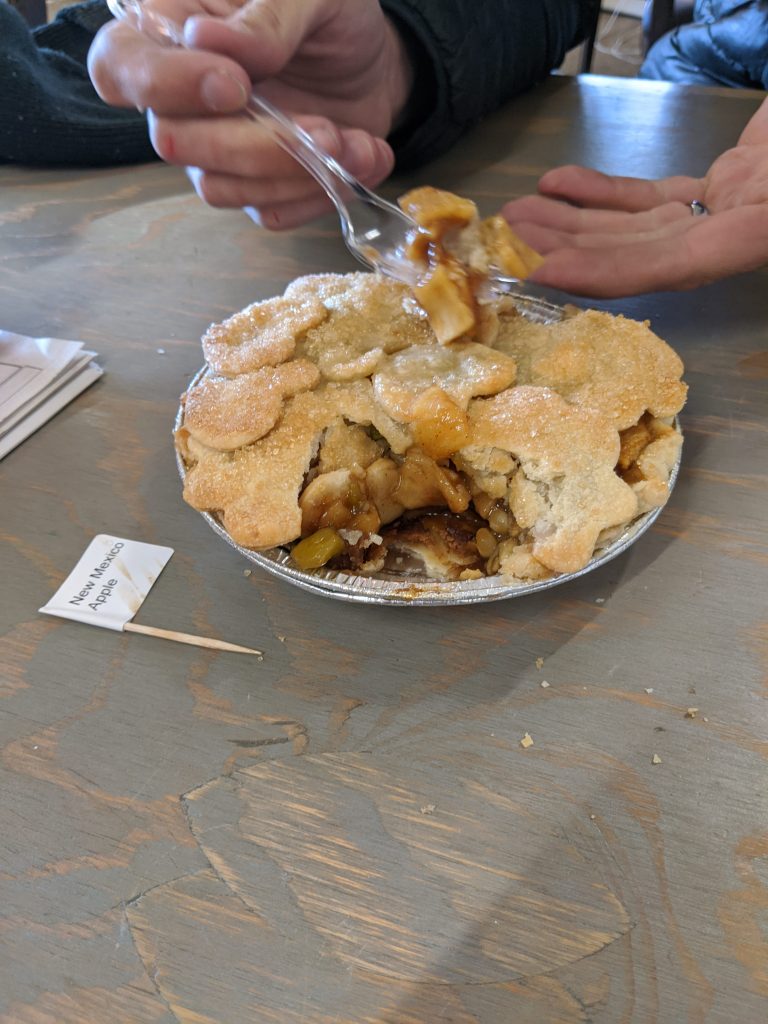
New Mexico Apple Pie is like normal apple pie but with pine nuts and green chiles that give it just the right amount of heat. We talked with the two employees – the only other people in the place – at length about how they ended up in such a remote area and what it’s like living out there. After telling them of our van problems, the lady offered to drive a few miles down the road to get a bottle of heet for us, since I was still partially suspecting a frozen fuel line. We took her up on her offer.
I dumped the bottle of heat in the tank and after profuse thank-yous and goodbyes we left Pie Town towards Quemado. It’s the next “town” over, 22 miles away, where there was a small repair shop. They didn’t have the right fuel filter, but they did have a filter of similar dimensions and application for a Ford something-or-other. I installed it in the parking lot, filled the tank with premium, and….. no. Problem still there. Two old timers at the garage (and a couple onlookers, as it seems this garage is the town meeting place to gossip about the weather) listened to the engine, poked around, and were stumped like me.
I started to question my initial assumption that it was a fuel problem, so I began scouring the ignition system. I took off the cap and rotor. They looked fine, but I swapped them anyways for known working spares that I carry. I inspected all the plug wiring and ignition coil connections. I checked the engine grounds and took ohm readings to verify good connections. I took ohm readings on the primary and secondary ignition coils. I swapped in a spare coil anyways. And I wiggled and poked things while the engine was running because sometimes that will identify problems. None of this helped.
Abbey and I decided to turn back and head towards Albuquerque. Now is not the time to be heading deeper into the backwoods of New Mexico.
Limping along with our hazard lights on, we finally made it to Socorro where there was a NAPA. I got some electrical contact cleaner, the correct fuel filter, and more heet. I went through all the electrical connections, pulled each spark plug to inspect, but still found nothing that fixed or pointed to the problem. And now we were in a pickle, because there were really only two ways to get to Albuquerque from here. One was the busy I-25 with screaming 75mph traffic and Friday rush-hour traffic. The other was a string of winding remote dirt roads that took you miles out of the way.
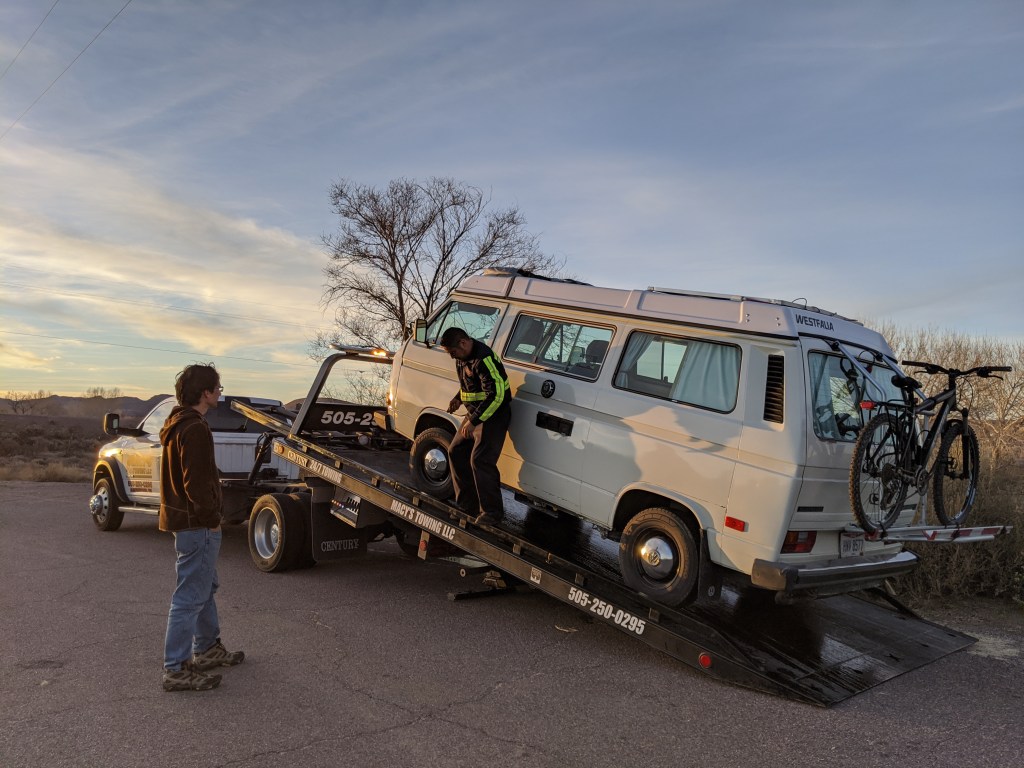
Abbey and I started limping down the back roads, but the first hill we came too was so steep Evelyn simply couldn’t get up it. She sputtered and stalled and I knew that this way would be impossible. We turned around and realized our fate: tow truck time. I wasn’t about to get on I-25 going 15mph during Friday night rush hour traffic.
I hold a sense of pride in my ability to maintain vehicles, and calling the tow truck was very hard for me. I felt dejected and lost. A problem I couldn’t figure out.
The tow truck driver went 87mph up the I-25: certainly the fastest Evelyn has ever been. It was only 60 miles to Albuquerque, so we were there in no time.
We dropped Evelyn at Foreign Aide, a vintage air-cooled VW shop that will have all the tools, parts, and experience to figure out what’s wrong (hopefully). Not every city has such a place, so I guess it’s good we weren’t too far. My wonderful cousin Dave was there to pick Abbey and I up, and we’ll be staying with him and his wife Ariel in Albuquerque until we get this figured out.
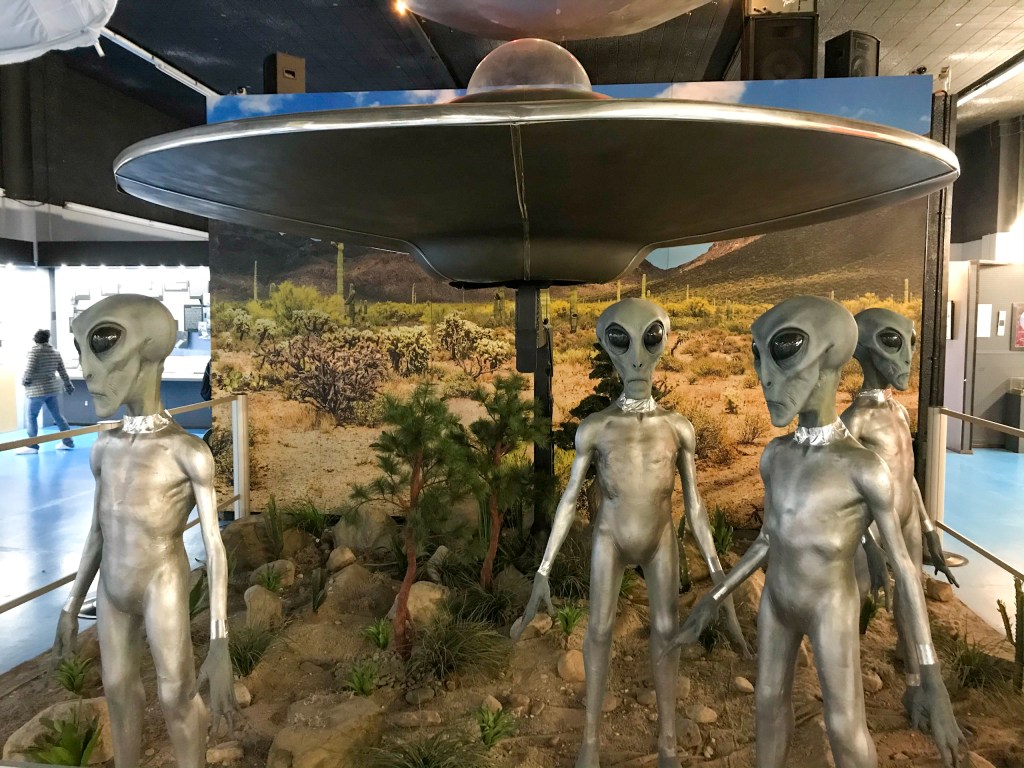
After leaving Carlsbad Caverns, Abbey and I headed up through Carlsbad the city (don’t go there, it’s inundated by the oil & gas industry) and on into Roswell. The town of Roswell is bigger than I imagined, but the touristy love of aliens and conspiracy theories is exactly as I pictured it. We stopped at the International UFO Museum and enjoyed the kitschy displays and the surprisingly informative exhibits that encompass the Roswell incident. If you’re in the area, it’s worth a stop – kinda cheesy but you know that going in.
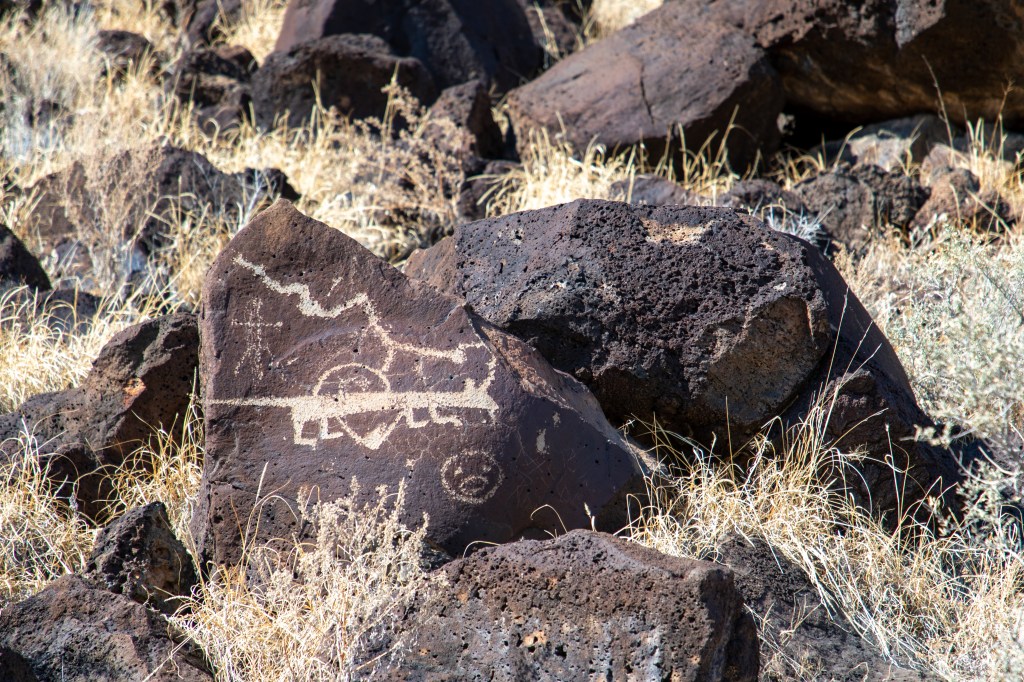
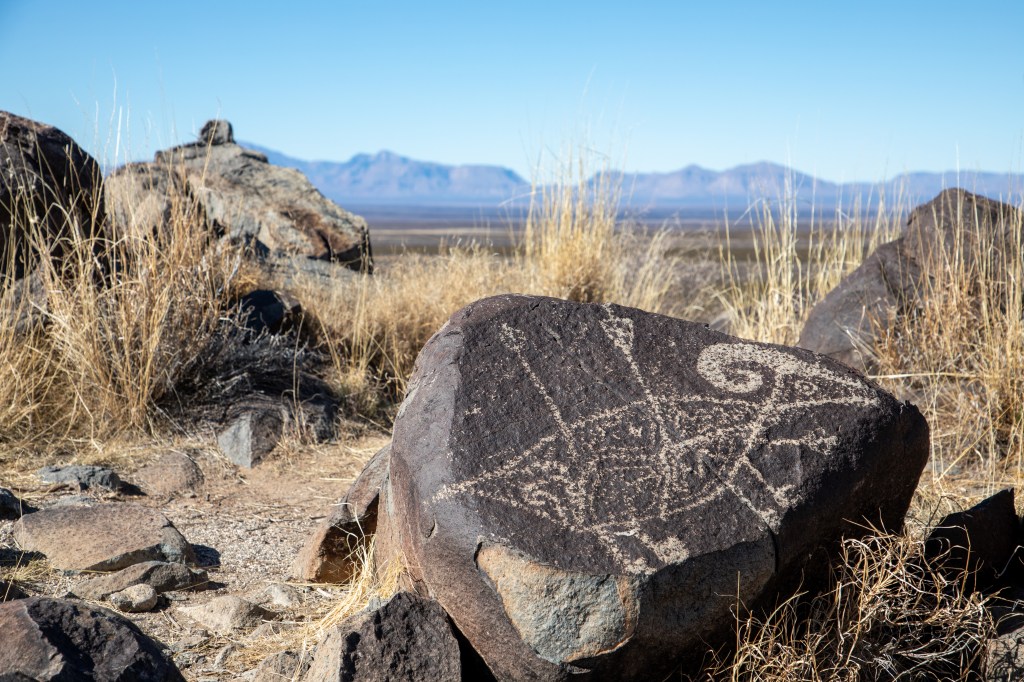
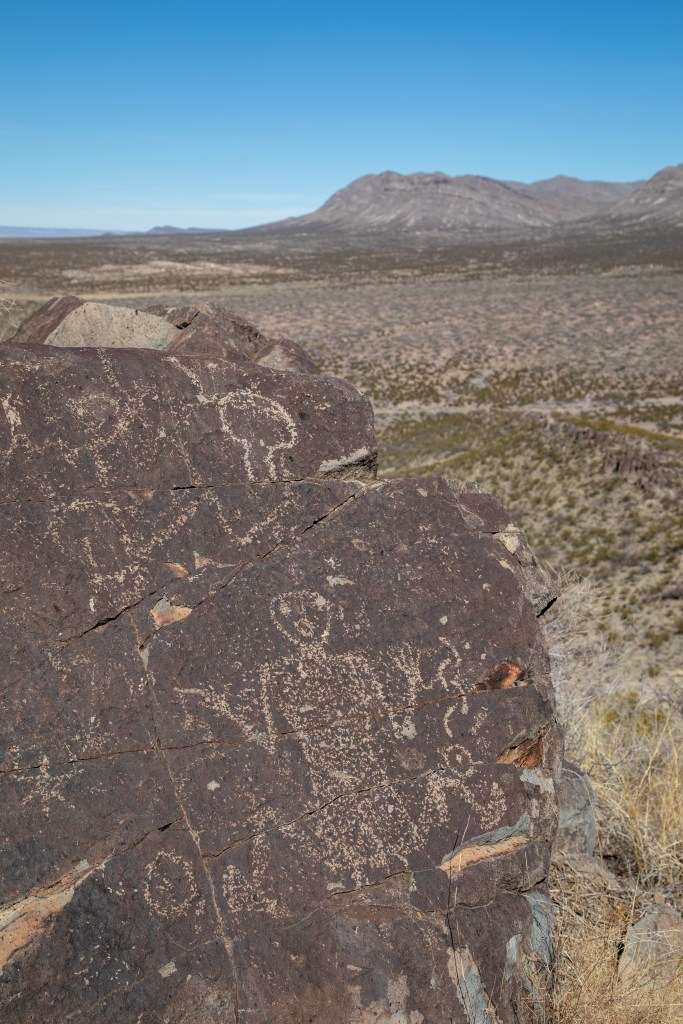
After Roswell we swung through the Three Rivers Petroglyph Site, home to the largest rock art site in the southwest. There are over 21,000 petroglyphs in this one area, and you can easily see hundreds and hundreds on one short trail along a ridge.
Jornada Mogollon people made these petroglyphs from about 1000 to 1400 CE, but then they mysteriously abandoned the area shortly thereafter. They had no written history and it is unclear if there are even modern-day descendants. As such, attributing meaning to these petroglyphs is just speculation. Maybe they had spare time and found it enjoyable to just draw pictures.
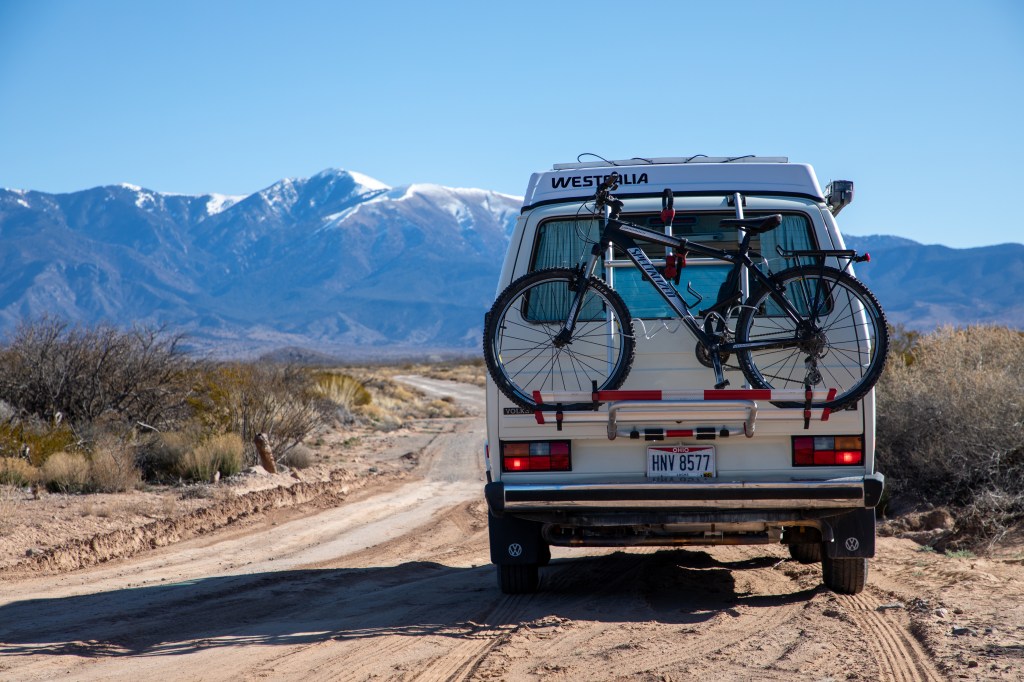
The roads out here are pretty great.
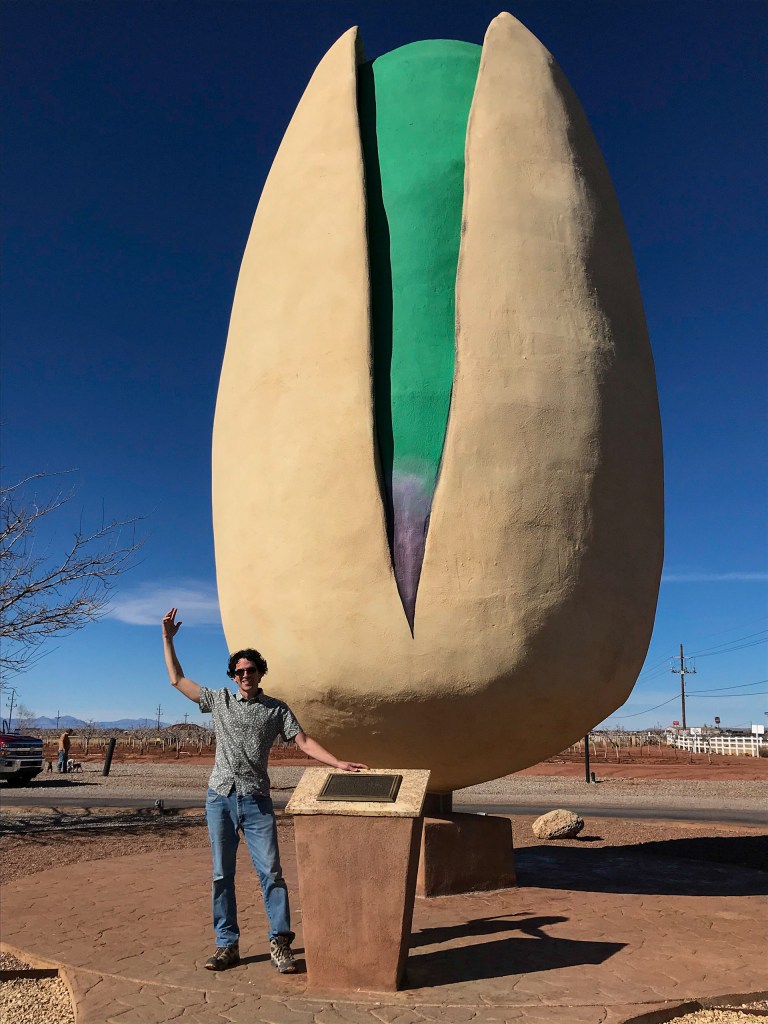
On our way towards White Sands National Park, Abbey and I came across a pistachio farm. We sampled many pistachios, had pistachio ice cream, and even got to see the world’s largest pistachio. Sometimes the touristy places are fun.
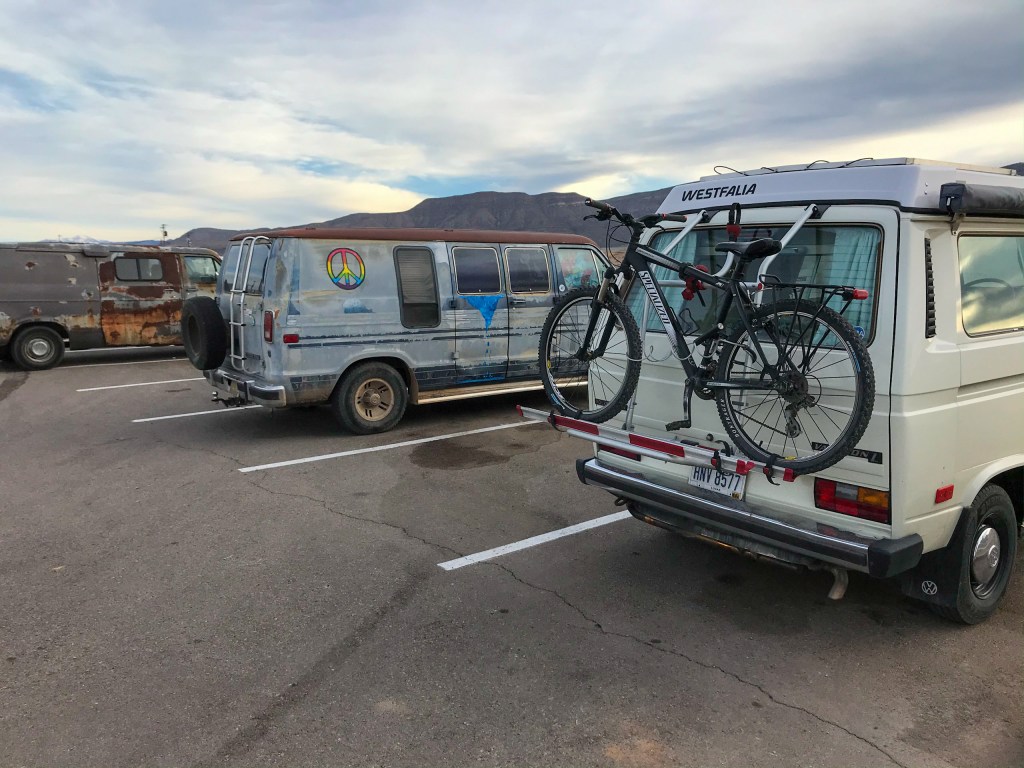
Abbey and I occasionally spend the night in parking lots. This may sound appalling to some, but sometimes it’s convenient when there are no nearby campgrounds or when you don’t feel like going out of your way down some little dirt road for miles. Many businesses, like Cabela’s, Cracker Barrel, and Walmart, welcome and encourage overnight campers. There is an interesting subculture of people that stay in these parking lots, and I had no idea just how many people make use of these free camp spots every single night across the nation. Abbey and I always park away from everyone else but it never fails that overnighters will come in after us and park right near us; typically the creepiest and seediest looking vans.
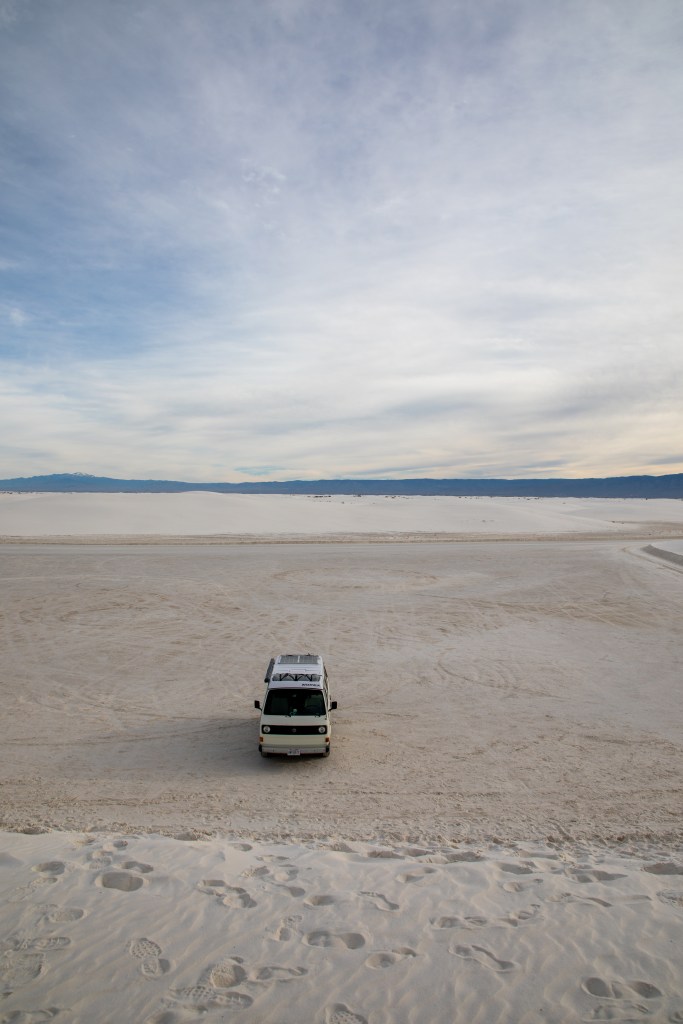
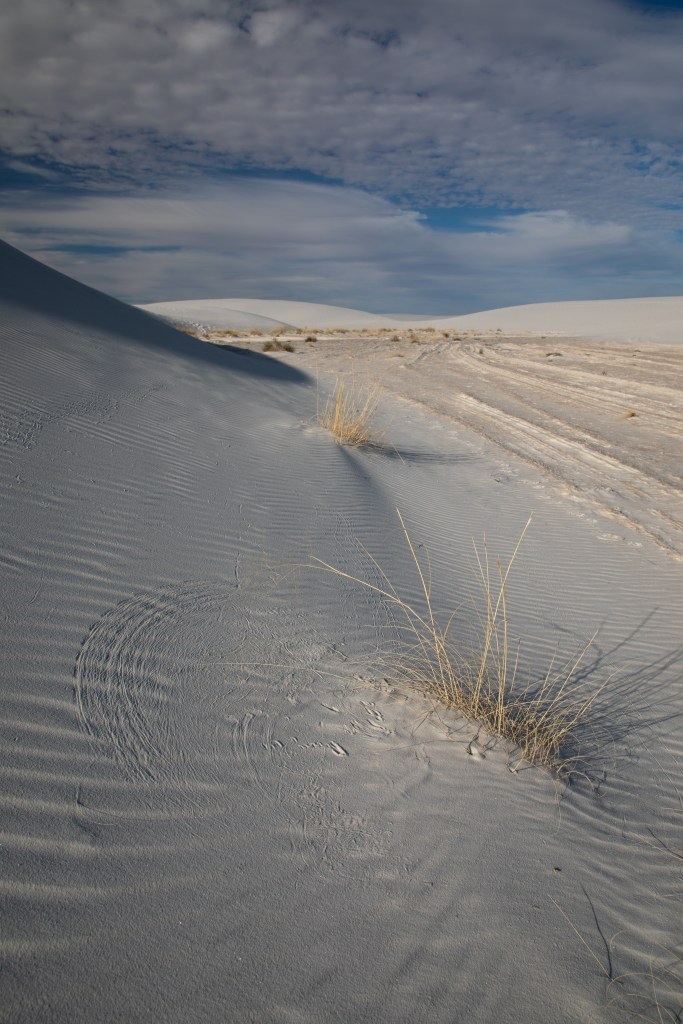
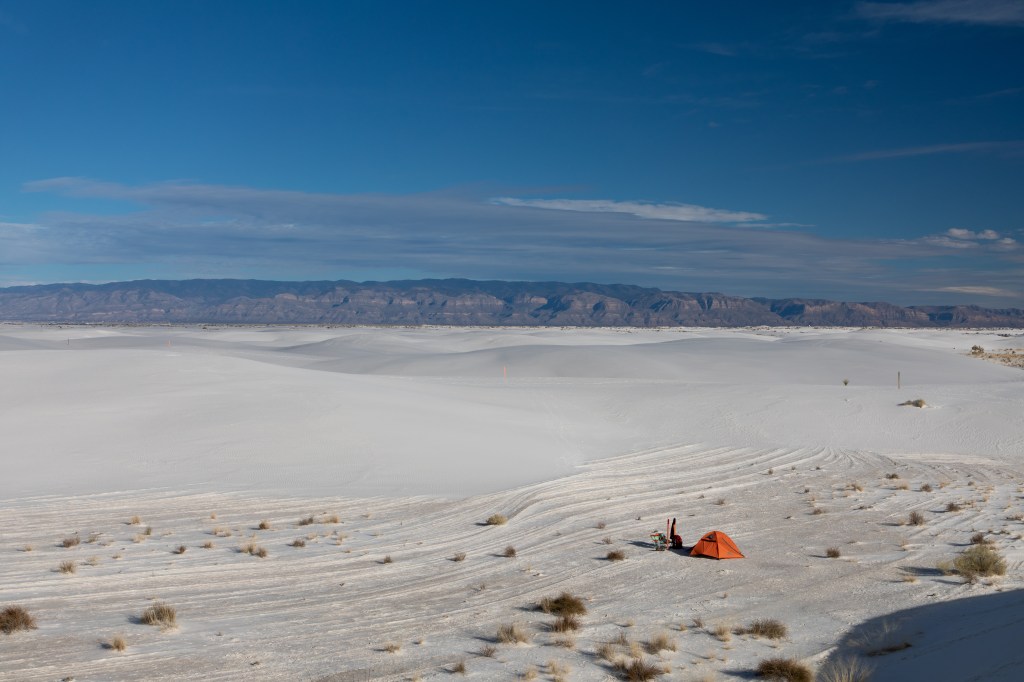
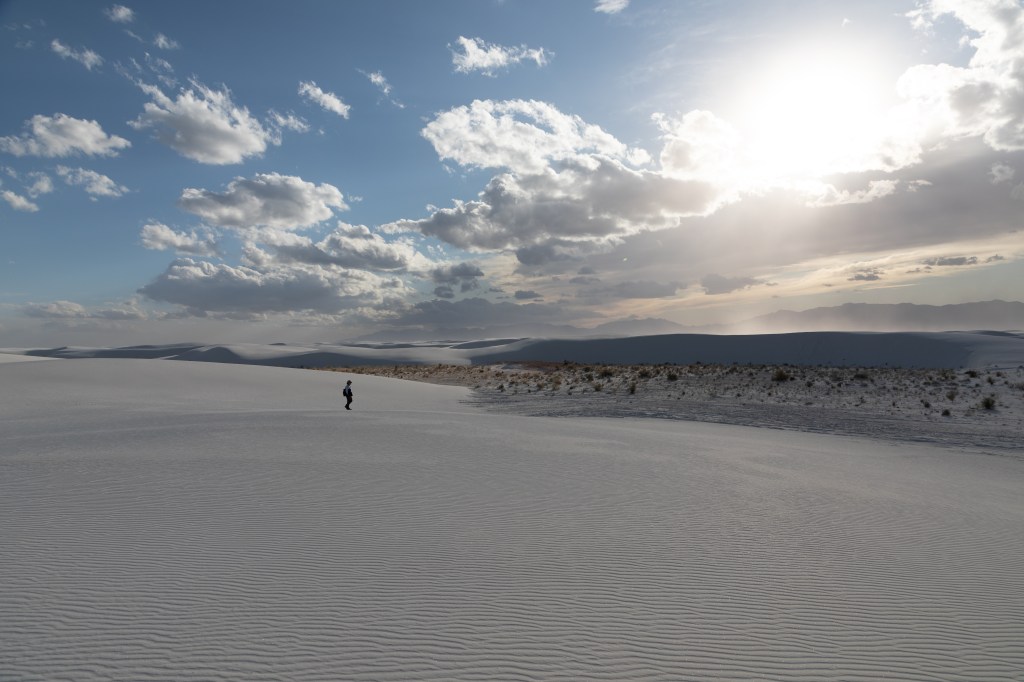
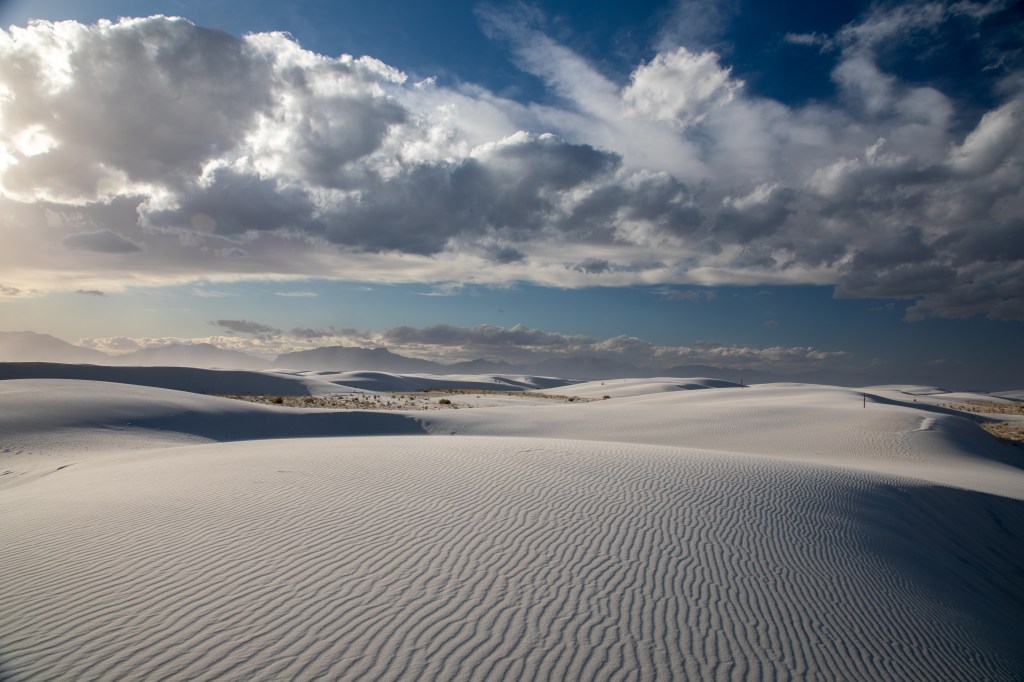
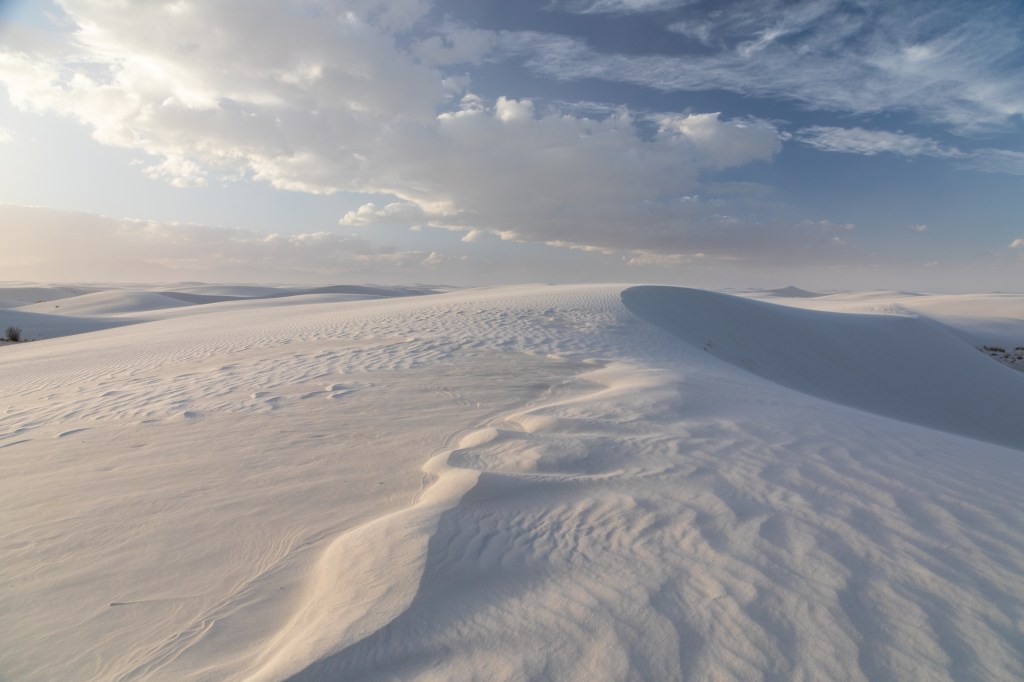
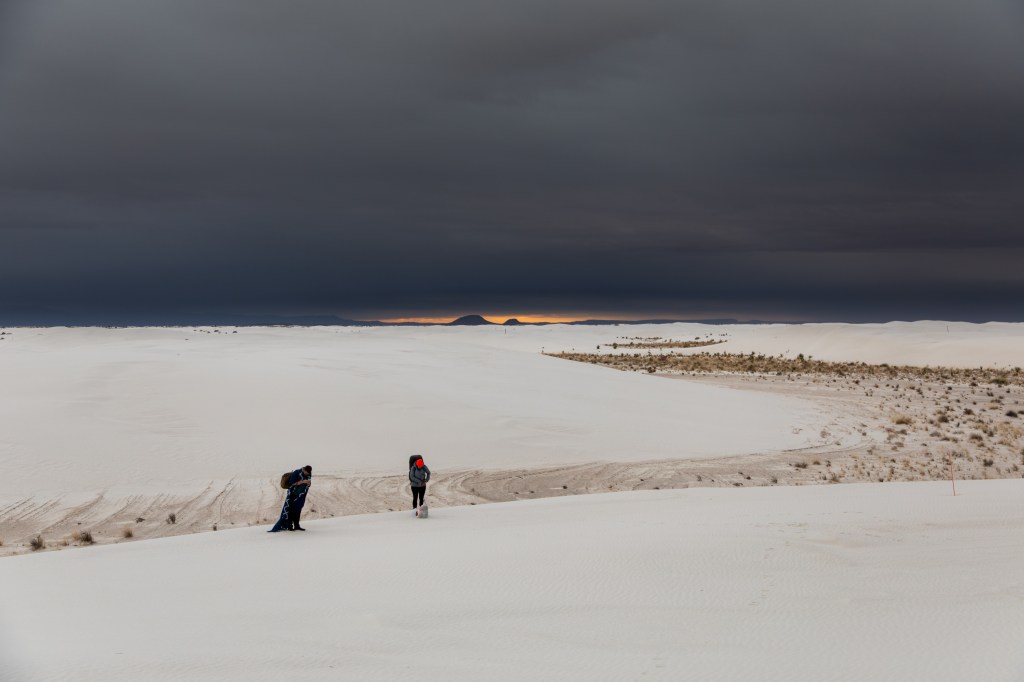
After spending the night with the creeper vans, we made it into White Sands National Park first thing in the morning. The landscape is striking, and even the early morning sun feels blinding when reflected off the white gypsum sand.
With the average dune here moving around 15 feet a year, the roads aren’t actually roads – they’re just graded sand. The path of the roads through the National Park changes a little bit every year.
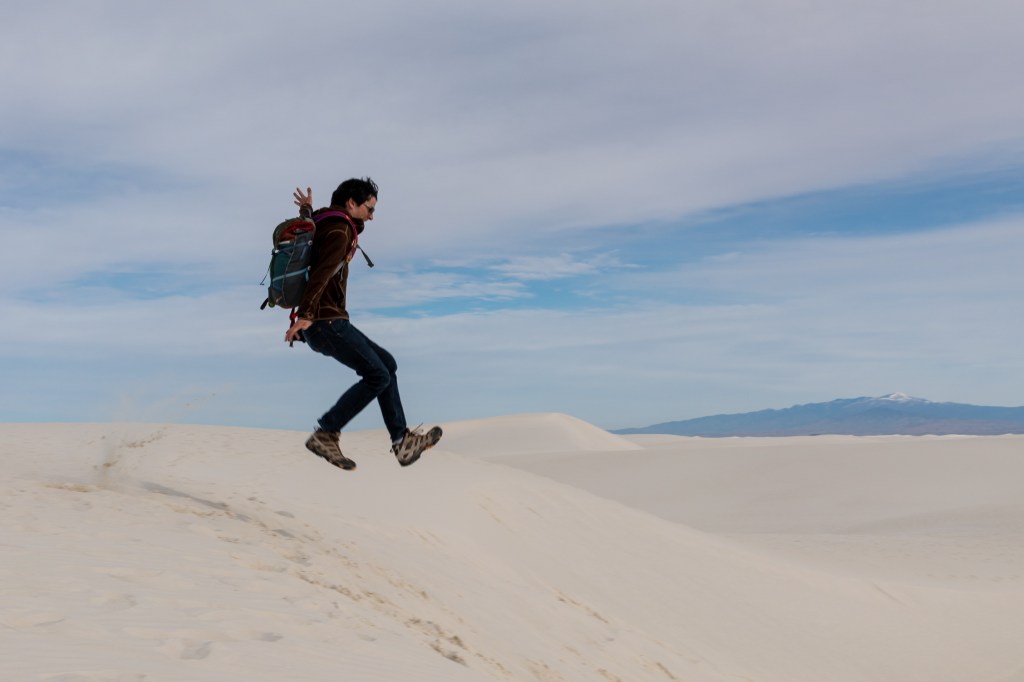
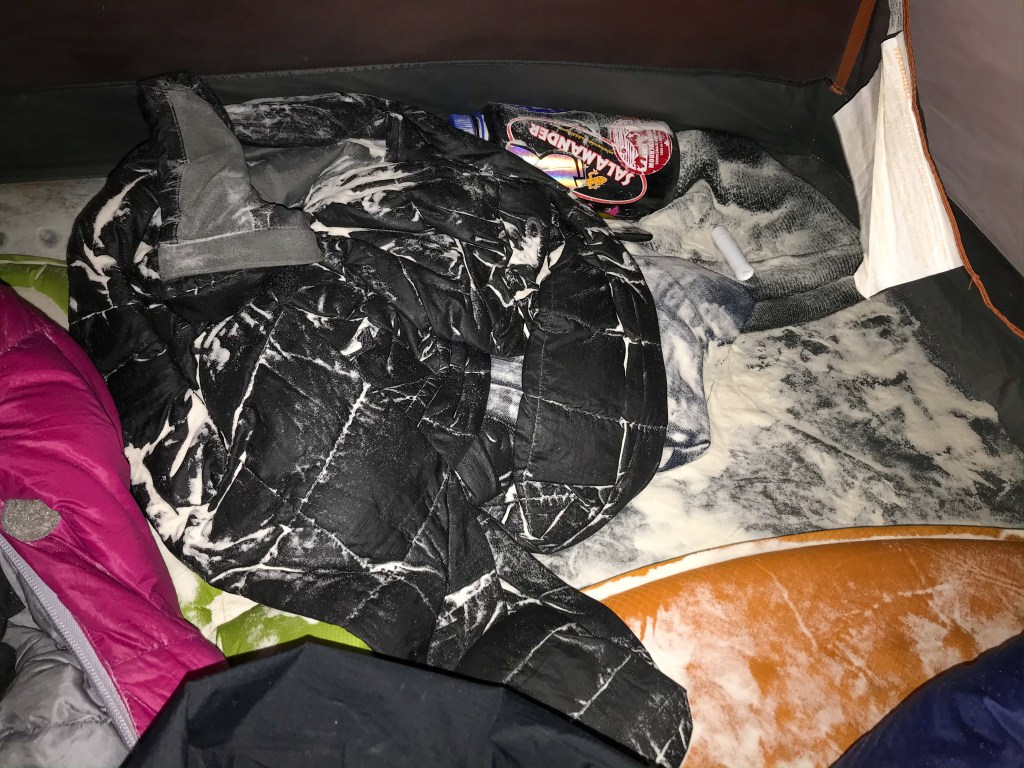
Running and jumping off dunes is fun, although I am still getting gypsum out of my clothes, boots, and of course, Evelyn.
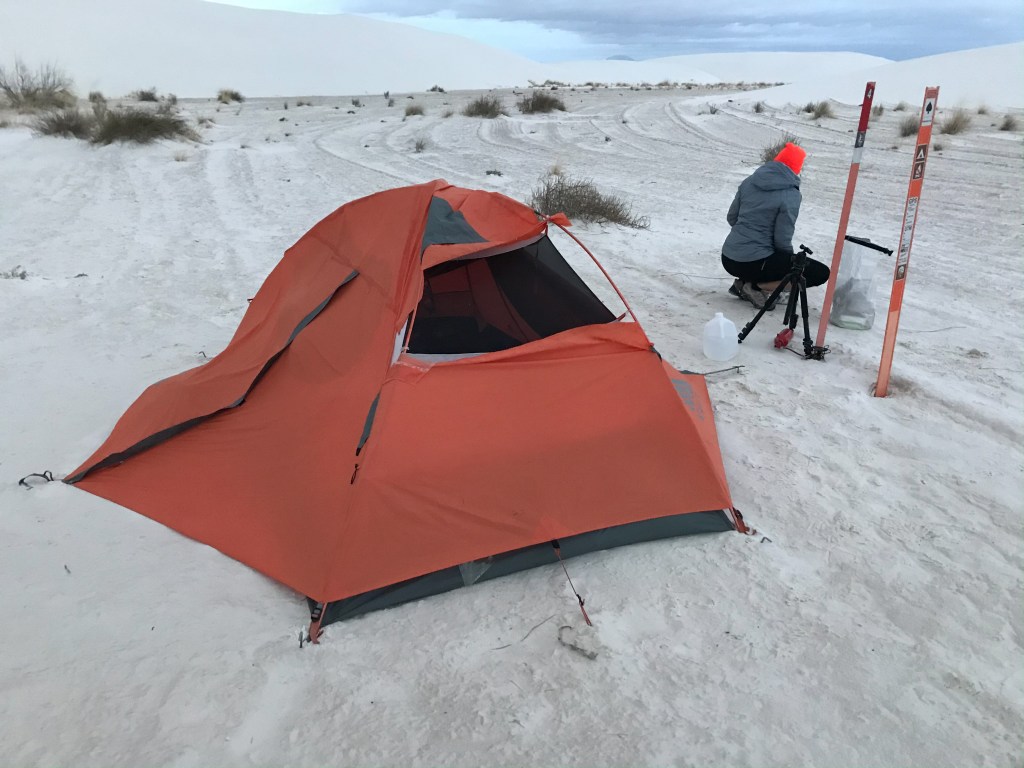
There are only ten campsites available in the entire National Park, so it gets pretty quiet. When you check in with the ranger they brief you on a host of requirements and regulations, and then they call the army to tell them that you’re out camping next to the missile range. Please don’t accidentally bomb us.
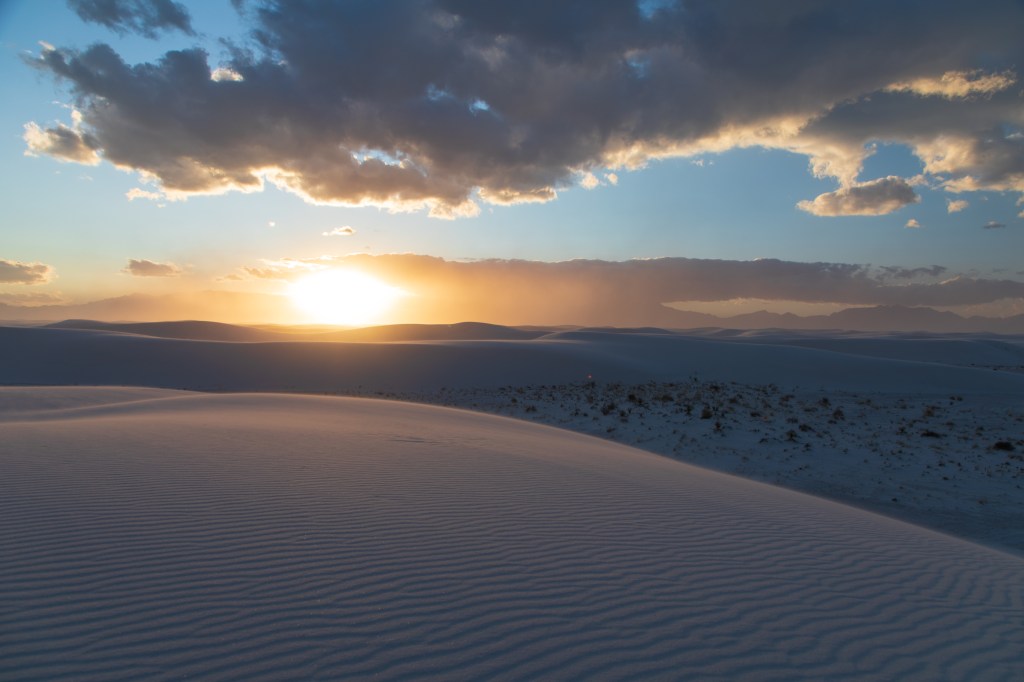
Our first night camping was cold but eerily still. No wind and not a whisper of noise. It was one of the quietest places I’ve ever experienced. I imagine the insulating properties of gypsum have something to do with that. We had a fantastic sunset.
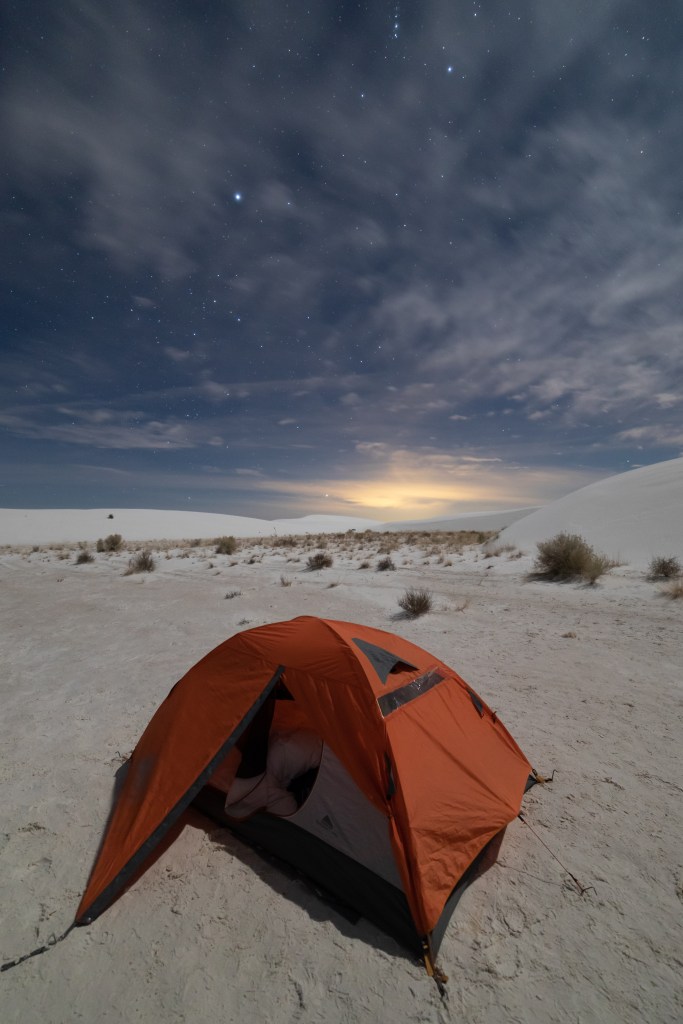
When we got up to look at the stars at night, we were met by a half moon, clouds, and nearby light pollution. The white sands made everything so bright you could easily walk around without a light, and this long-exposure picture makes it look like some weird day/night hybrid, which it kinda was.
For our second day in White Sands, we met up with my cousin Dave (who had also come to Carlsbad Caverns with us) and did some more dune hiking. Towards the afternoon it started to get progressively windier, and soon you could see clouds of white sand blowing on the horizon.
Before we got in the tent for the night, the wind was enough to knock you backwards and it was getting hard to see or hear because of all the flying gypsum. We hunkered down in the tent, and then the wind REALLY started to pick up. Our tent, an older Kelty four season, can take a beating and is designed for high winds and winter expeditions. But tonight it was going to meet it’s match. As the winds howled and groaned outside, the tent bent and heaved wildly. Sand started billowing into the tent. I could feel wind reaching in under the tent floor and trying to pick it, and us, up.
My mind raced. How much stress can these aluminum poles take? What should we do if the tent is ripped away from us? We hunkered down deeper and cocooned under our sleeping bags and clothes to keep the flying gypsum out of our faces. Just then I heard a sudden creaking and then sustained flapping – a stake had just come undone. I knew the stakes were critical to the integrity of the tent and the poles, so I threw on my jacket and went outside. At this point it was so windy that the gypsum was painful – stinging you anywhere there was exposed skin. I was being exfoliated. I re-staked the tent blind since I dared not open my eyes and dove back into the tent.
We had to re-stake twice more over the next hour, but then the wind decided to intensify further. The tent bowed downwards so badly under strong gusts that it laid flat against us – and then – RRRRIIIIPPPP. The rain fly on the leeward side tore upon, admitting wind and sand directly into the tent. The aluminum poles utterly bent, the rain fly breached, but still the tent held on.
As morning came and the winds subsided, we had a chance to survey the damage. Abbey and I hope to repair the tent because it’s been a champ over the years, and has kept us cozy for many an adventure. We’ll bend the poles back and superglue/sew up the rain fly. And next time we’re in a high-wind area we’ll use 12 stakes and not 8.
As we packed up our gear and hiked back to the van, we saw the receding side of the storm that passed over in the night.
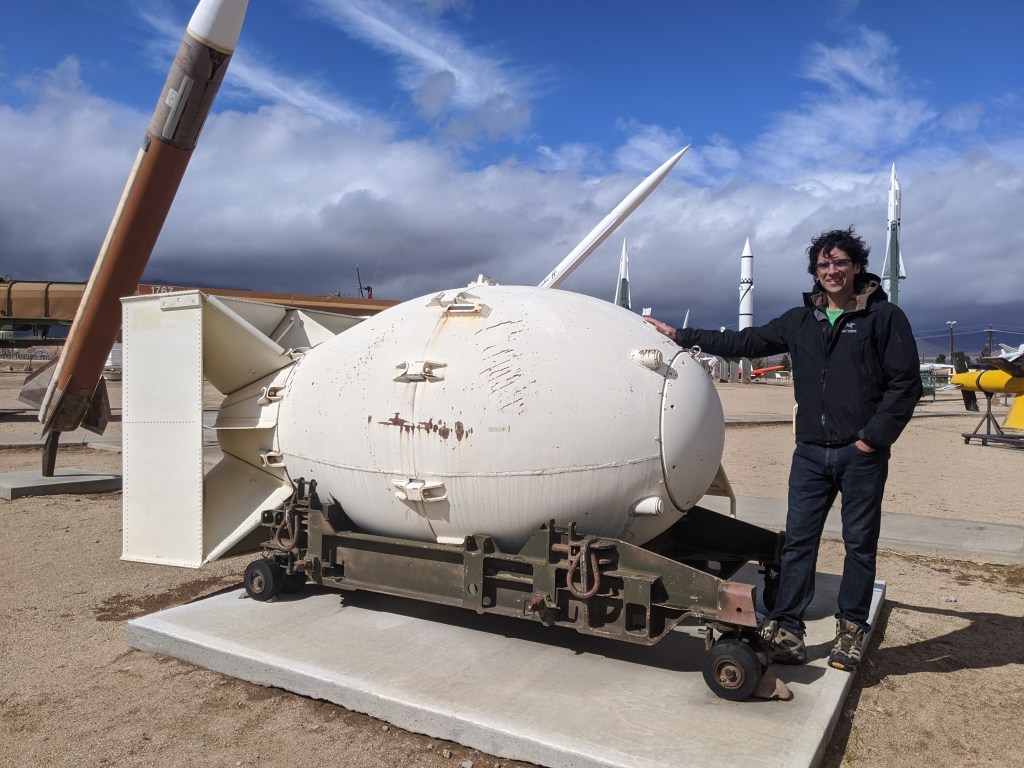
After White Sands, my cousin left us and Abbey and I continued onward to the White Sands Missile Museum. The museum is located on an active army base, so you have to stop and go through rather intense security, including a photo shoot and presumably a quick background check. The security was worth it, though, because the museum was fascinating!
The museum has hundreds of different types of missiles and bombs on display, including Fat Man. There is probably no nuclear core in there, though.
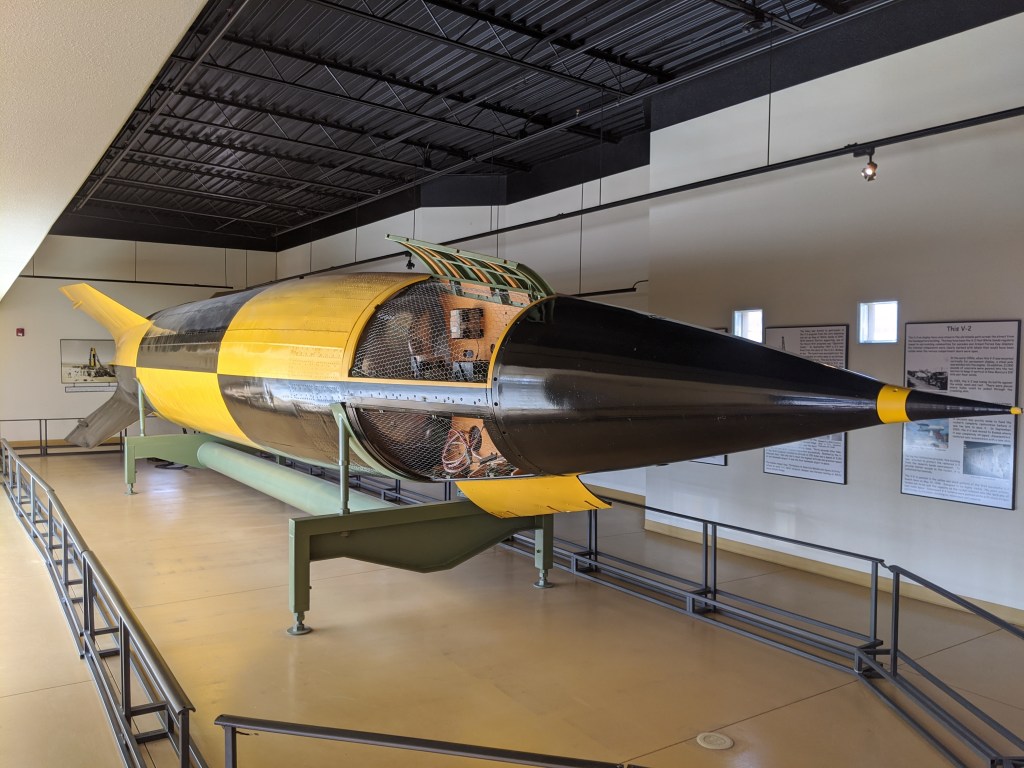
The museum also boasts one of the most complete original V-2 rockets in the world – this one was fully restored to original condition.
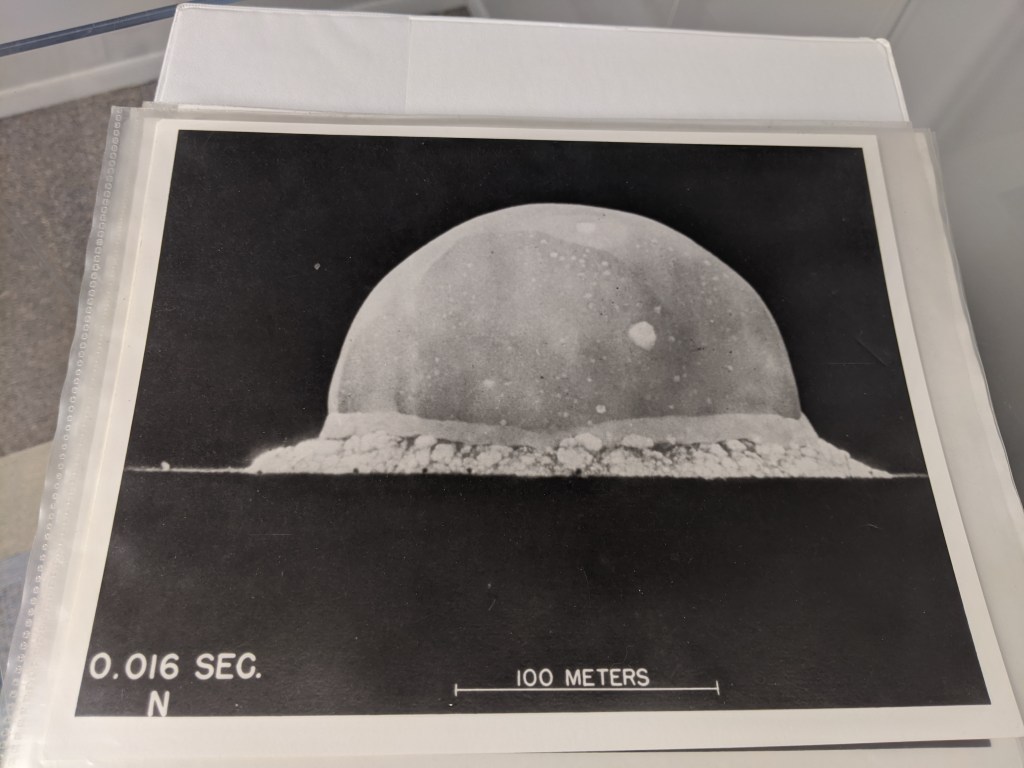
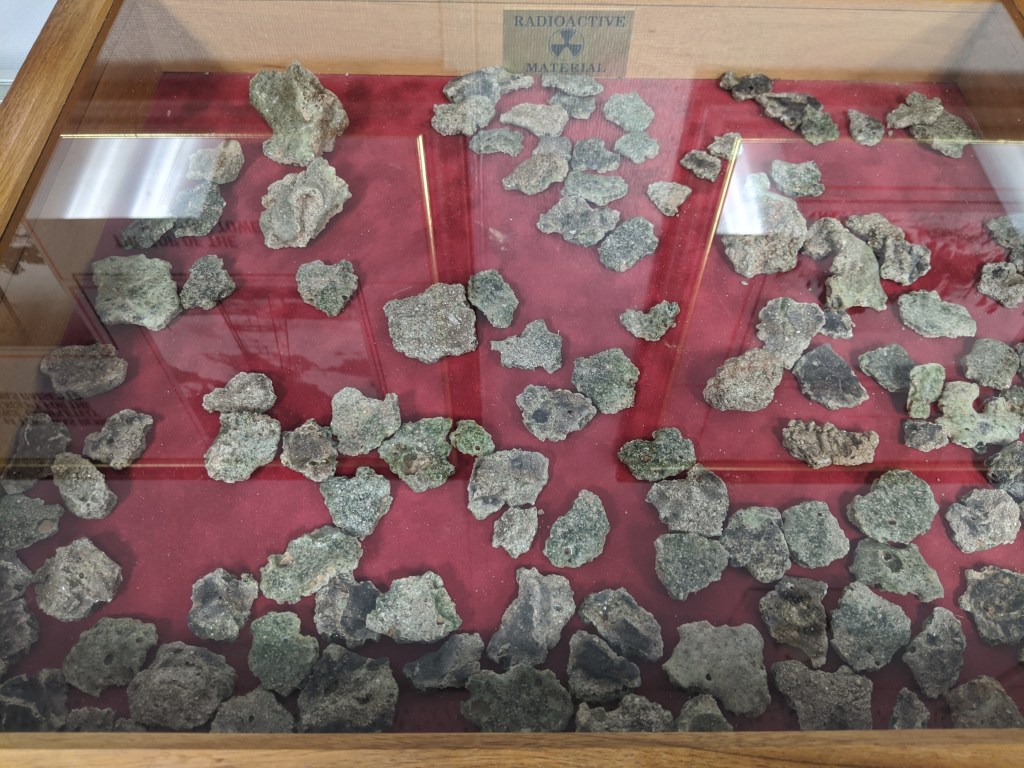
The Trinity test in 1945 was the first detonation of an atomic bomb. The explosion was so powerful that sand was melted to form glass, which was named Trinitite. I was overjoyed to see some of this at the museum.
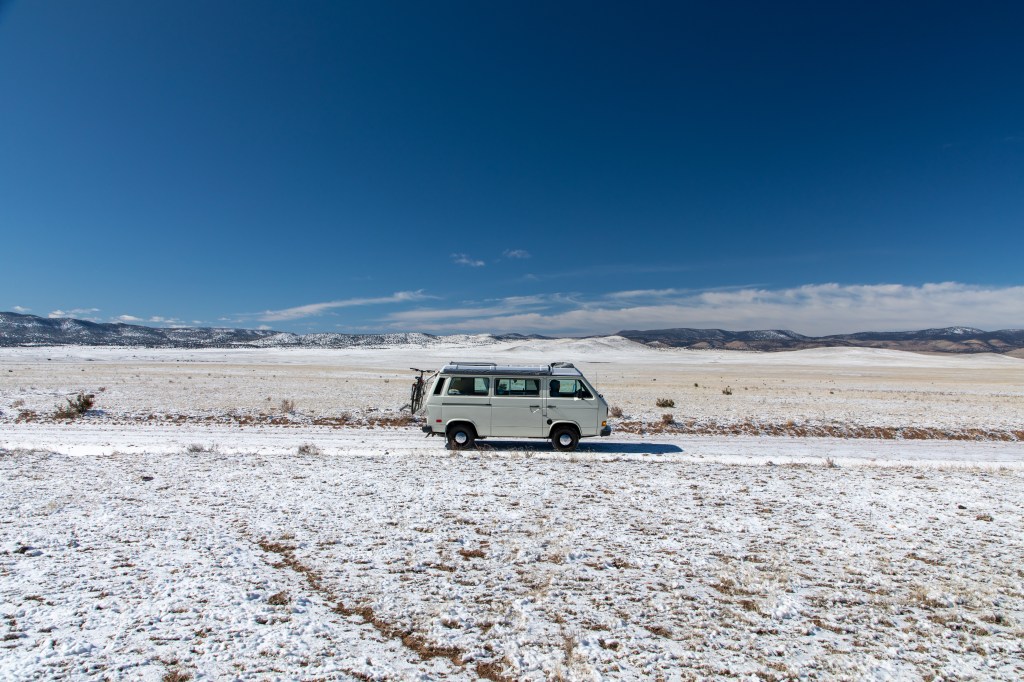
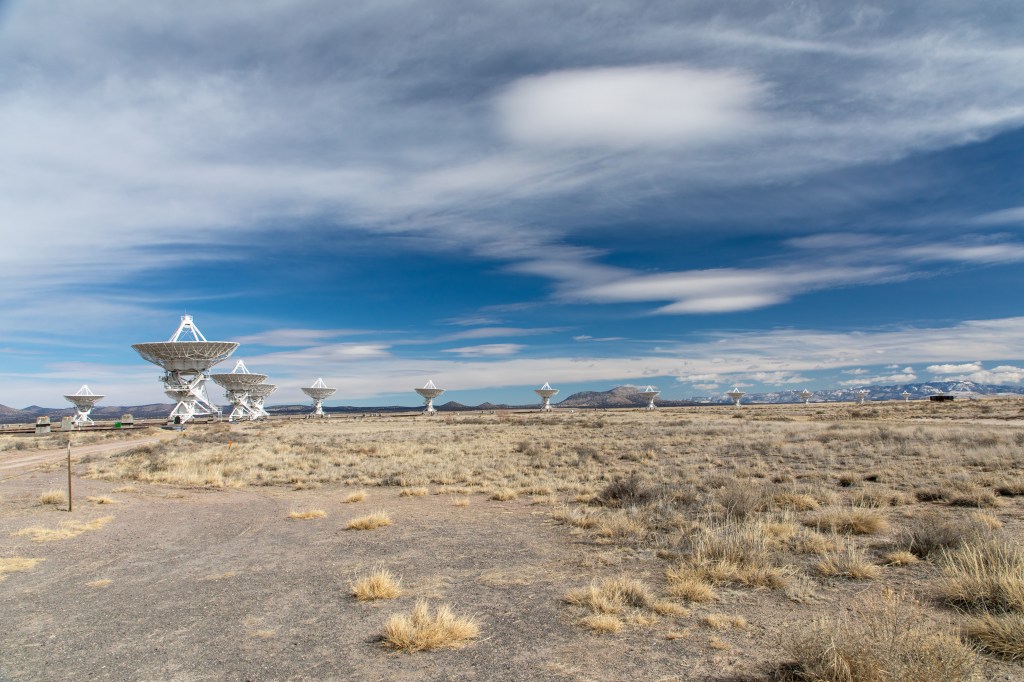
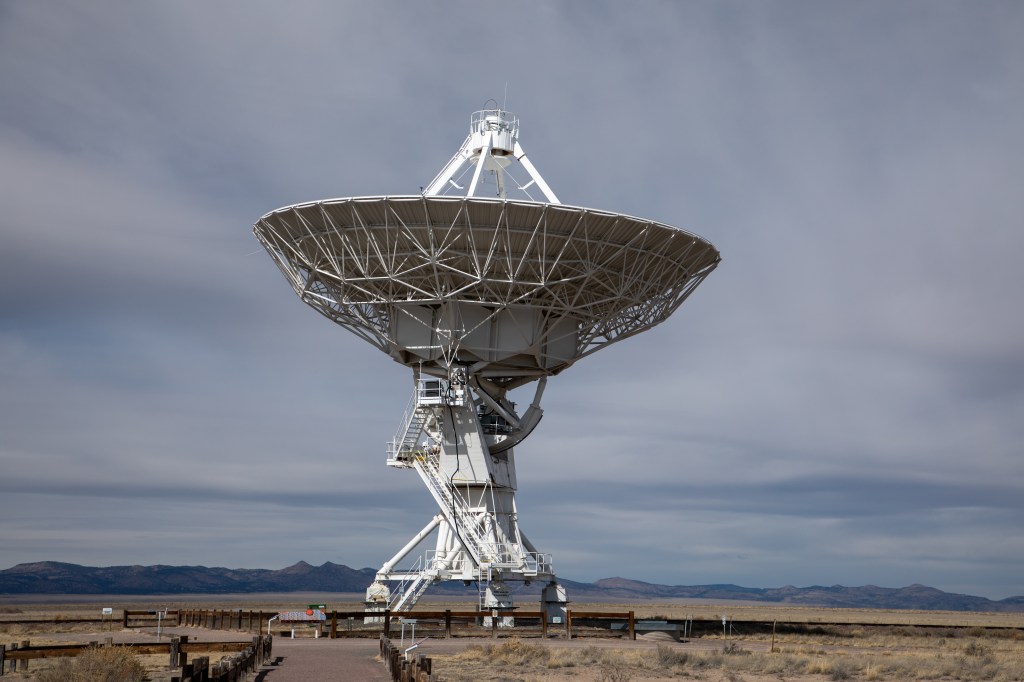
After the missile museum, we set our sites on the Very Large Array (VLA). Located in the high desert in the middle of nowhere, 40 miles of our drive was down a gravel road where we only saw one other car. It was cold and windy.
The whole VLA is mobile – each of the 27 radio antennas can be moved down railroad tracks with a maximum array size of 22 miles! The engineering that went on to build this place is quite impressive.
Abbey and I had a great time in this part of New Mexico, but now we’re setting our sites on the next destination – Pie Town!
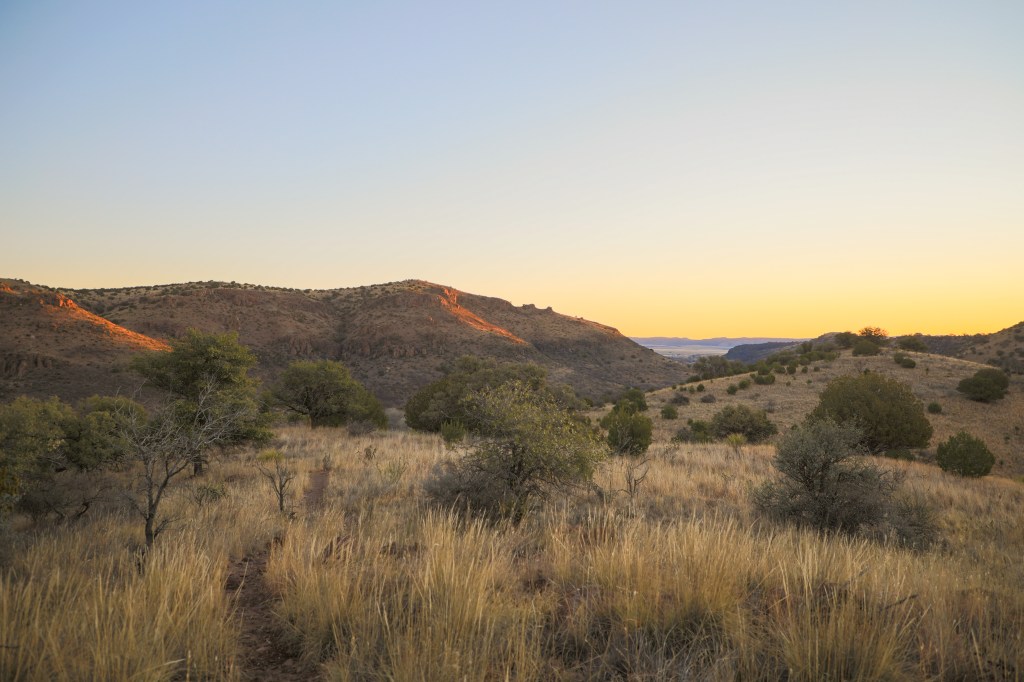
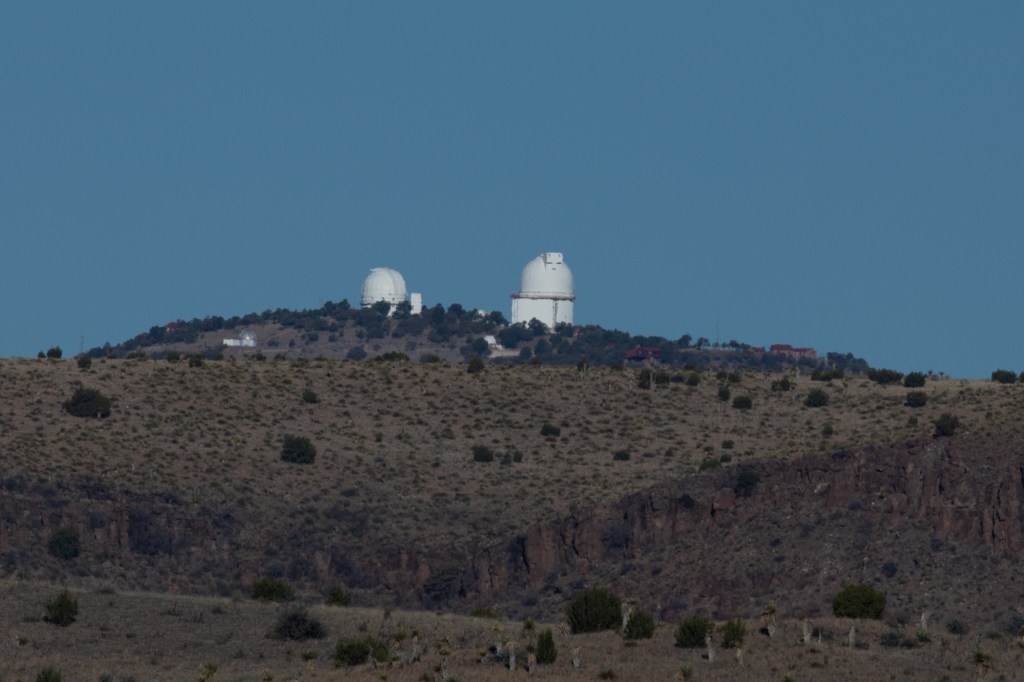
On our way out of Big Bend, Abbey and I decided to stay in Davis Mountains State Park for three nights. The park borders Ft. Davis National Historic Site, is near the McDonald Observatory, and and also has some fantastic hiking. Our first morning offered a pleasant sunrise.
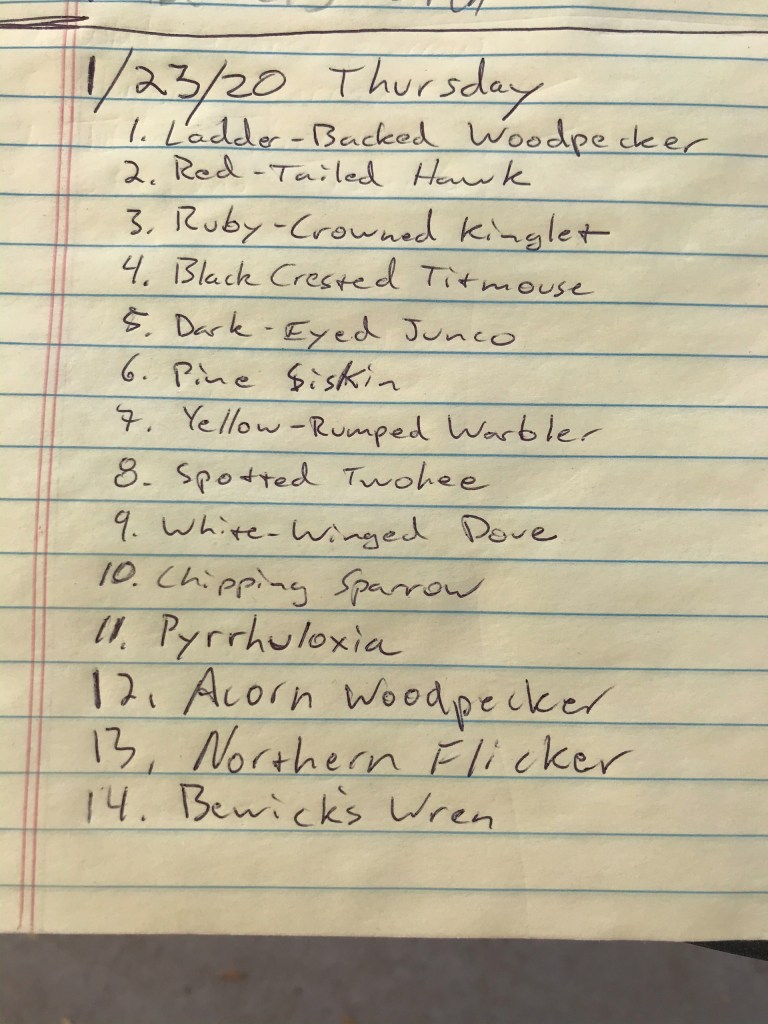
Abbey and I sat for a little while and watched birds. At this point it’s safe to say we’re birders. It’s very fun seeing strange new birds and trying to figure out what it is.
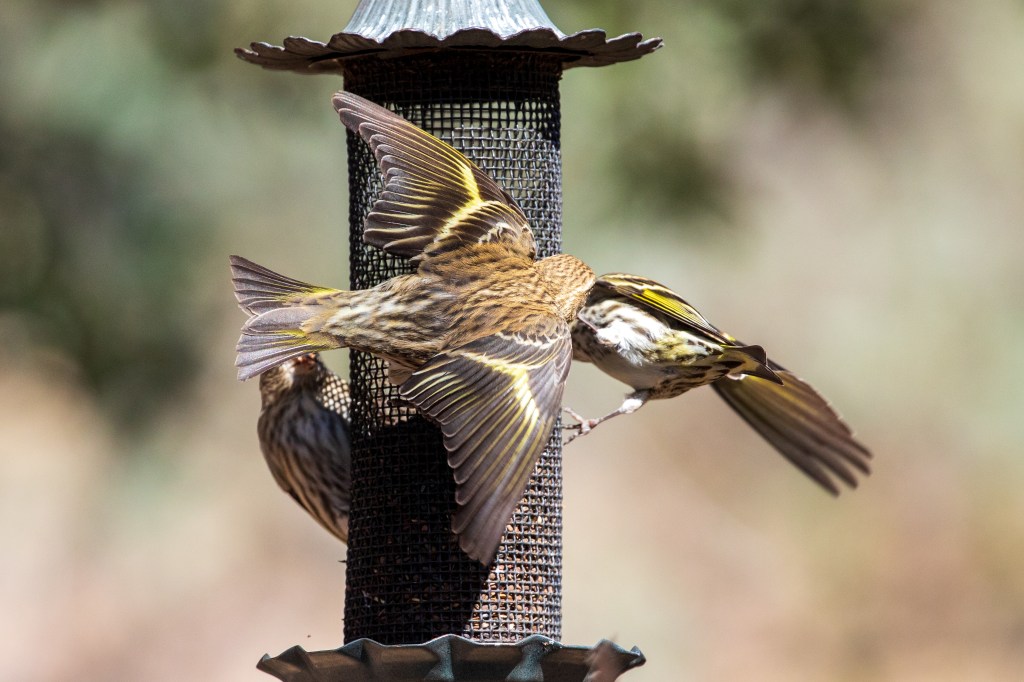
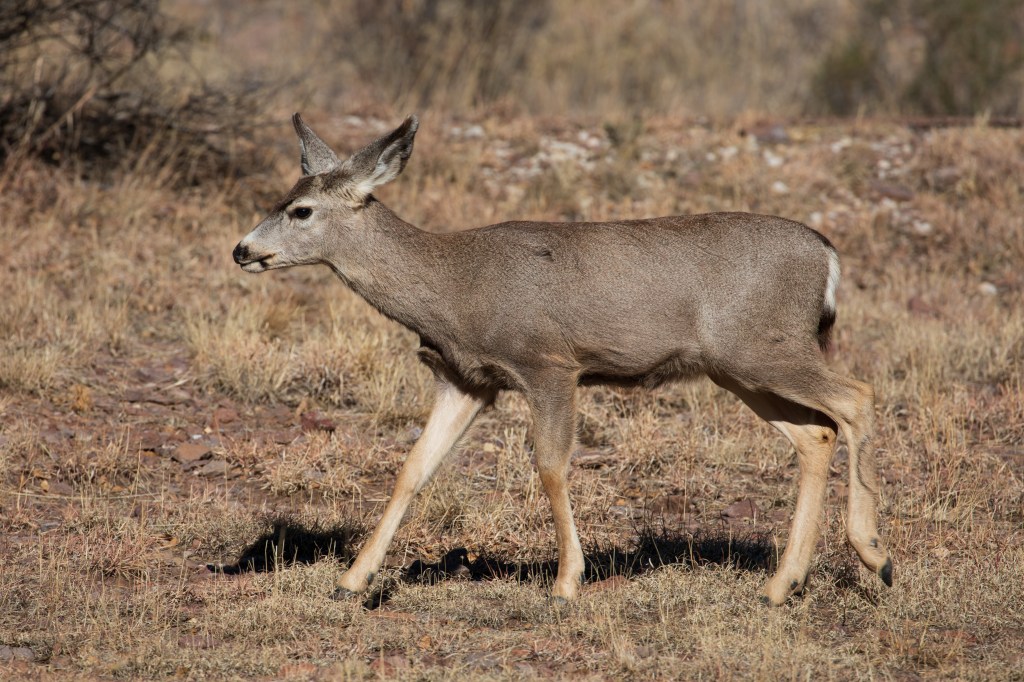
This state park feeds and waters the birds, which I find curious. It was nice to see some activity at the feeders (like these Pine Siskin), but it also draws in other creatures, like Mule Deer.
McDonald Observatory is a research facility that also hosts public events. Abbey and I went to a “Star Party” on a cloudless, new moon night. WOW, it was fun. We got to look through a bunch of very large telescopes at various nebulae, galaxies, and stars. We even got to see Uranus! (Insert astronomy joke here). The program also included constellation identification and how to find various exciting things like Andromeda. I didn’t take my camera because I didn’t want to waste any time I could otherwise be using to look through telescopes. Good decision.
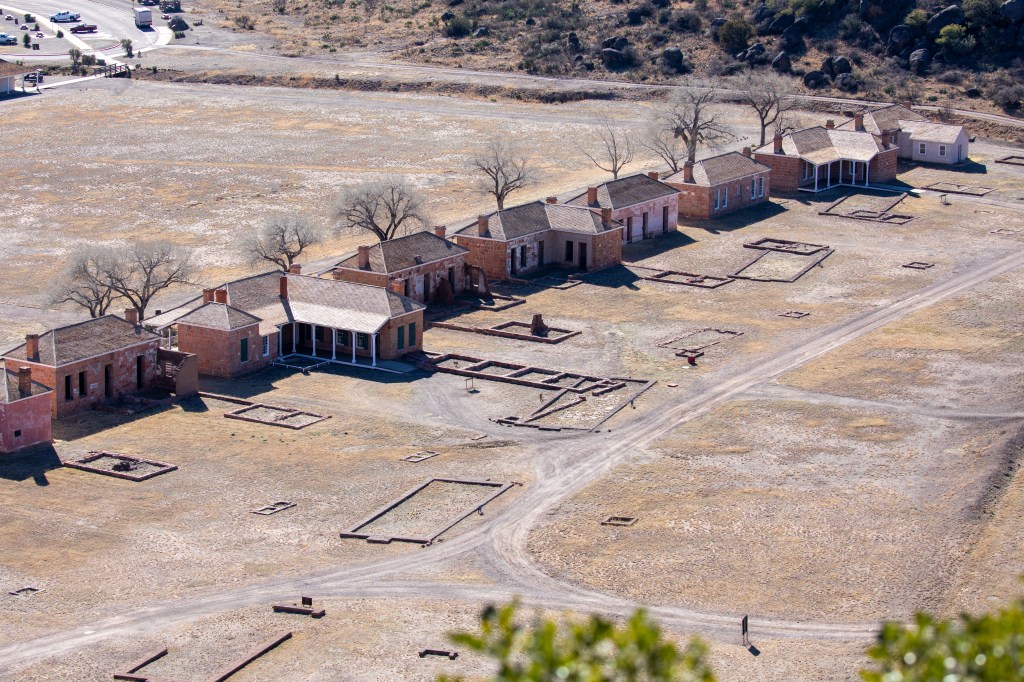
Fort Davis National Historic Site offers a look at a frontier fort from the mid 1800’s. The fort was used to protect (from Native Americans -sigh-) a popular route for settlers heading West. The buildings and grounds are very well preserved, and help to transport you back to the time period.
In the following picture you’ll note the strange angle of the foundations – One set follows true north, and the other magnetic north. The army changed how they lay out their buildings sometime around the Civil War. This also is a reminder to the importance of declination when orienting a map!
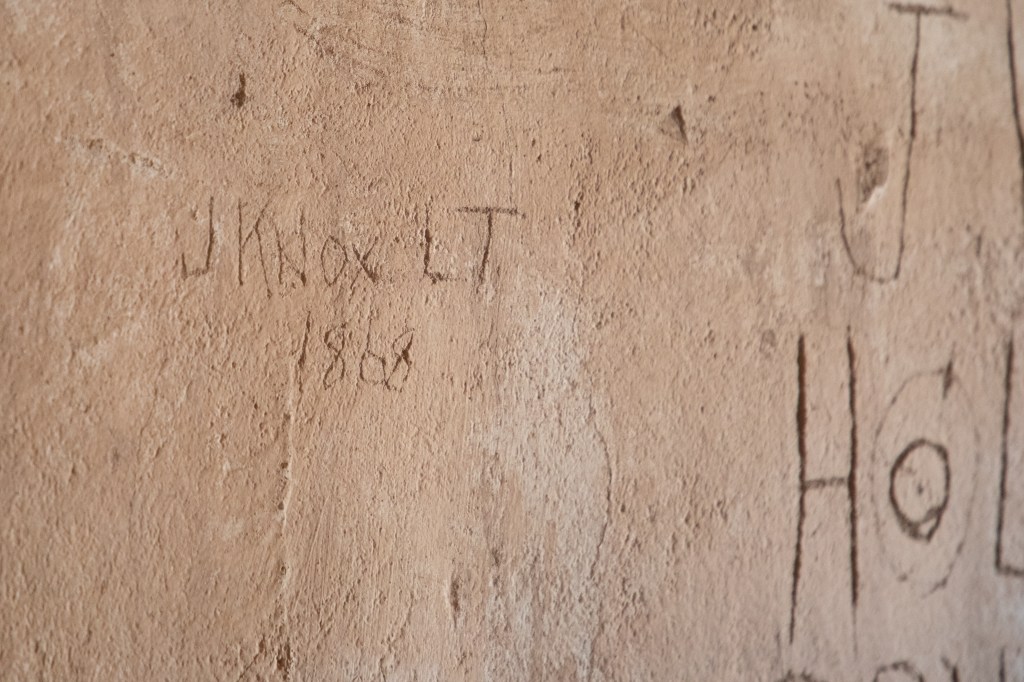
How old does graffiti have to be before it becomes archaeologically interesting?
Guadalupe Mountains National Park and Carlsbad Caverns National Park are part of the same geologic feature – the Permian Basin. This ancient sea covered vast expanses of the Southwest, and was home to an impressive coral reef some 250 million years ago. Some 400 miles of that reef was exposed through mountain building over millions of years. It is considered one of the best exposed marine reefs in the world.
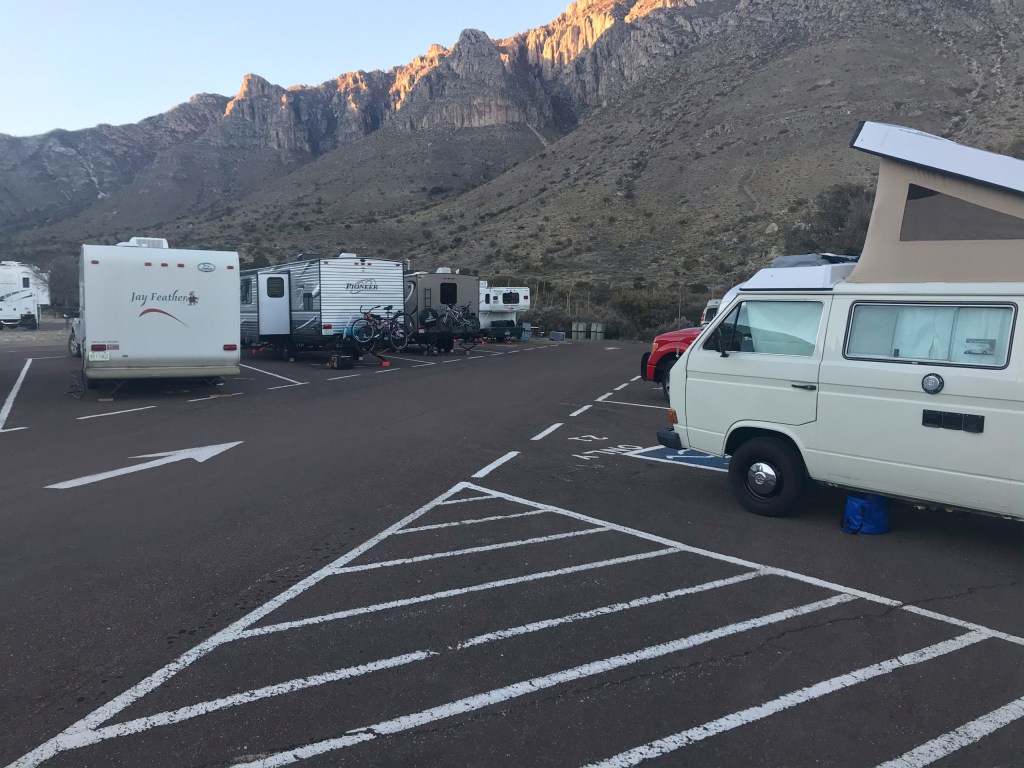
Abbey and I arrived at Guadalupe Mountains just in time to get the last spot in the “campground.” Unfortunately, this “campground” is actually just a parking lot, and was a rather disappointing start to this National Park.
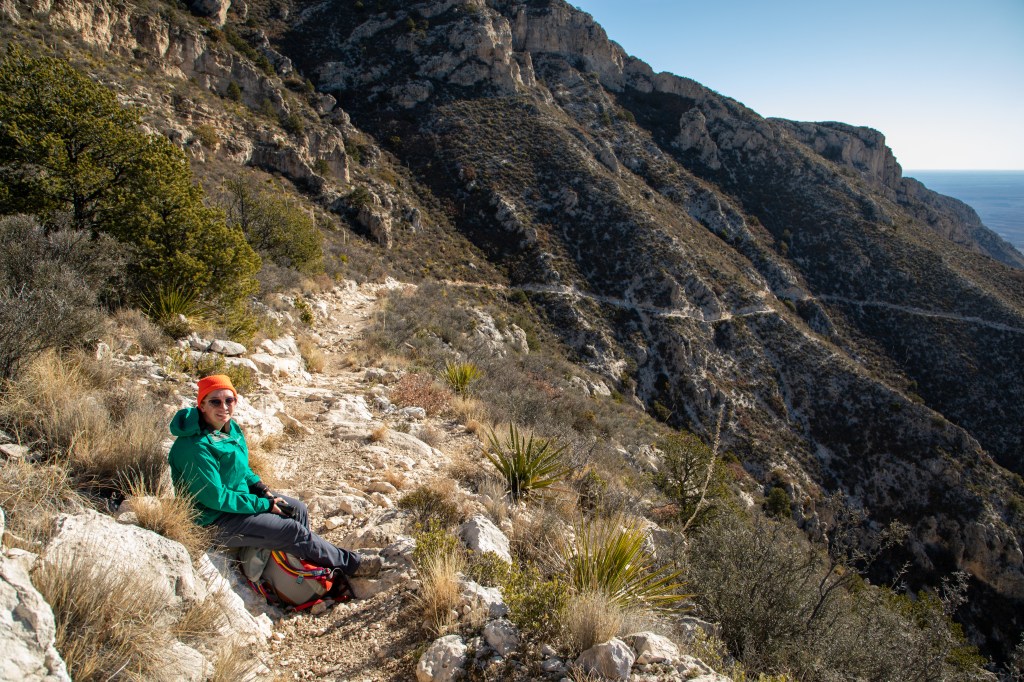
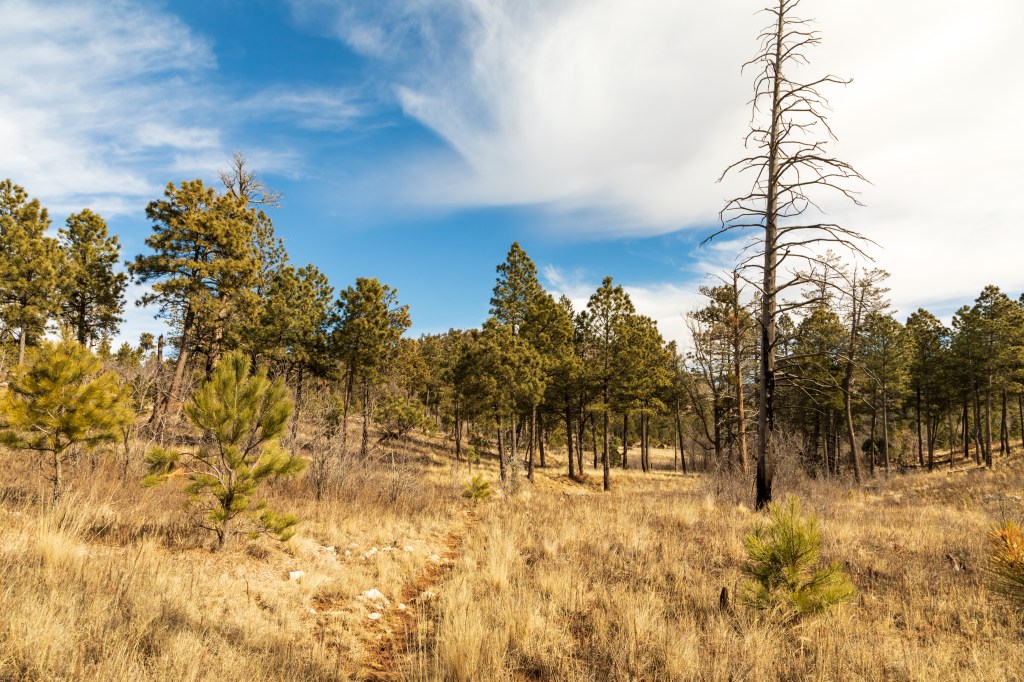
The next morning we started out early on a 10+ mile hike to “The Bowl.” The trail started out by promptly ascending 2,500 feet. ugh. After countless switchbacks, the trail crossed over a ridge into “The Bowl,” a protected area high in the mountains whose landscape greatly contrasted the arid desert below. Suddenly there were grass meadows, ponderosa pines, and even oak trees. Supposedly there are elk up here too, but we didn’t see any. We had a peaceful lunch in the meadow.
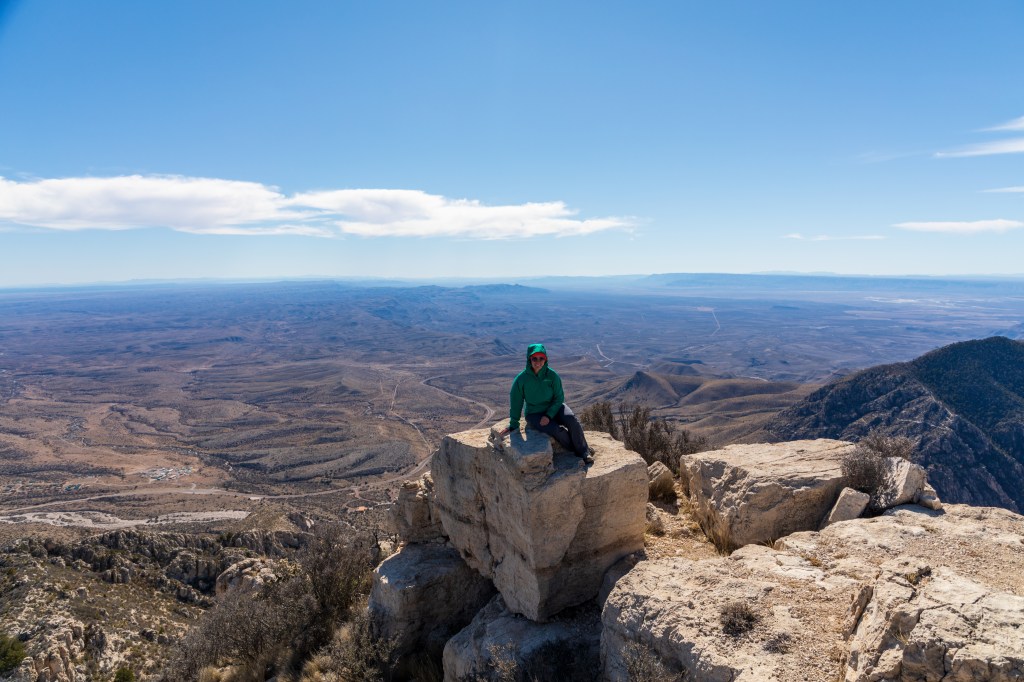
Abbey and I summited Hunter’s Peak, about 8,400 feet, and had more great views of the Texas plains.
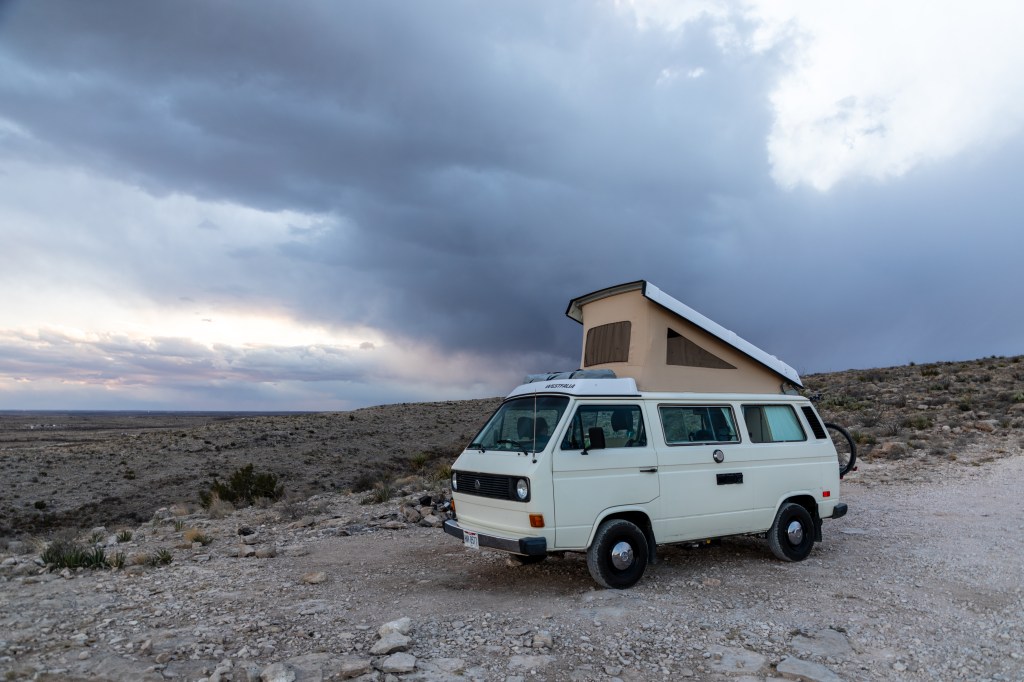
After leaving the parking lot campground, we headed out to BLM land in New Mexico. BLM land is wonderful because it’s remote, free, and quiet. The campsite we found was way out in the desert. It was cold and WINDY. At one point we put down Evelyn’s top for fear of it becoming a kite.
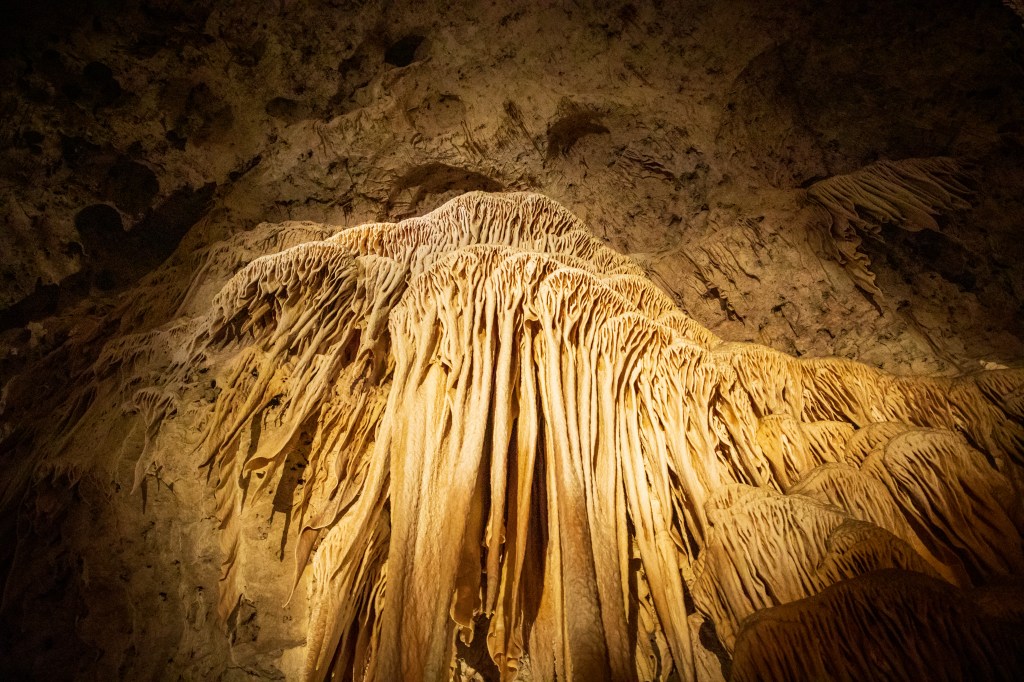
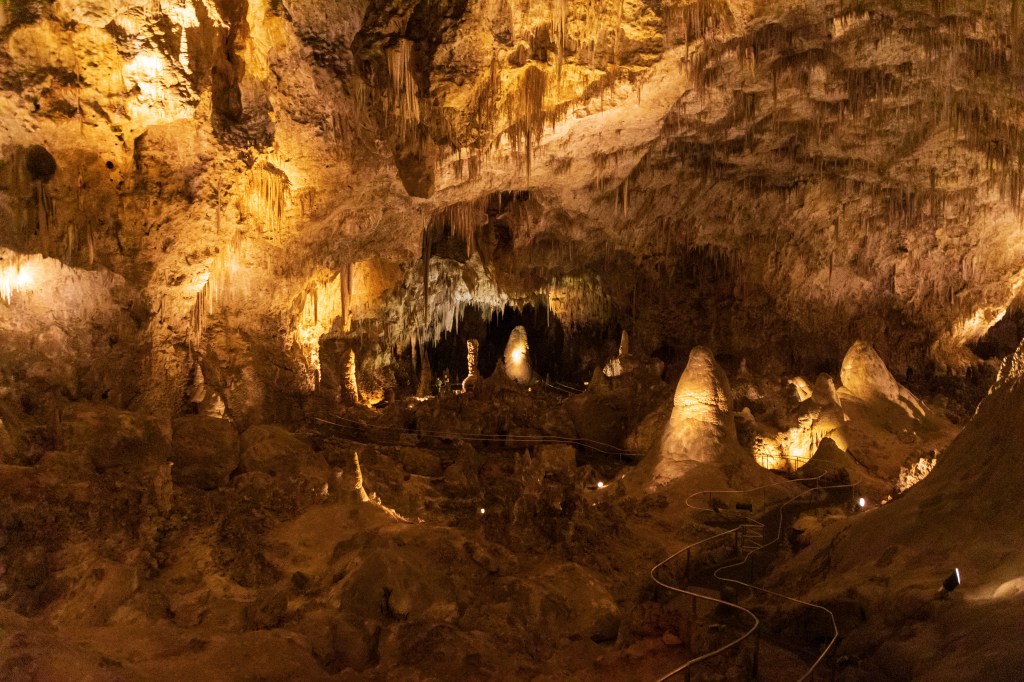
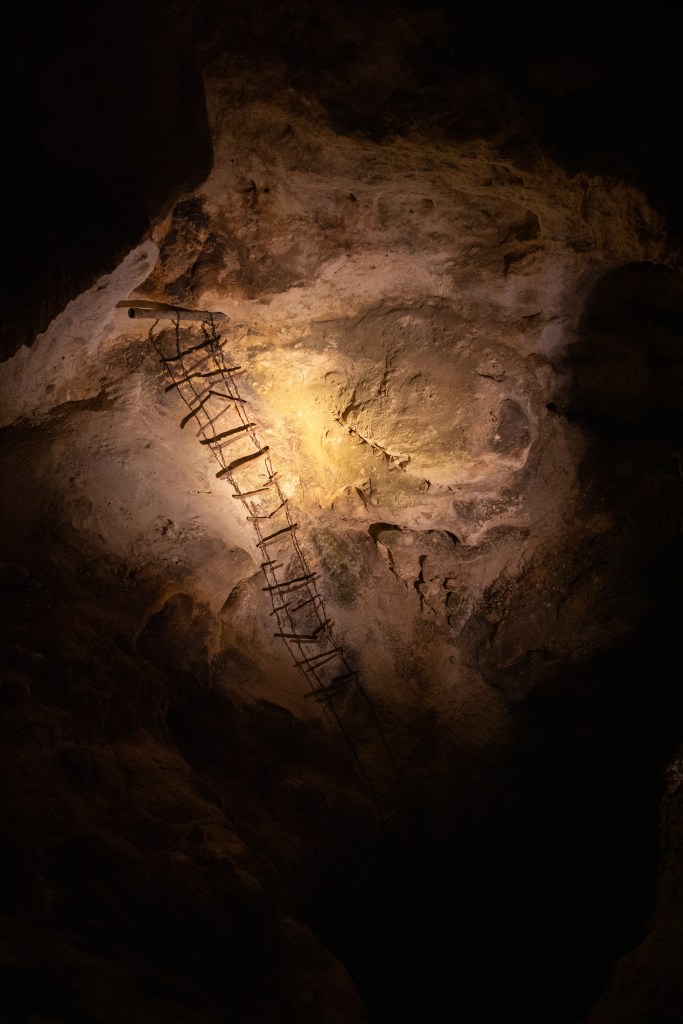
Carlsbad Caverns is an experience. You start on the surface and hike down the mouth of the cave until you’re 755 feet below ground. I have never seen anything remotely like this in my life. I felt small, yet timeless.
The original 1924 National Geographic Expedition ladder is still in place at a deep part of the cave.
I didn’t use my tripod in the caves, mostly because there is limited space on the paths. It doesn’t really mater, though, because no picture can accurately convey how incredible these caves are. Make plans to go.
Evelyn is doing fine. She just rolled past 290,000 miles. Keep ’em running, I say.
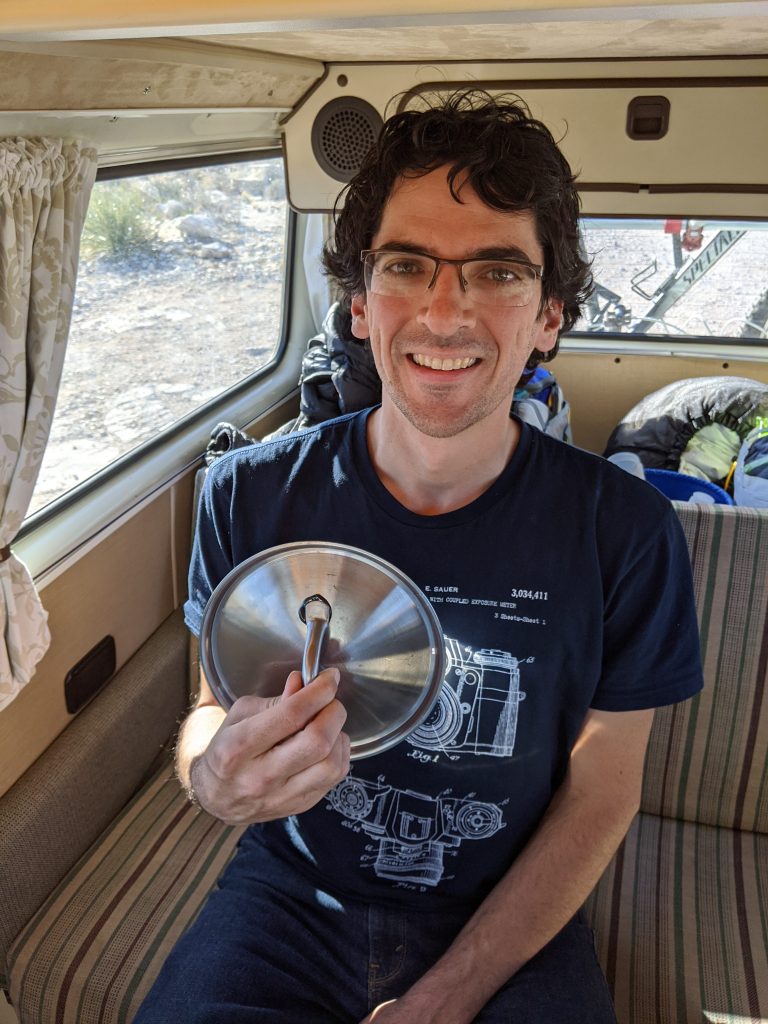
The handle on Abbey’s pot broke. It was an easy fix with JB Weld. I’ve been carrying the stuff in my cars ever since I was 16 and have only ever needed it a couple times (radiator in ’85 Mercedes, cracked intake manifold ’72 Chevy). Hopefully I’ll never need it with Evelyn.
Big Bend National Park is larger than the state of Rhode Island. It’s the only national park that completely contains an entire mountain range (The Chisos). The landscape is diverse, as is the wildlife here. Abbey and I were stunned by the birds especially. Over 450 bird species are documented as either living in, or migrating through, the park. Our time in Big Bend was characterized by good luck that lasted all 8 days we were here.
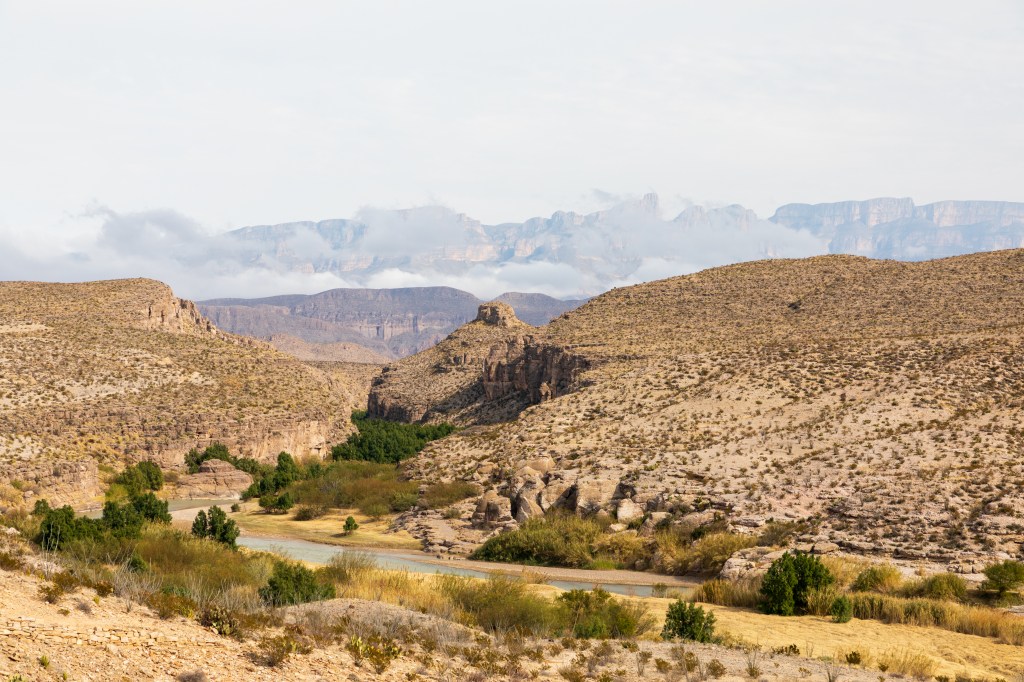
The Rio Grande runs over 100 miles inside the park and is the border between the United States and Mexico. There is no wall here – the desert is all the barrier that is needed.
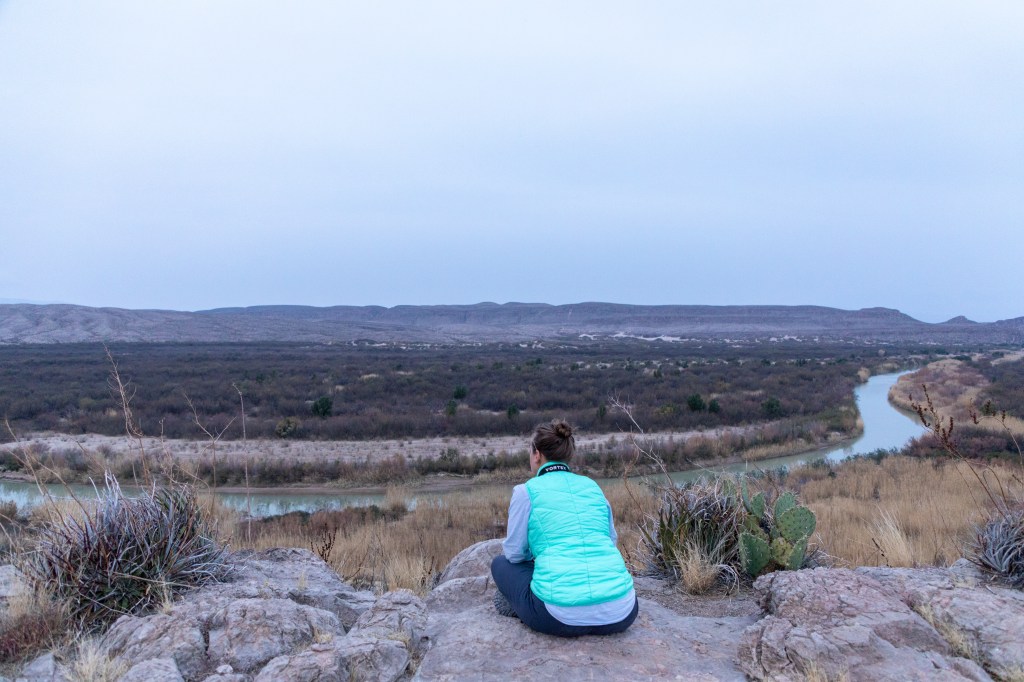
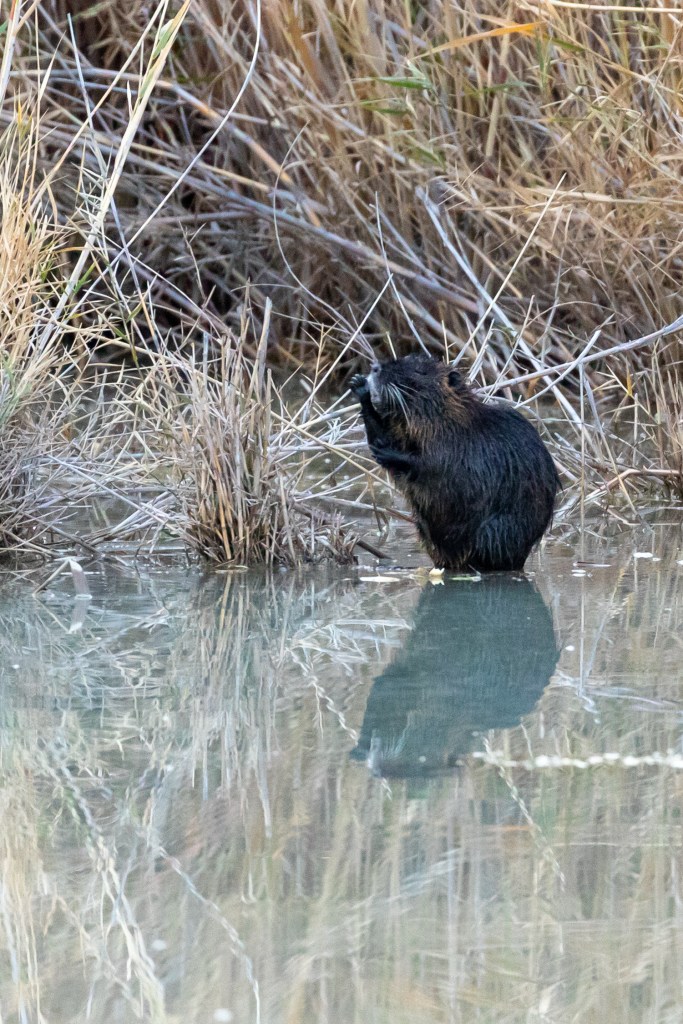
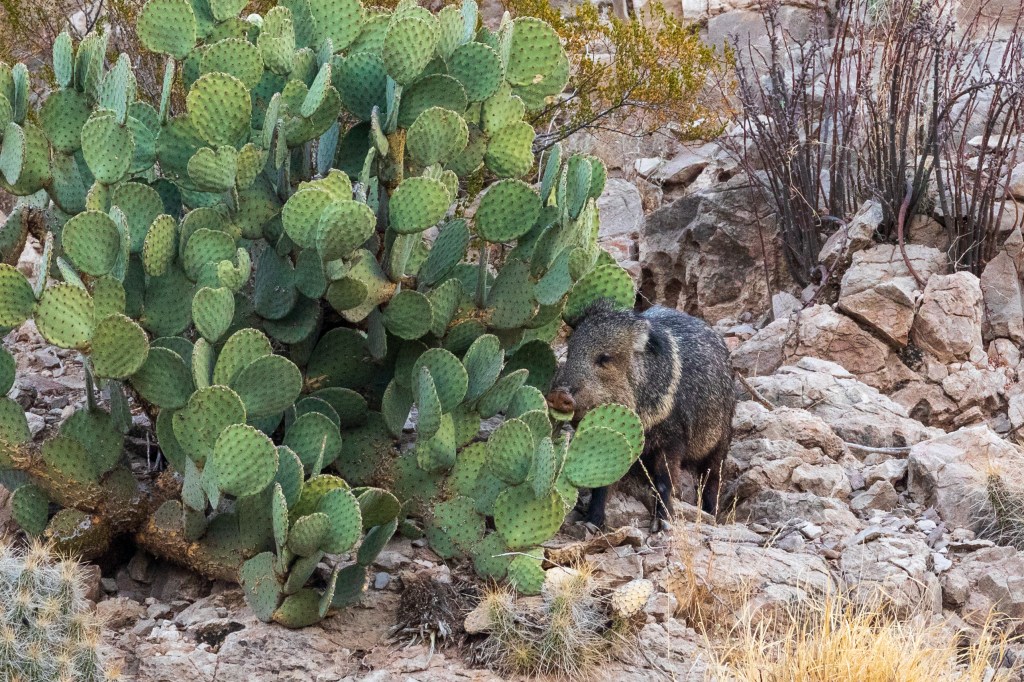
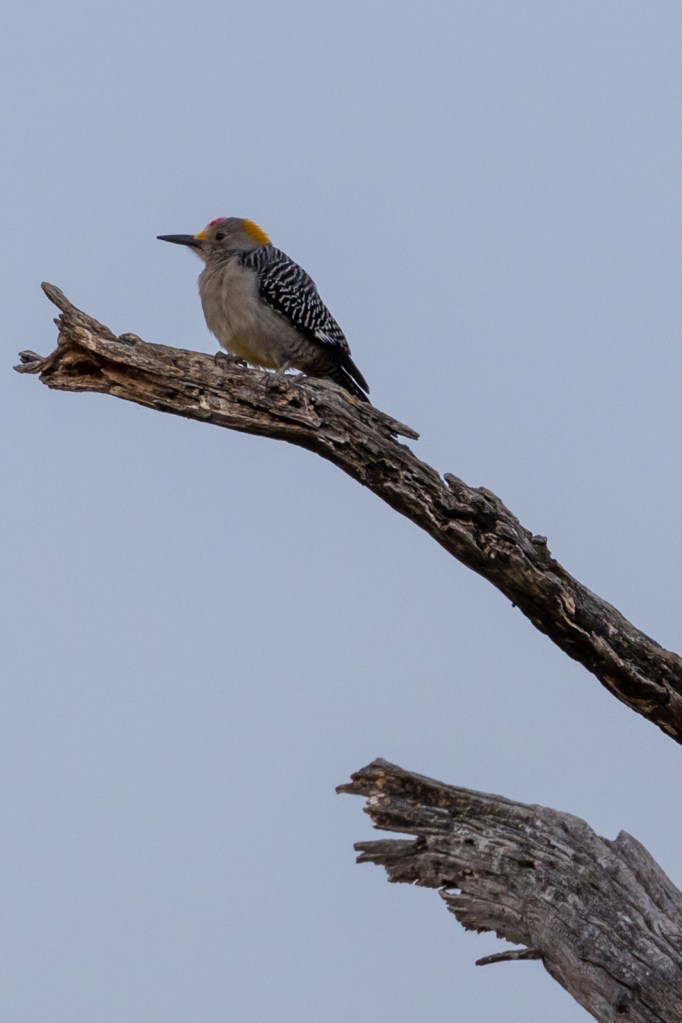
After watching a sunset over the Rio Grande and Mexico, Abbey and I saw a family of muskrats swimming and playing. At the same moment, a Golden-Fronted Woodpecker flew into a tree near us, and then rustling in the hills above turned out to be a family of a dozen Javelinas foraging for prickly pear cactus. Abbey and I were speechless.
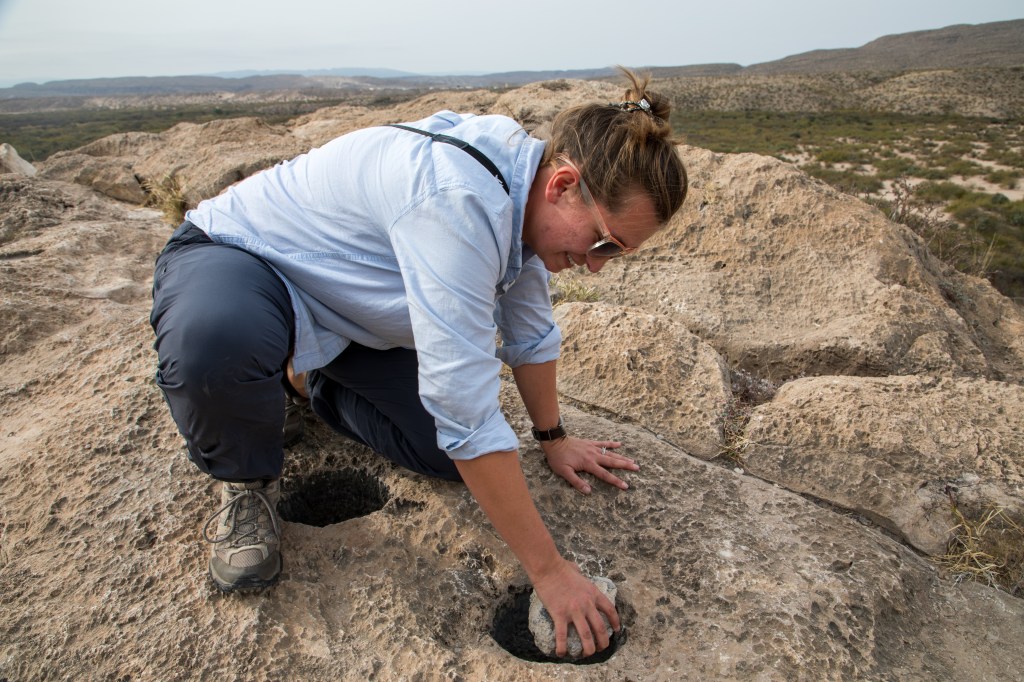
Boquillas Canyon and the areas surrounding have been inhabited for thousands of years. Circular holes were ground into solid rock, and then used to mix and grind (like a mortar and pestle) various ingredients and compounds. I found it interesting that these were often located on top of rock outcroppings. People living thousands of years ago liked a good scenic view, too.
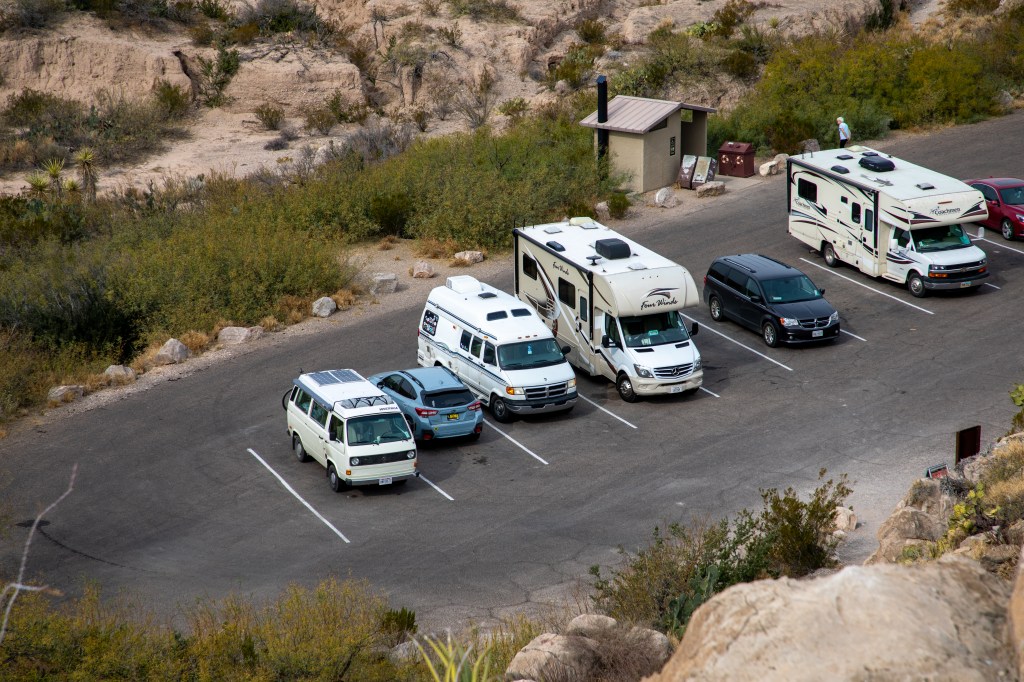
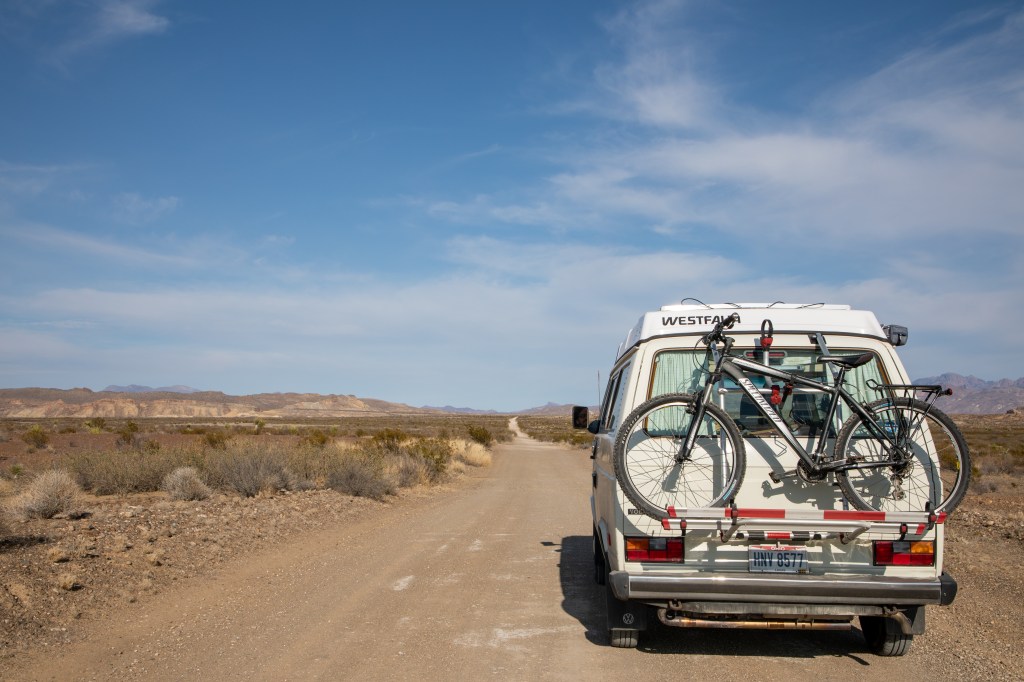
Abbey and I love Evelyn because she is very compact. It’s nice not having to drive around a monstrous RV or van.
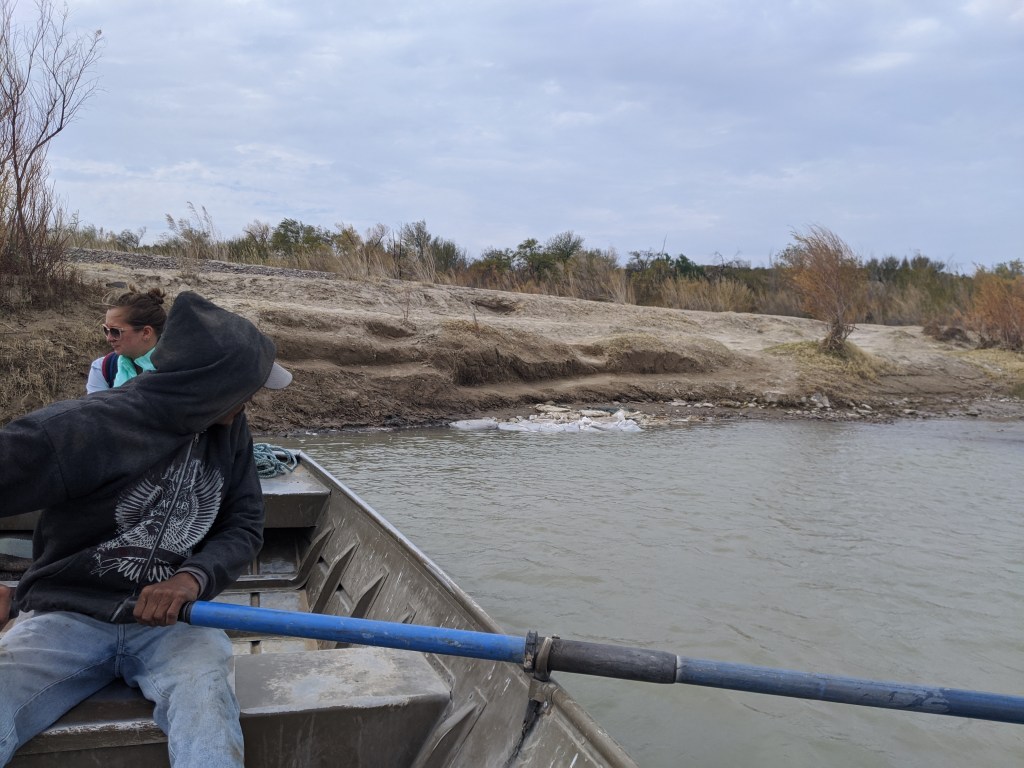
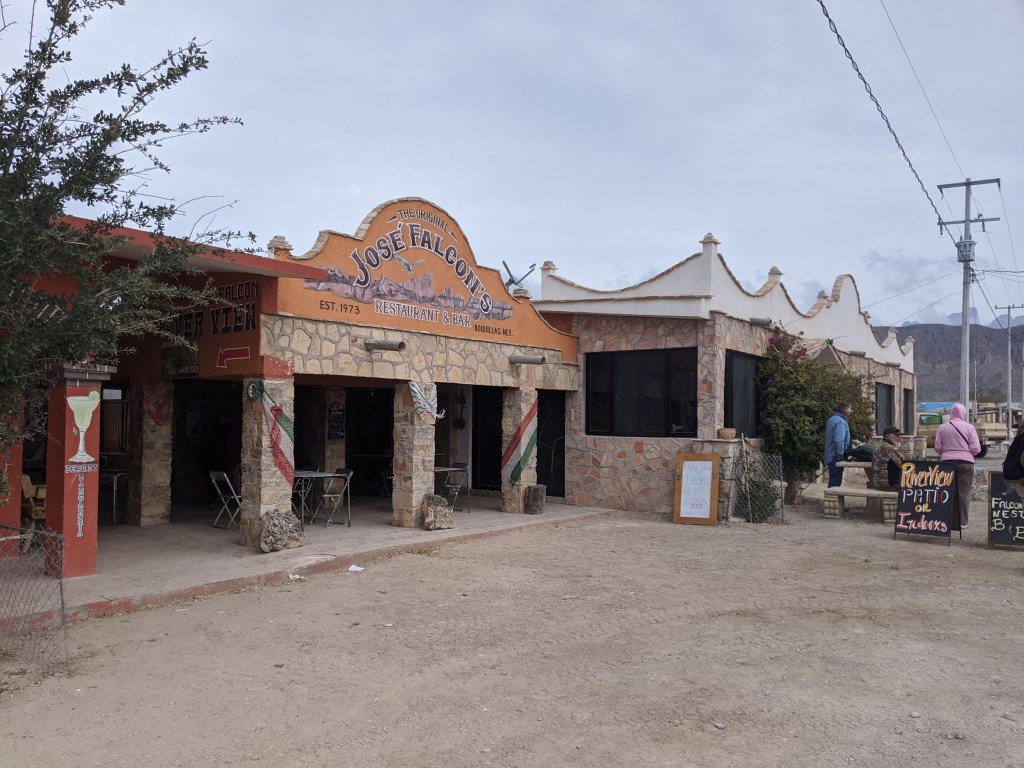
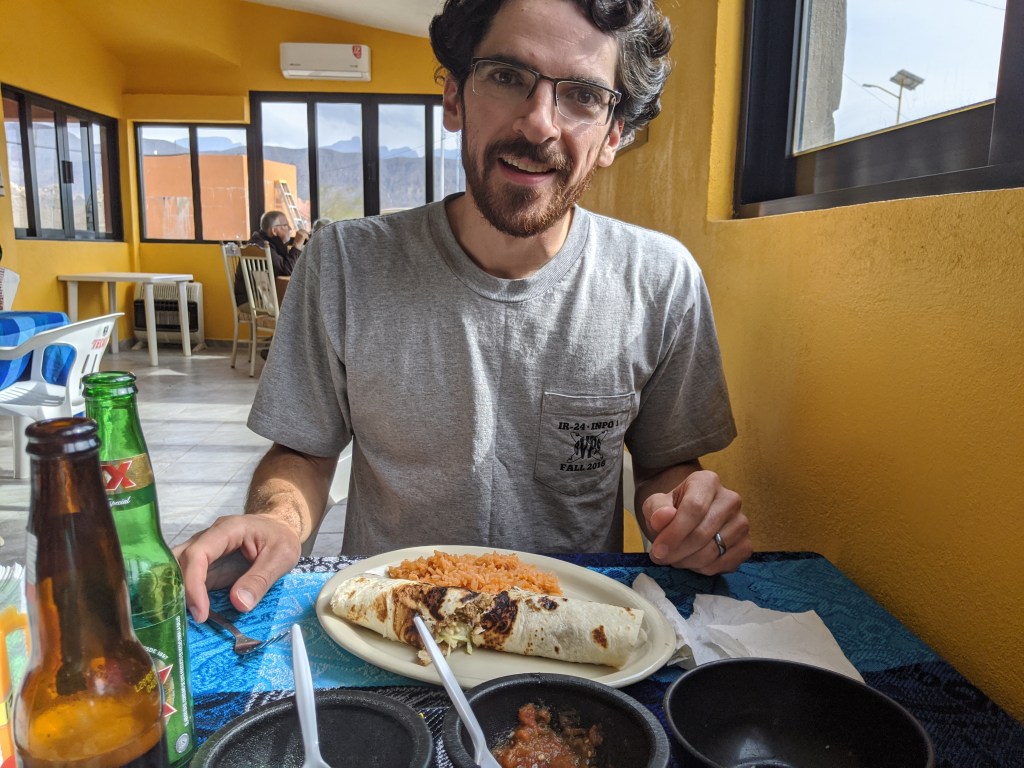
Abbey and I decided to cross into Boquillas, Mexico for lunch one day. There is no bridge. You pay a Mexican guy $5 to row you across the Rio Grande in a boat. We ate at Jose Falcon’s, one of two restaurants in the town. The food was simple and delicious, and all homemade. The salsa was the best I’ve ever had – a mix of peppers, carrots, onions, and happiness. I had a Dos Equis (reliably good) and Abbey had a Tecate Red (yuck). I’m glad we decided to go across the border – Janell will be so proud of us.
Petroglyphs are scattered throughout the park. These markings are between 2,000 and 3,000 years old, and obviously depict an ancient race of squid overlords.
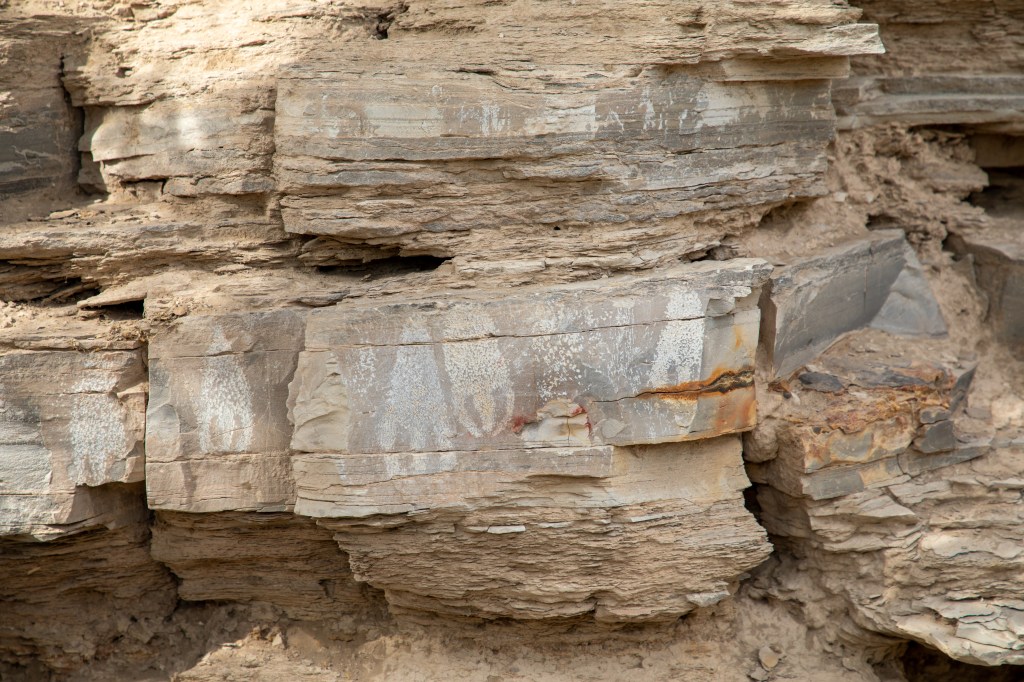
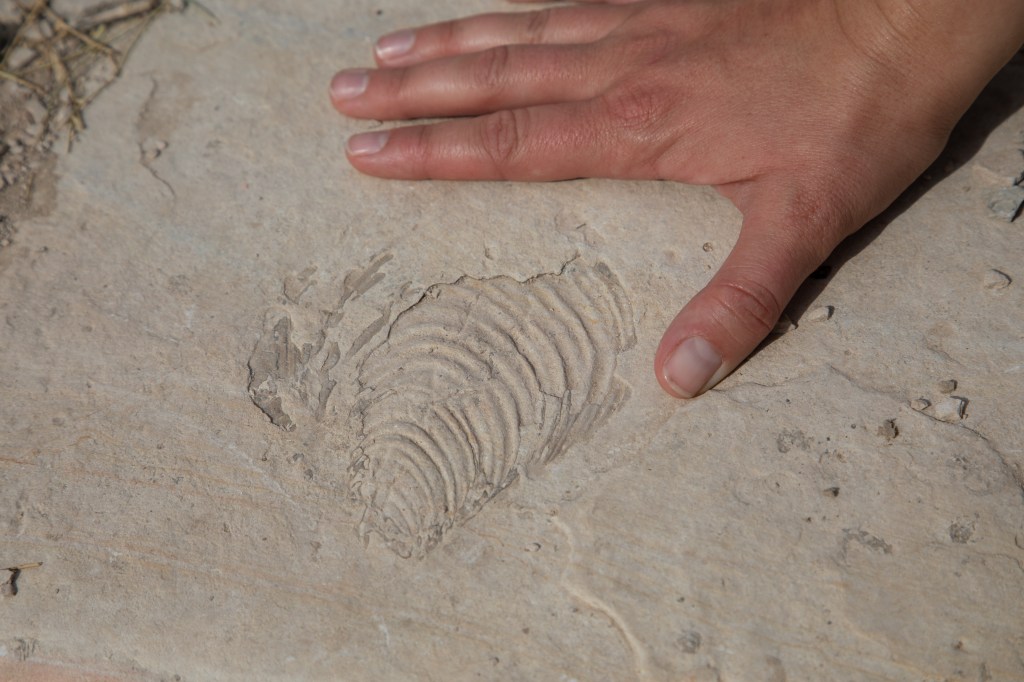
Big Bend was a shallow sea 130 million years ago, so there are fossils of various shells all over. Later, the area became a swamp, then a desert, then volcanoes and multiple massive eruptions, then erosion, and finally the current state – a unique, geologically goofy landscape.
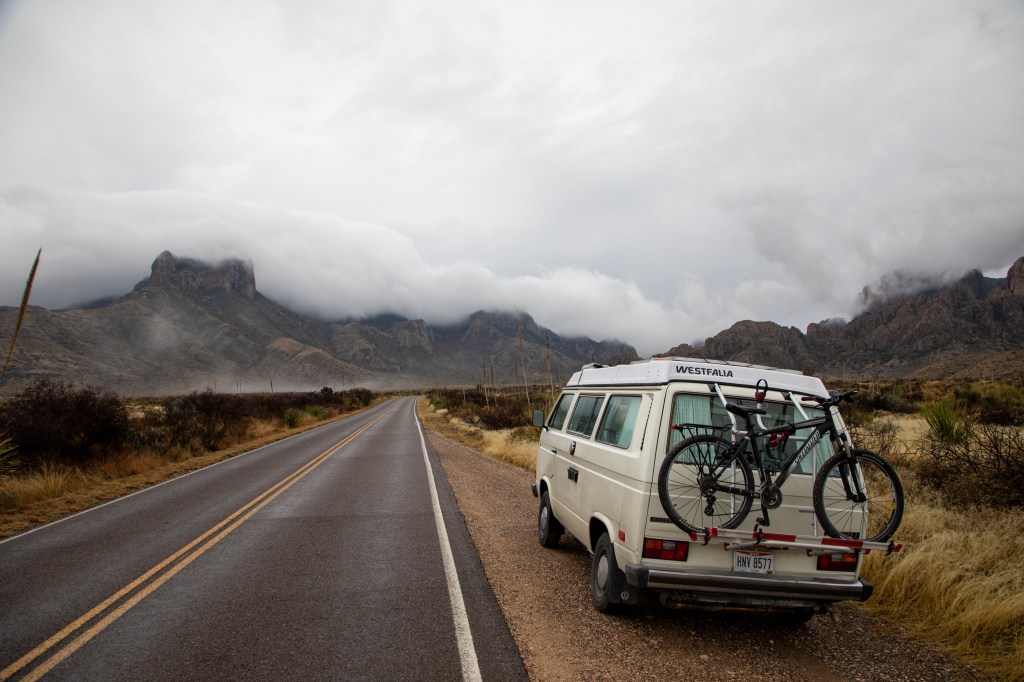
One night it rained heavily, which resulted in a damp and cloudy morning that really seemed to bring out the wildlife and the colors. More good luck.
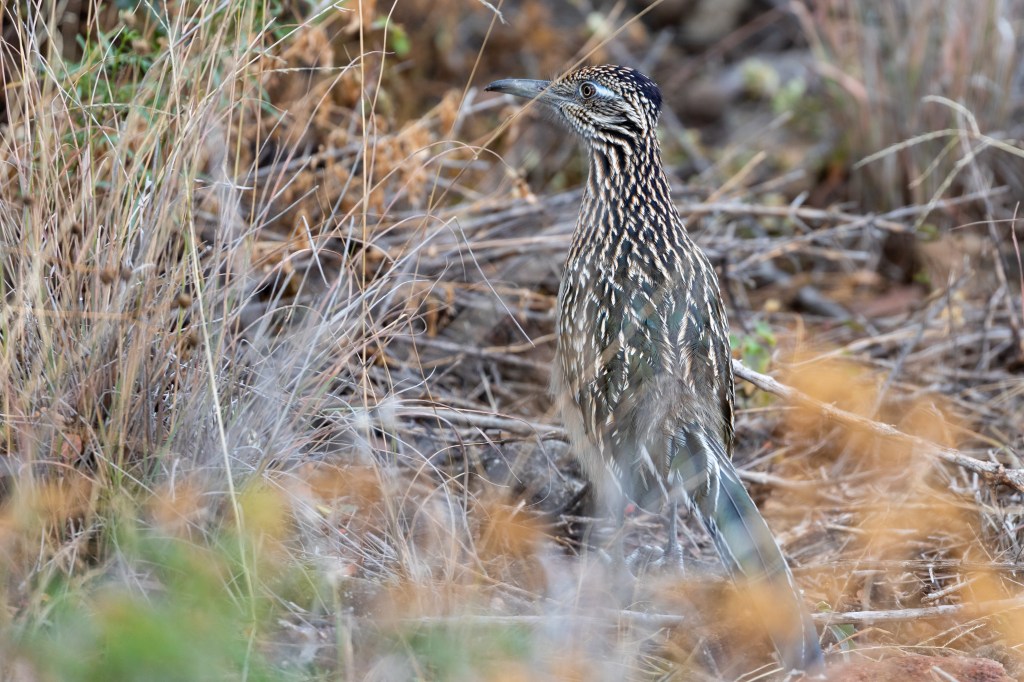
Roadrunners are everywhere out here. So are coyotes, but we didn’t witness any interaction.
Abbey and I had never seen a Pyrrhuloxia before. Since we don’t know how to pronounce that, we just call them Whacky Cardinals.
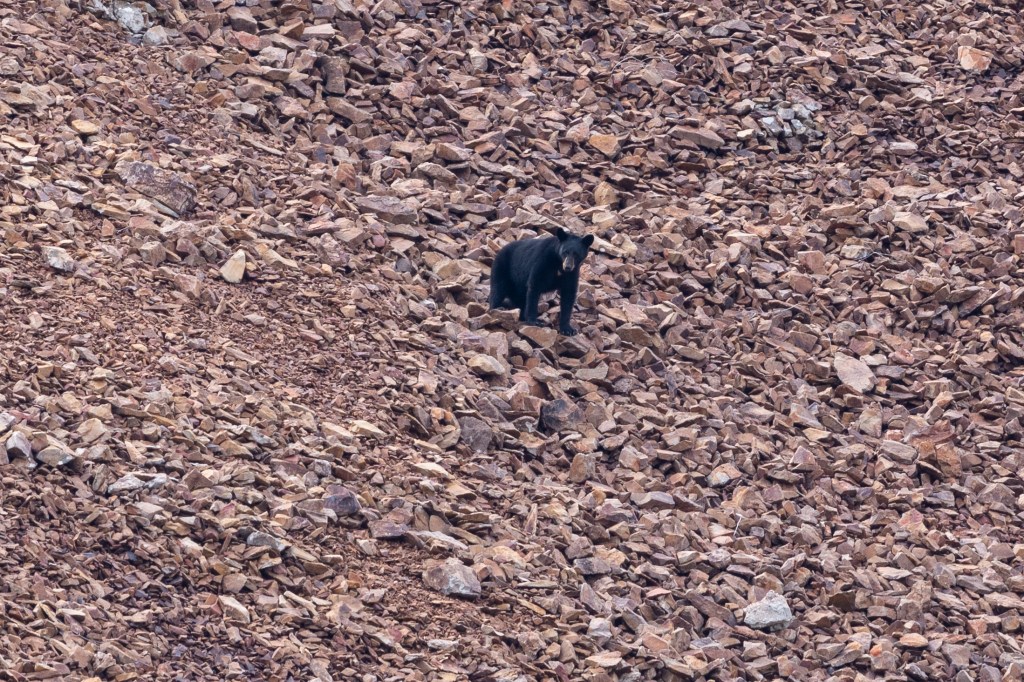
Mexican Black Bears were eradicated from the Big Bend area before it was a park. Thankfully, the bears began reappearing in the park in the 1980’s on their own, and now there is a small but stable population. Abbey and I saw four!
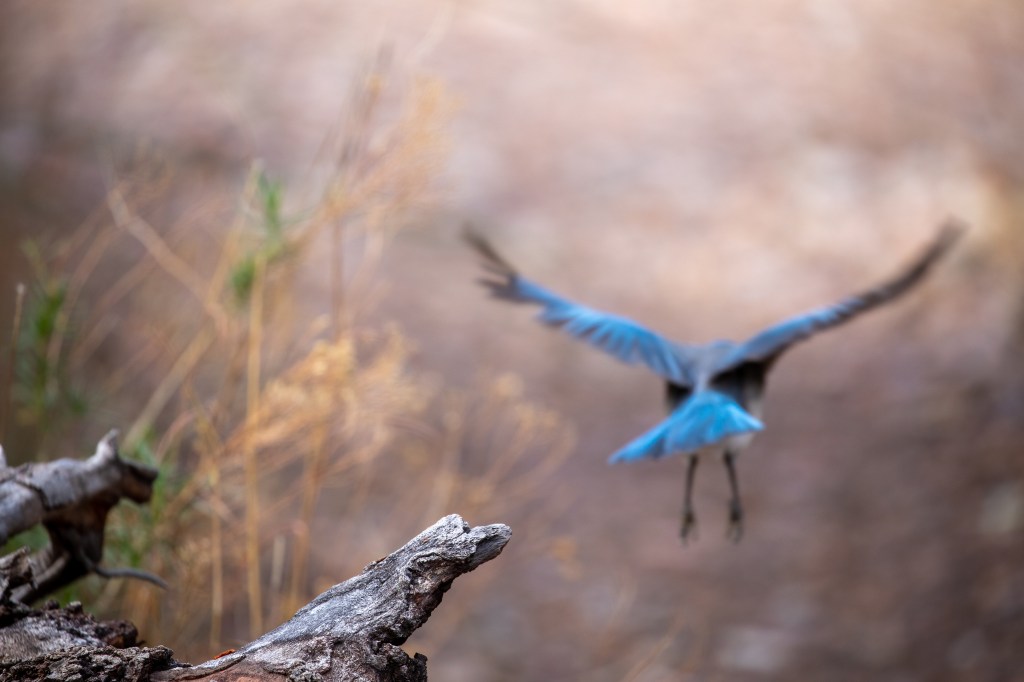
Mexican Jays are just like any other member of the Jay family – loud and obnoxious. This one wouldn’t sit still for a picture.
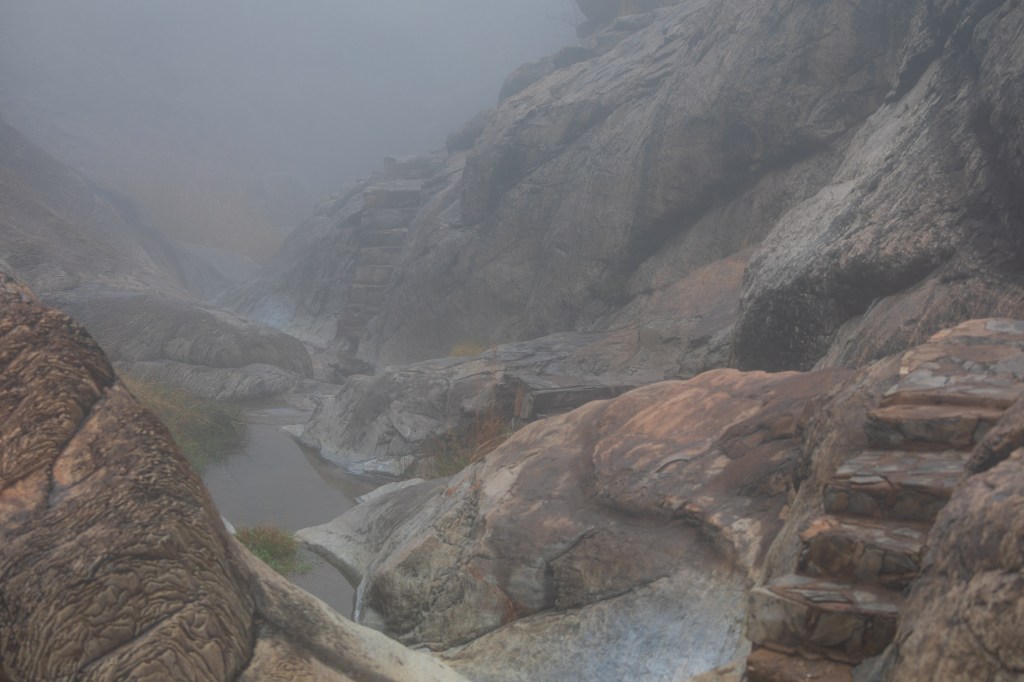
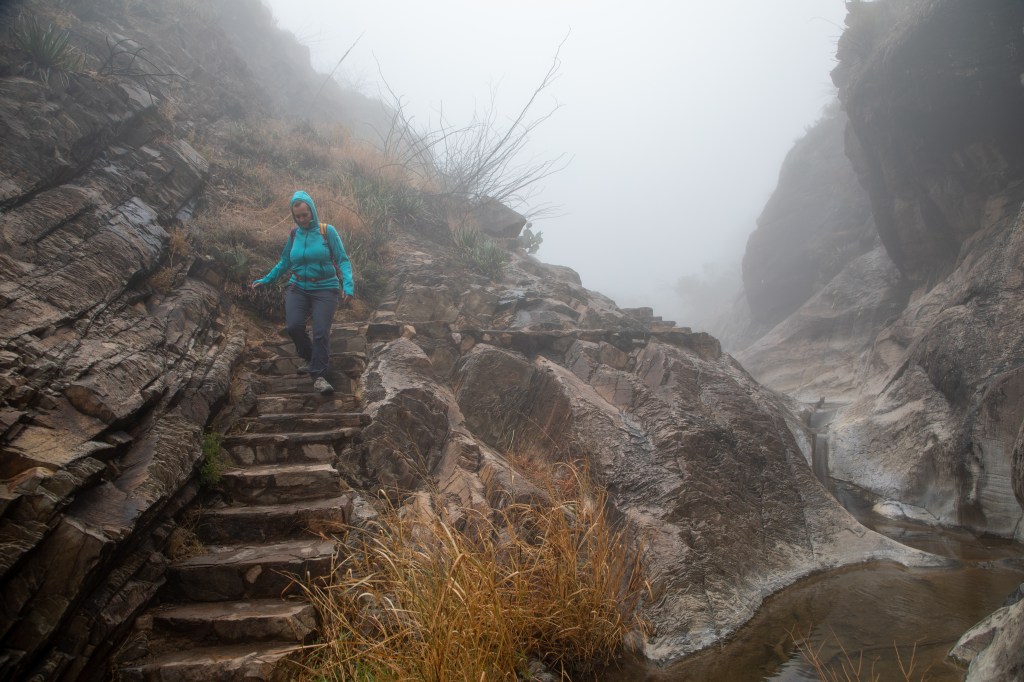
Abbey and I hiked down into a steep valley cloaked in fog. The stillness and complete silence made it very eerie, and I was without words to describe this magical place. The fog here was only because of the rain the night before, and it quickly dissipated as the sun crept higher into the sky. Abbey and I were lucky to witness this.
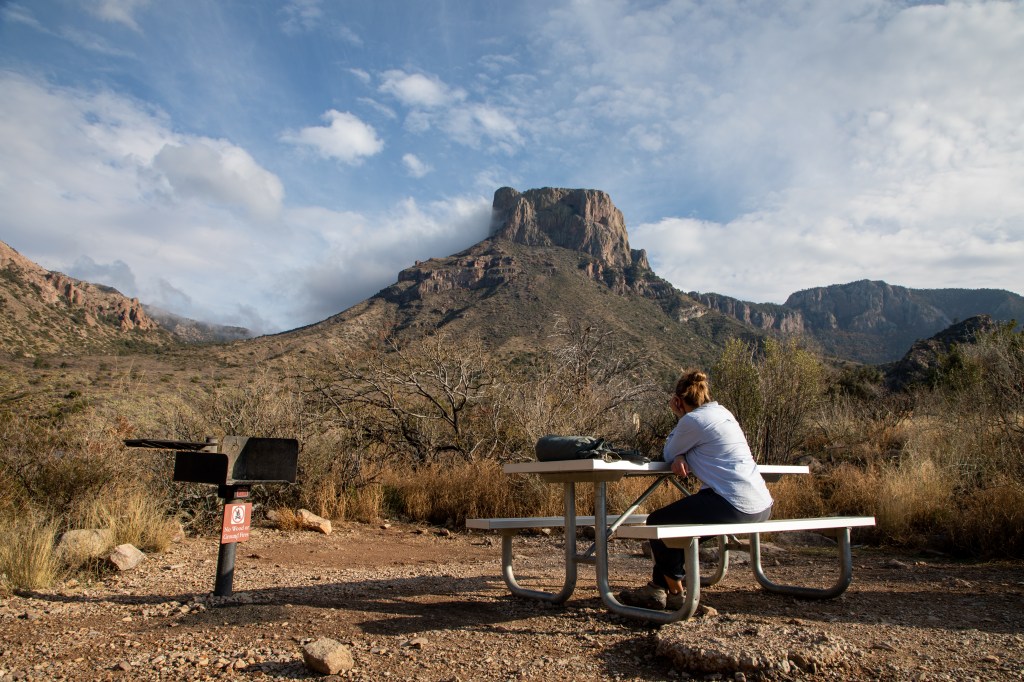
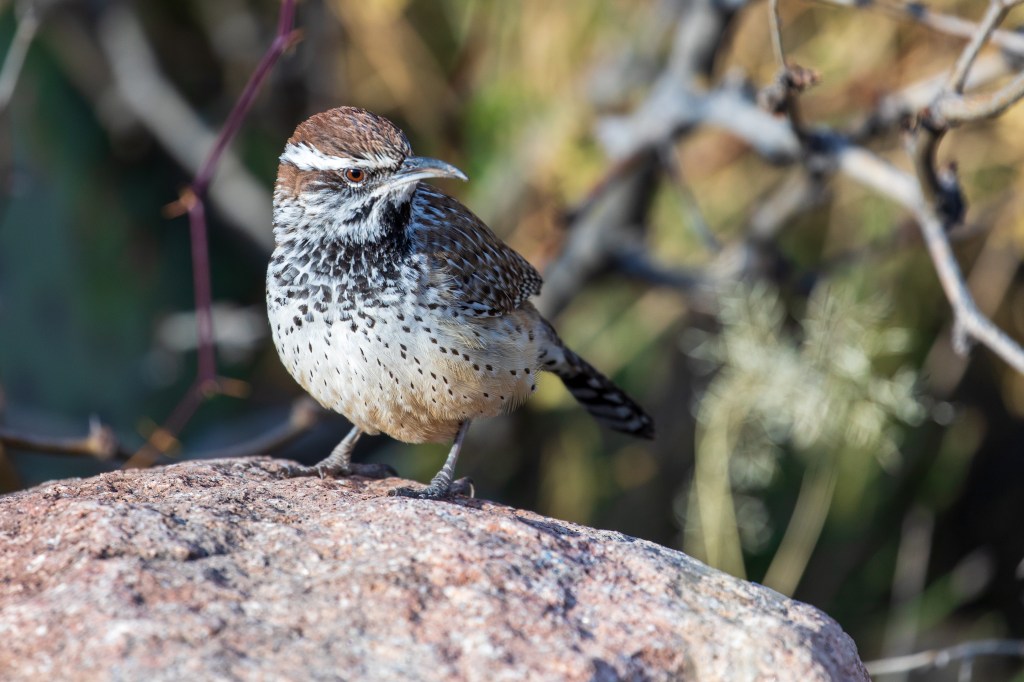
Abbey and I got the last campsite available in Chisos campground for the night. I don’t know why it wasn’t taken; it was isolated from the other sites and probably had the best views in the whole campground. As Abbey and I sat taking in the views, Cactus Wrens flew into the site, kicking up the ground and eating little bugs.
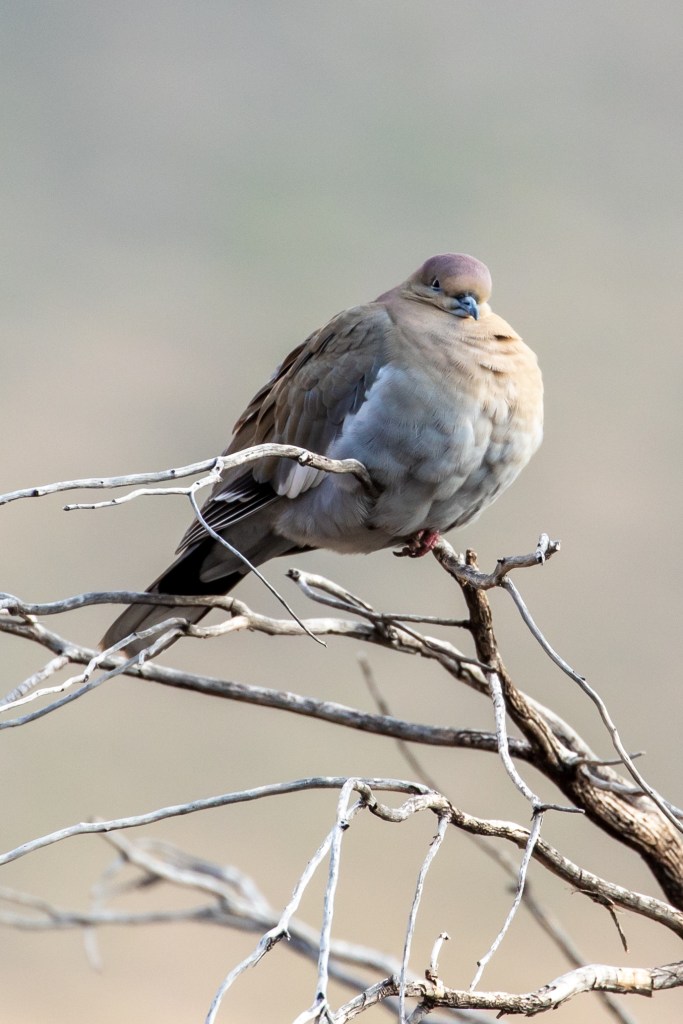
It was chilly in the evenings, with temperatures dropping into the 30’s. This White-Winged Dove was fluffed and content.
The Havard Agave, also called the Century Plant, grows for years, slowing storing water and energy. Then, in a great final show it blooms magnificently, with the flowering stalk reaching 15 feet in the air. After having spent all it’s energy, the plant dies.
Big Bend is a National Dark Sky Preserve. The park is 100 miles from the nearest city, and it shows. These are the best stars I have ever seen in my life. You don’t realize how bad and ubiquitous light pollution is until you see what the sky is supposed to look like.
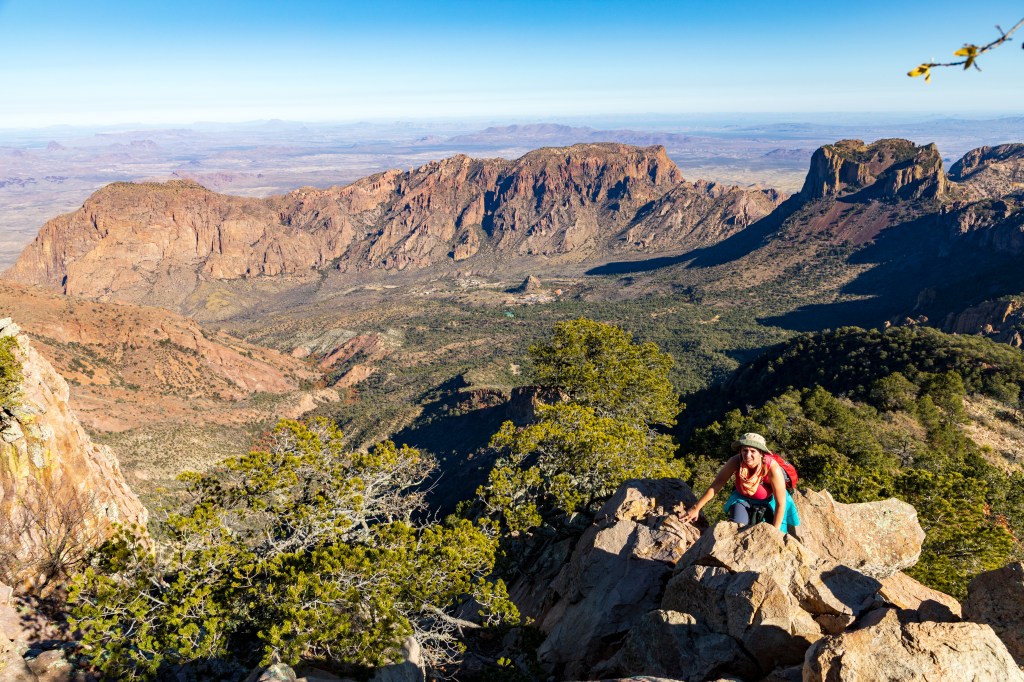
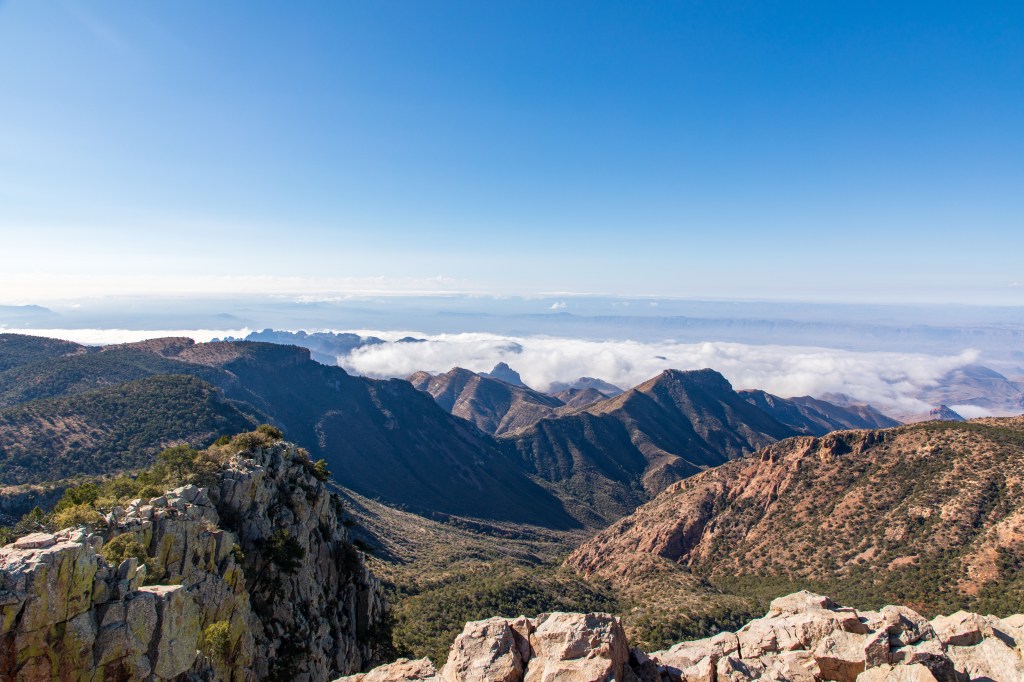
Abbey and I did some backpacking in the Chisos Mountains, including a summit of Emory peak (7,825’). The last 100’ of the summit trail requires scrambling and is mildly treacherous. There are a couple places where a misstep could mean death, so don’t misstep. The views are worth it, though; this is the highest mountain in the Chisos range and the highest in the national park. We could see a mountain range that was 136 miles away on the horizon.
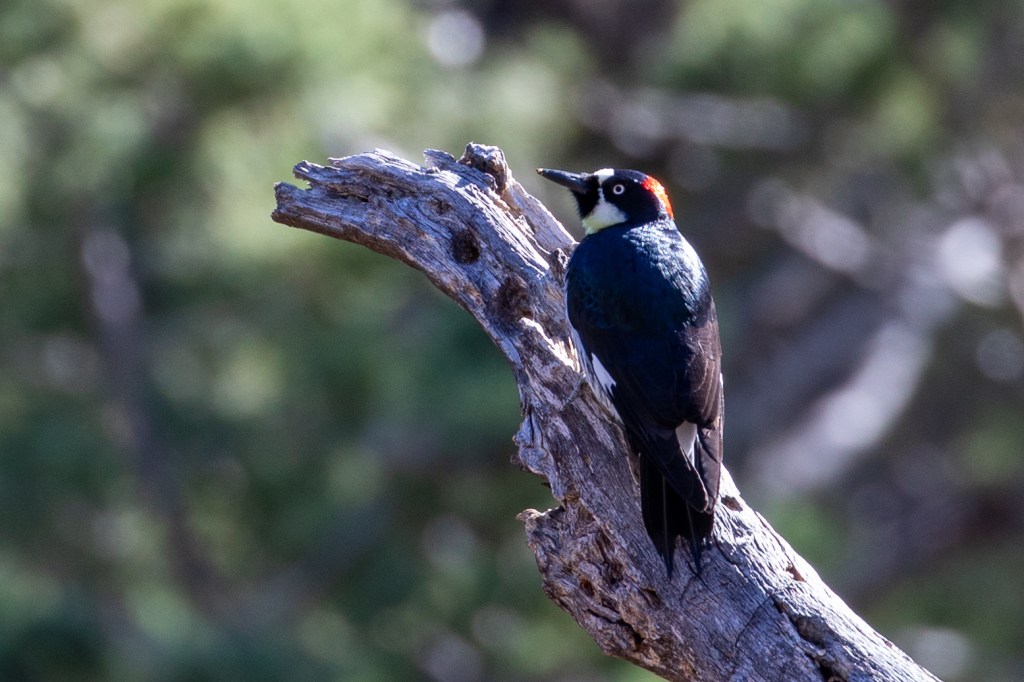
Acorn woodpeckers are highly social and talkative. They’ve been known to hoard thousands of acorns in their secret hidey places.
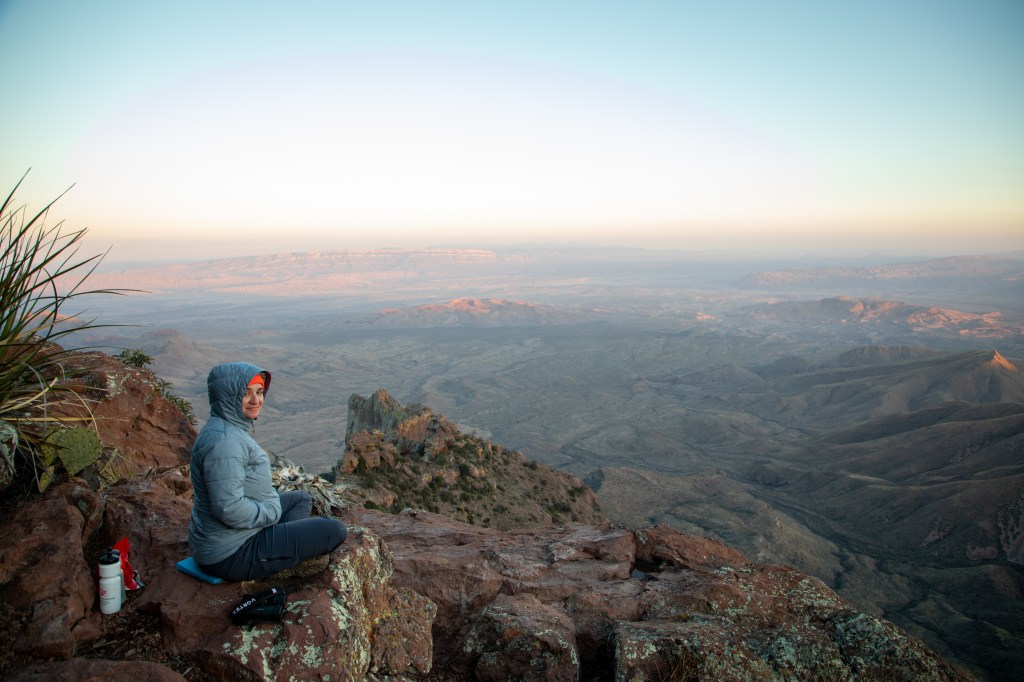
When Abbey and I were getting our backpacking permit, one of the campsites we asked for was incorrectly entered by the park staff. When he realized his mistake, we said we’d just take it even though it meant a few more miles of hiking. As it turns out, this was a wonderfully lucky mistake; the campsite had legendary views and no neighbors. We ate our dinner and breakfast out on a ledge, 2,000’ above everything, looking 100+ miles out into the horizon and Mexico. Woah.
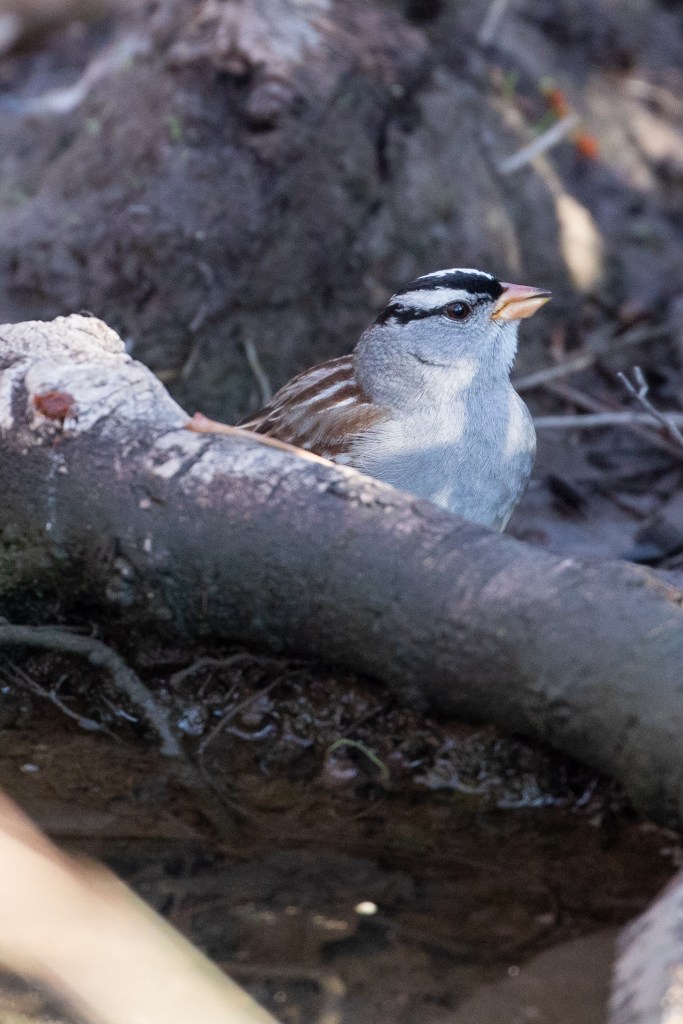
Water is scarce in the desert, so Abbey and I would sit and wait when we found some to see who would show up to drink. This White Crowned Sparrow was thirsty.
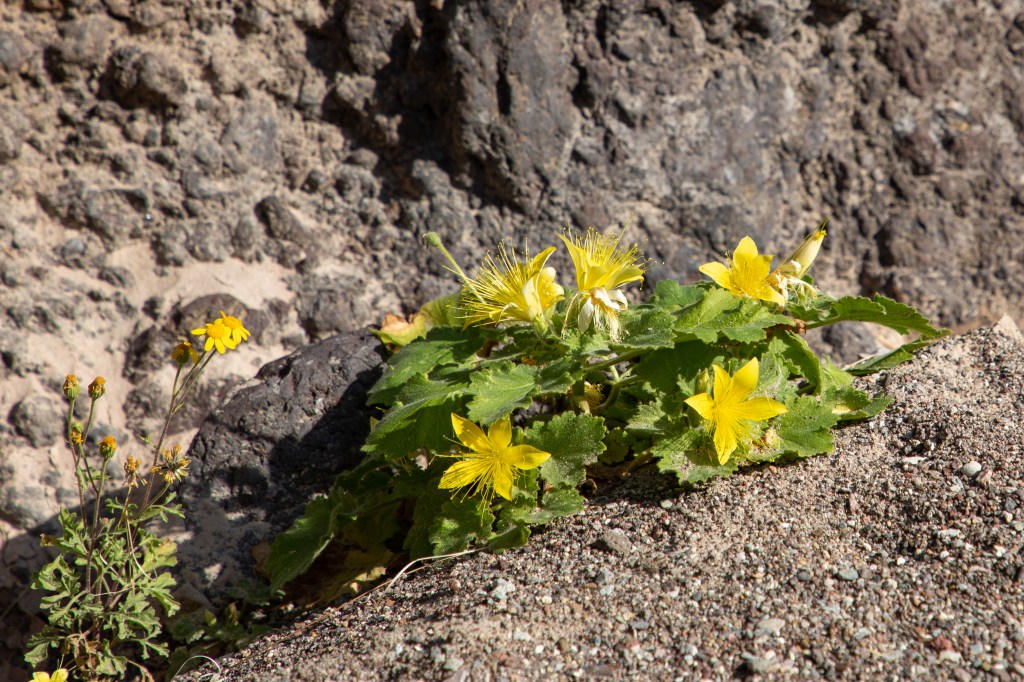
Flowers in the desert like this Rock Nettle don’t necessarily bloom in any one season. They bloom after rain when they have enough energy stored to support the flowers.
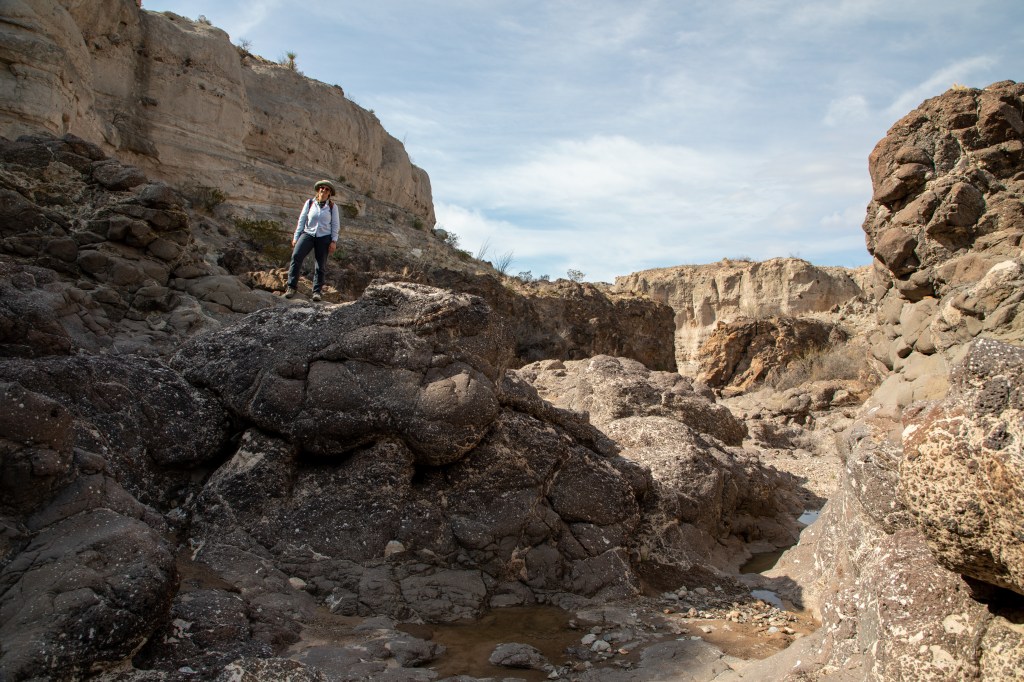
Abbey put on her geology hat to explore this eroded arroyo that revealed volcanic rock.
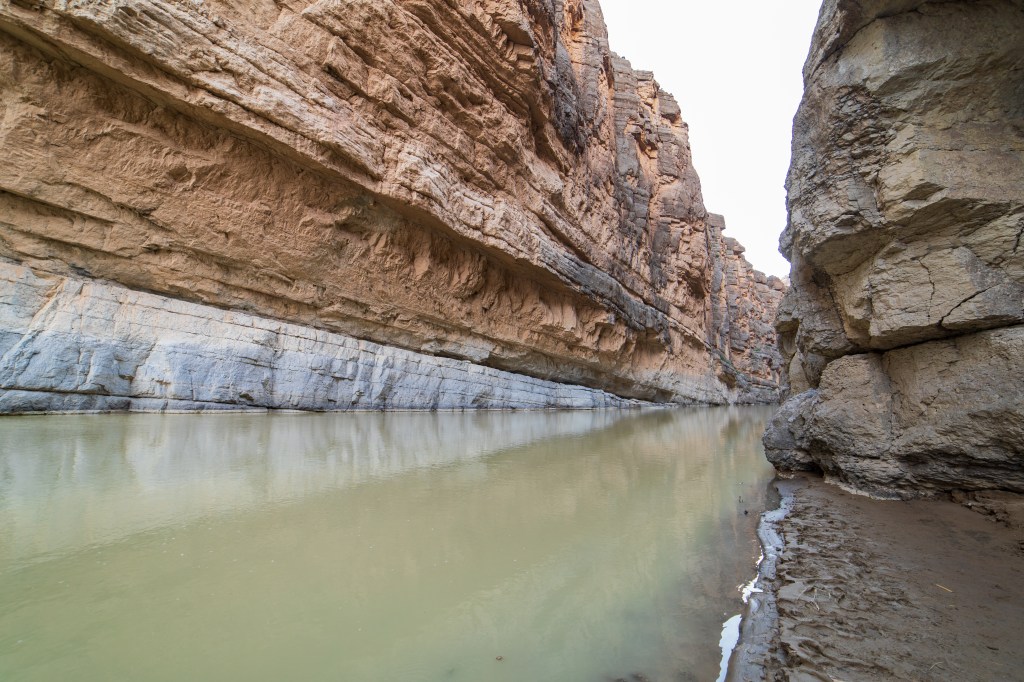
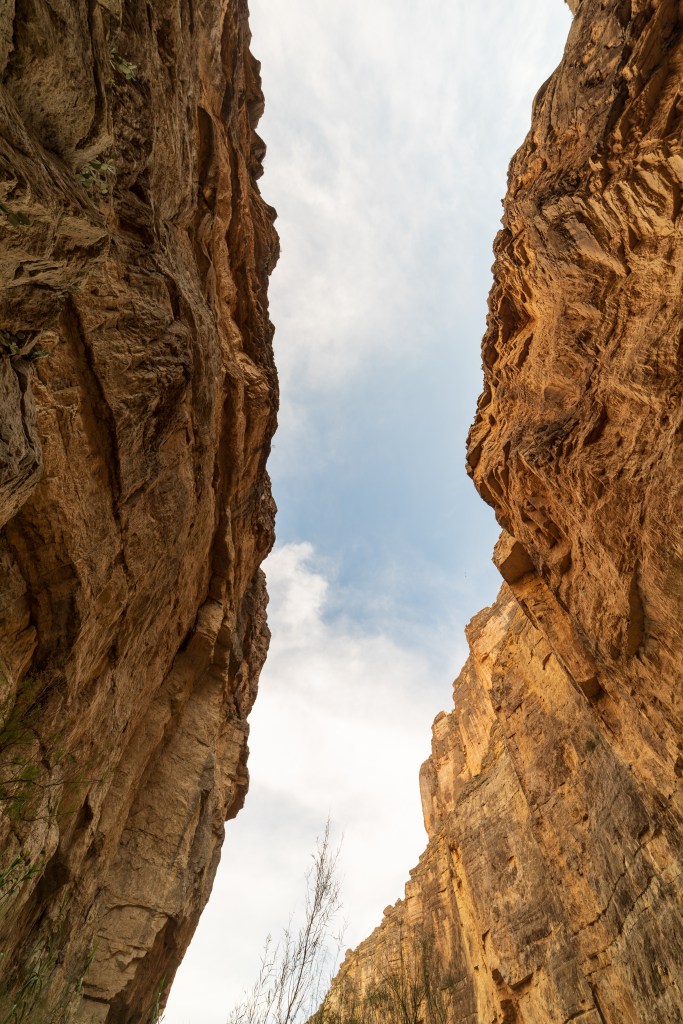
Santa Elana Canyon is 1,500’ deep but imperceptibly narrow – only 30’ at places. One sheer rock wall is the United States, the other Mexico.
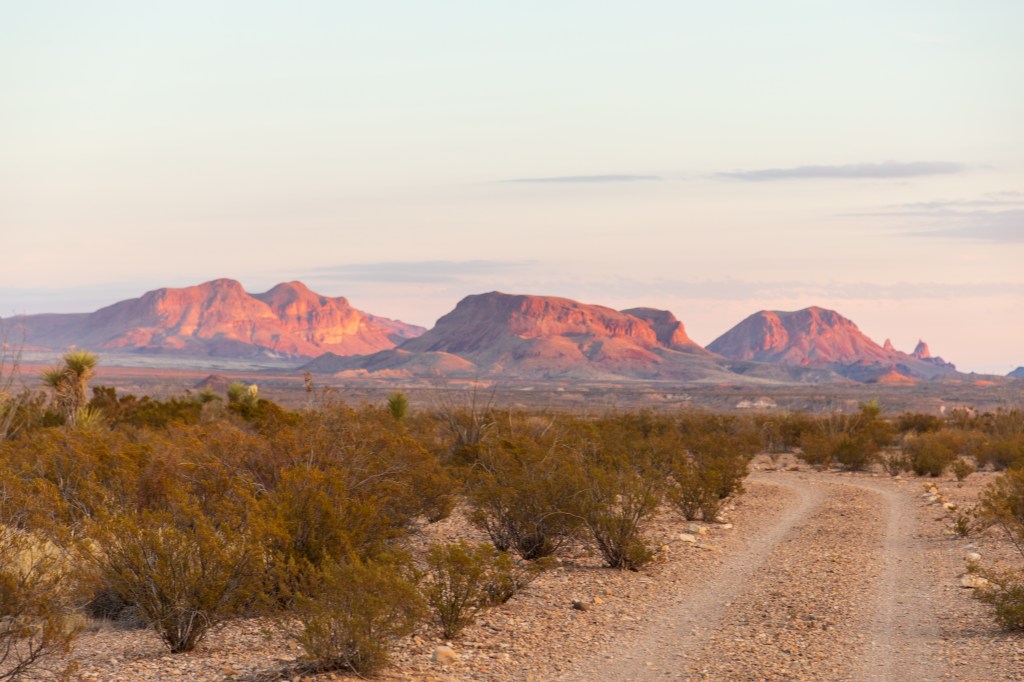
Big Bend has primitive backcountry sites located along old unpaved roads that you can drive too. We spent two nights doing these backroads with Evelyn. The sign posted said 4×4 required, but when we spoke with a Park Ranger to get our permit, she was excited to hear we had a Vanagon. She gave us some tips, told us what roads to avoid, and said we wouldn’t have a problem. We didn’t. The roads were rough in places but Evelyn did fine.
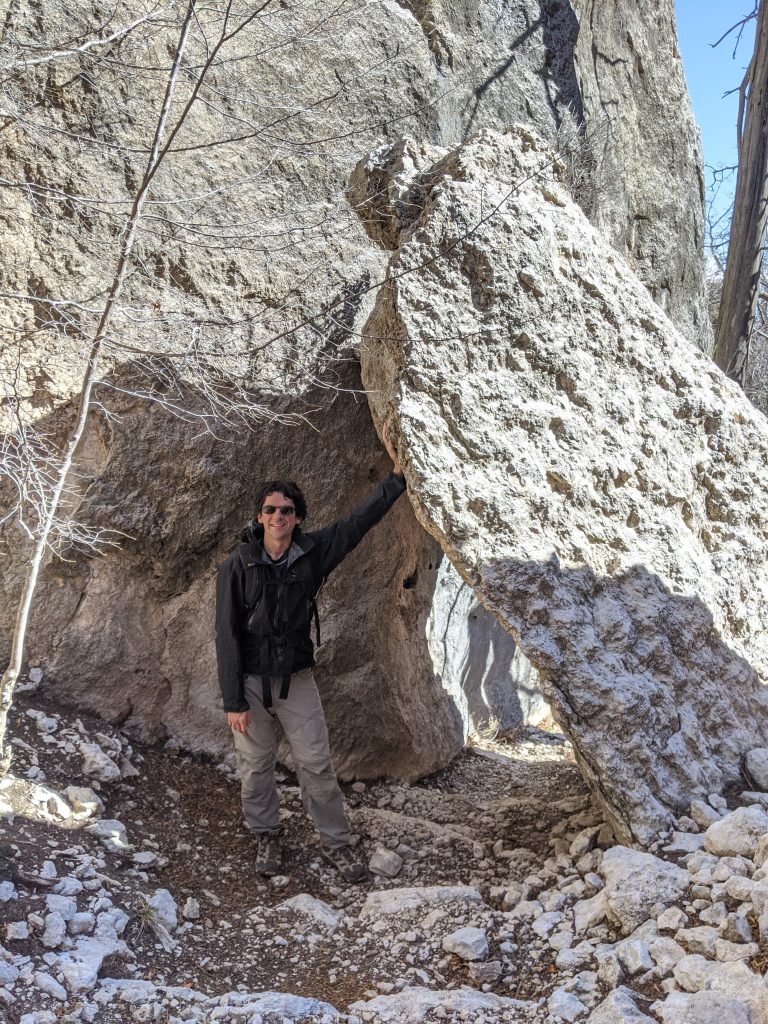
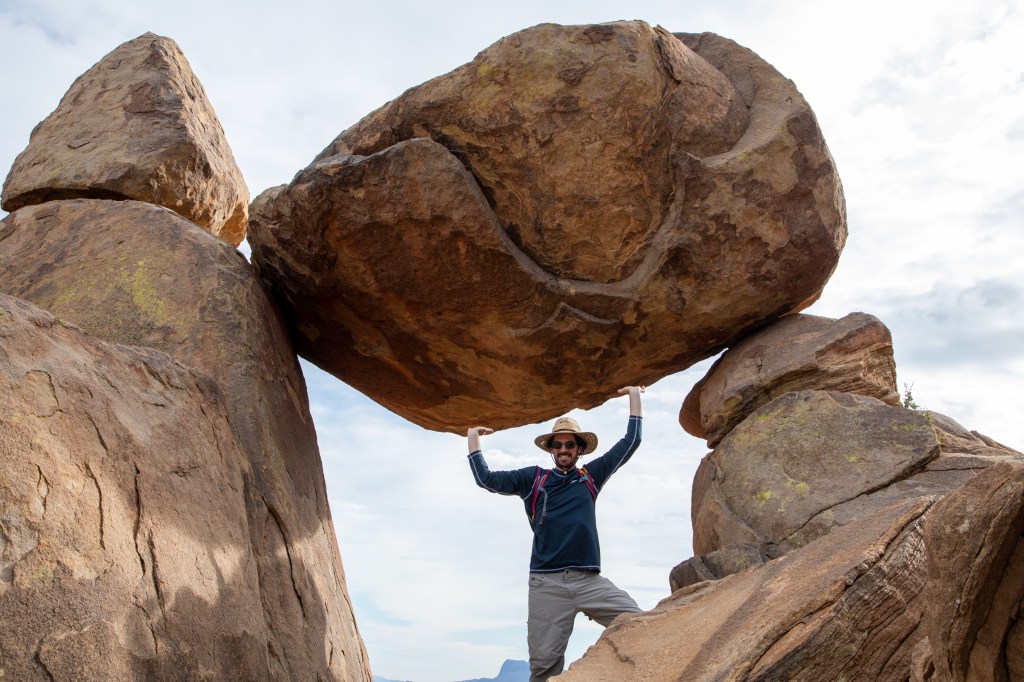
Balanced Rock is just that. Seeing oddities like this is always fun, and it makes you wonder how long it’s been like that and when it will fall. Standing under it, I hope it’s not today.
If you ever get the chance, Big Bend is worth the visit. It’s on par with the likes of Yosemite, Yellowstone, and Glacier, and probably the only reason it’s not more heavily visited is due to its remoteness. In my opinion, that’s a plus.








































 Hardway Travels