More people visit the Great Smoky Mountains than any other National Park in the country, and it’s easy to understand why (besides the fact that it is so close to many major East-coast cities). Diverse forests, towering trees, raging rivers, and plentiful wildlife make the Smokies unique. The diversity is attributed to the last ice age. As the glaciers pushed South across the Northern United States, they brought cold-climate plants and animals into the Smokies, which became the very southern edge of the glaciers. When the glaicers receded, they left the diversity, so now the higher elevations in the Smokies are more akin to Canadian-type forests, while lower elevations are more typical of the area.

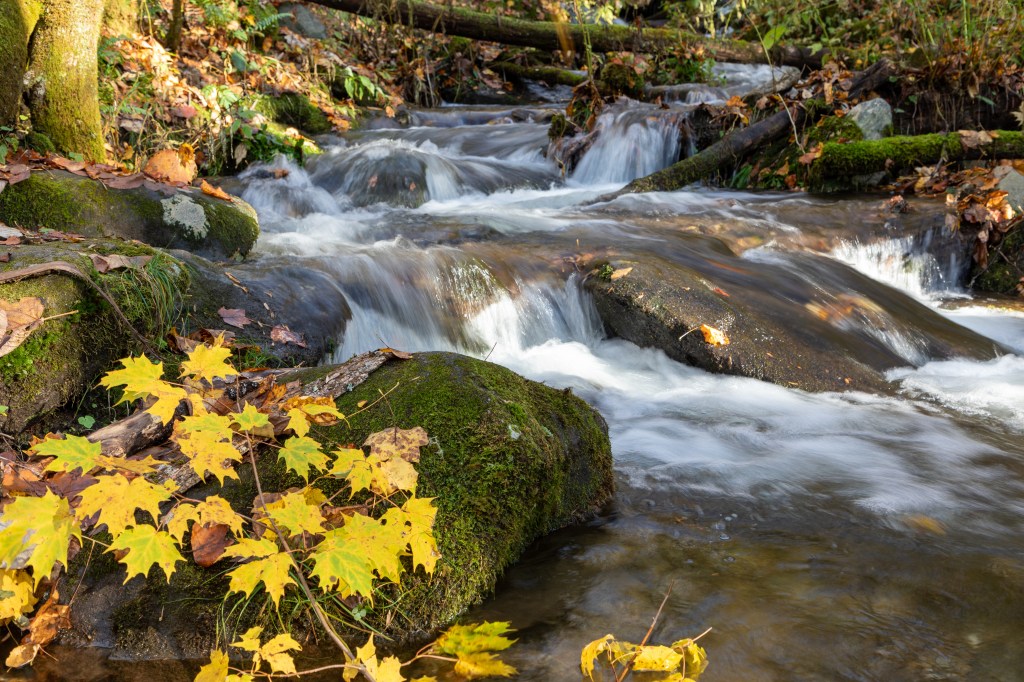
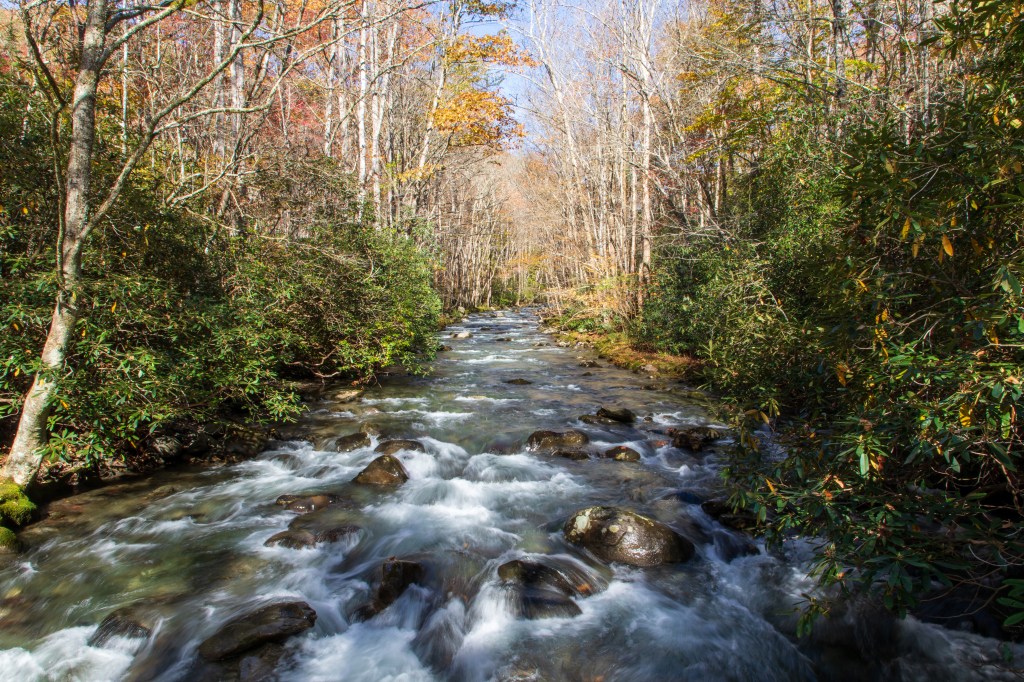
Two days of heavy, continuous rain greeted us as we entered the Smokies. All the rivers were swollen and raging, and we hunkered down to wait out the soaking. All the rain made for some beautiful hiking though, and we never had to worry about where to find water while backpacking!

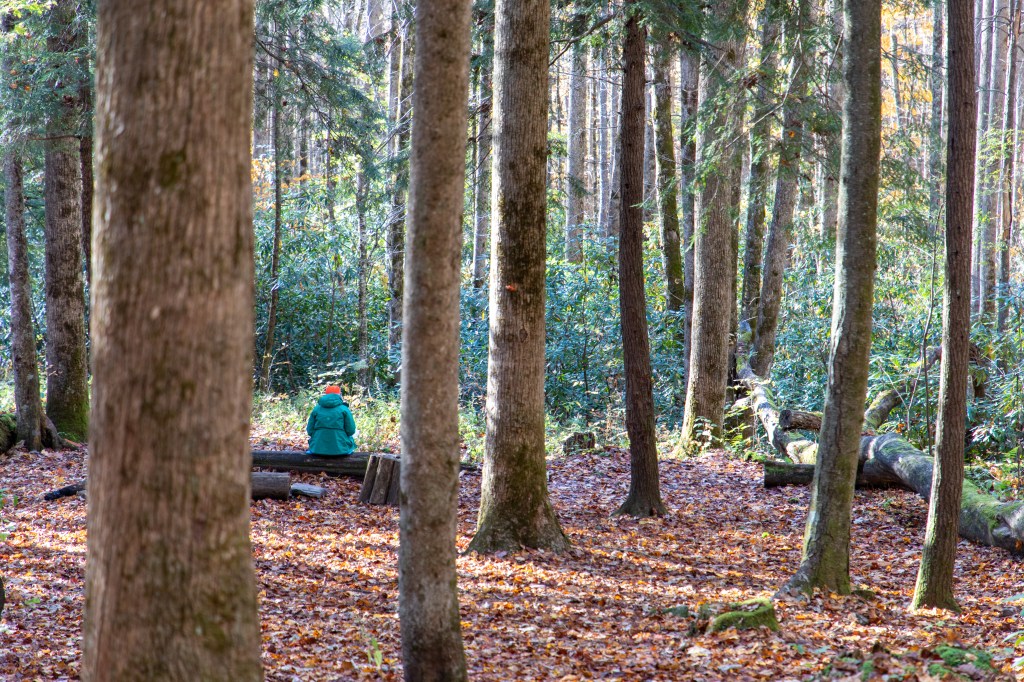
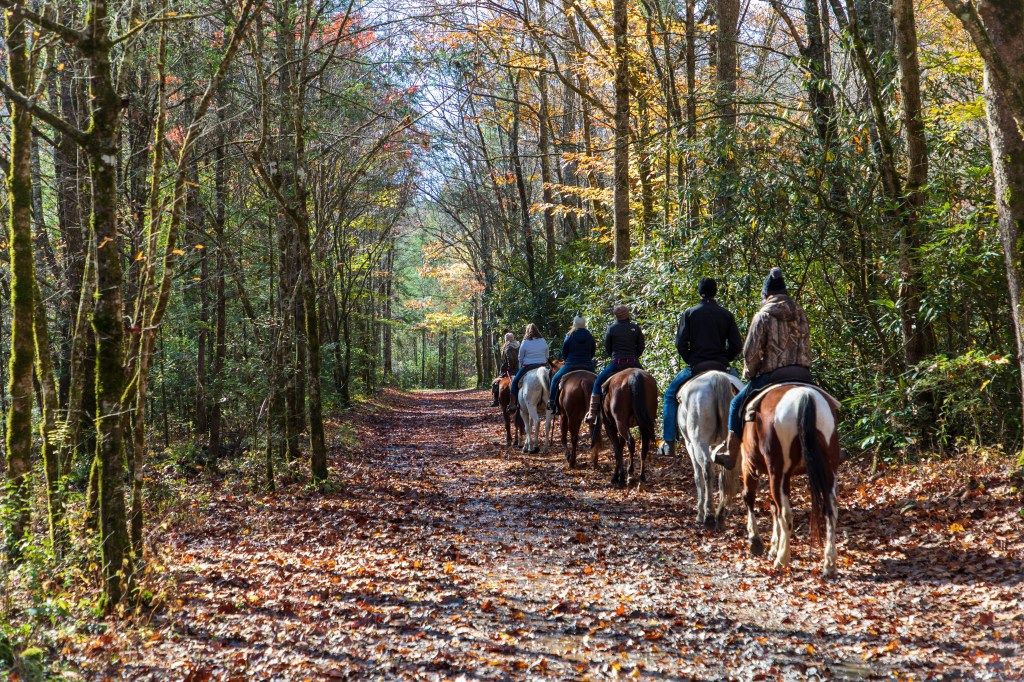
Abbey and I decided to leave the van and do a small 3-day backpacking trip into the back country. I’m convinced that you can’t really experience the true beauty of a park until you leave your car and get out into it. We had good weather – nearly 60’s during the day and upper 20’s at night.

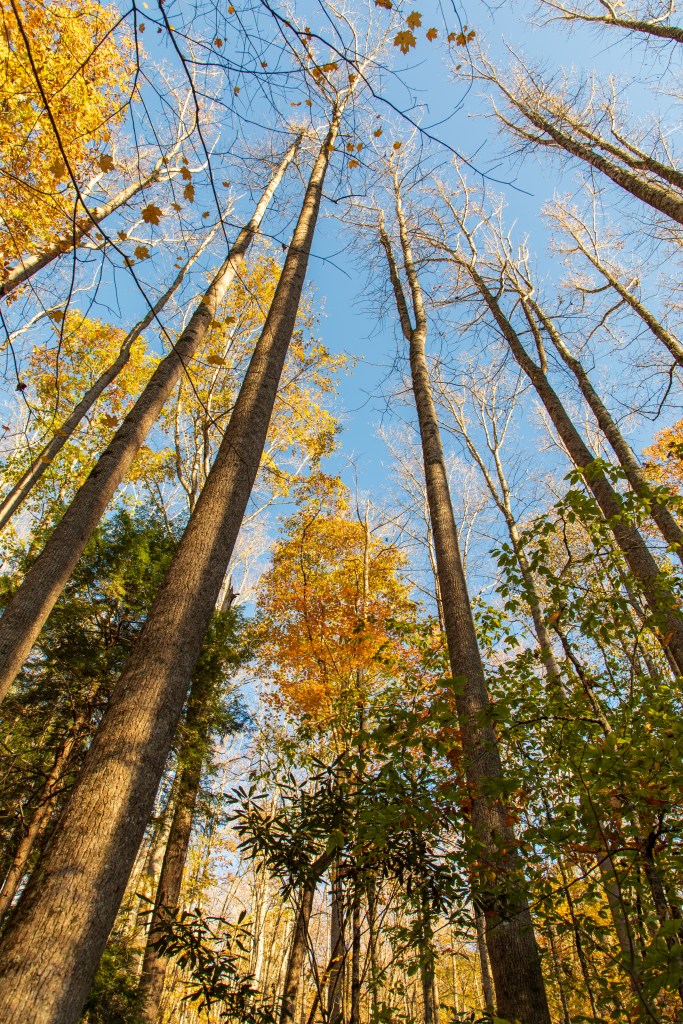
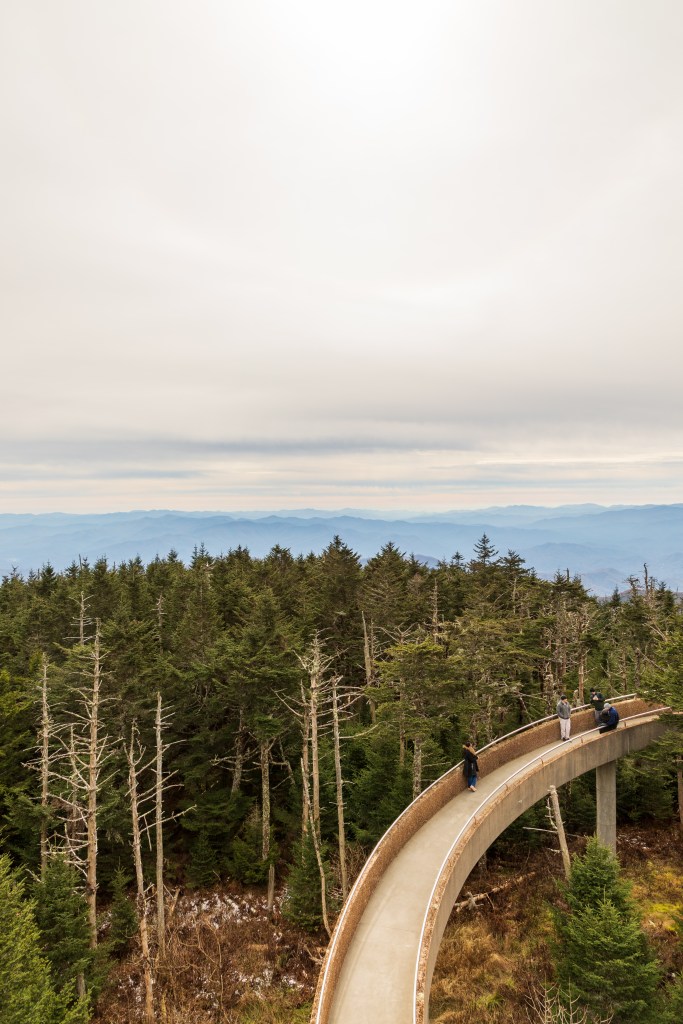
Clingman’s Dome is the highest point in Tennessee at 6,643 feet. You can drive most of the way to the top (yes, Evelyn did fine in the oxygen-deprived air), with only a short hike to the lookout. In my opinion, this is both good, because it lets more people experience the views, and bad, because it lets more people experience the views.
Cade’s Cove is geologically intriguing. Known as a “Limestone Window,” the flat valley area is actually composed of younger rock than the surrounding higher ridges because the softer limestone eroded away and because of fault action. Some of the oldest rock in the surrounding ridges is over a billion years old.
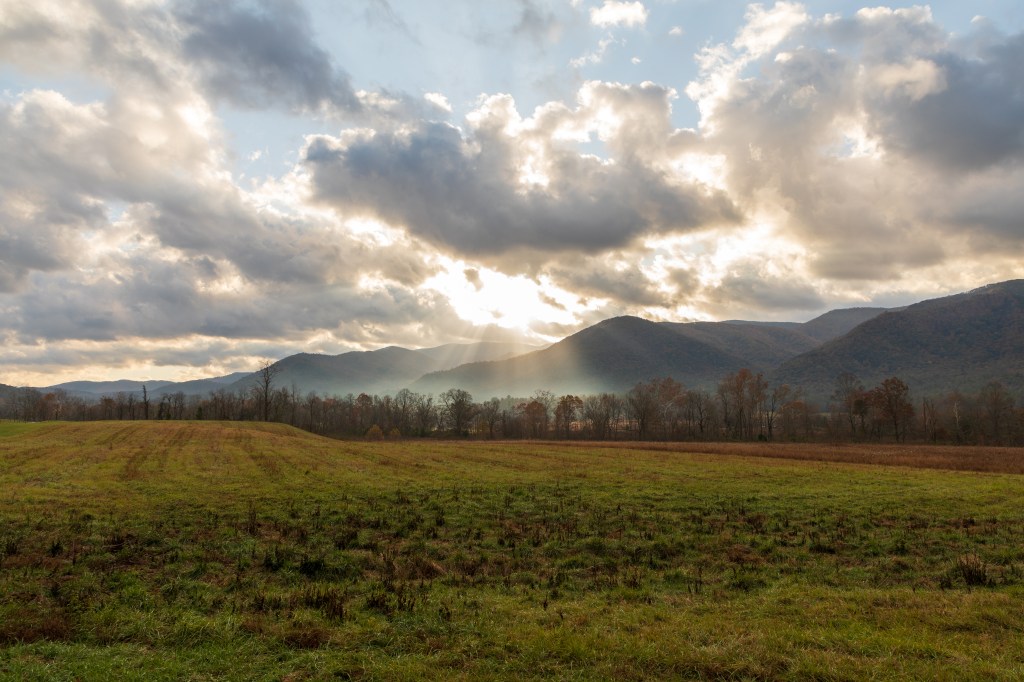
The Cove was attractive to early settlers because of the fertile soil. Some of the early structures have been preserved by the Park Service. Cherokee Indians were in the area before this, but they were mostly marched out in the Trail of Tears to Oklahoma. Sigh…
Early nails were handmade, one at a time, by a Blacksmith. Ever wonder why there is a “d” in nail terminology, but we refer to them as “penny” (e.g. a 16d nail is called 16 penny)? The “d” stands for Denarius, an ancient Roman coin, and referenced the cost of the nail. We still call them 8, 12, 16 penny nails today even though the “d” and the cost is no longer relevant.

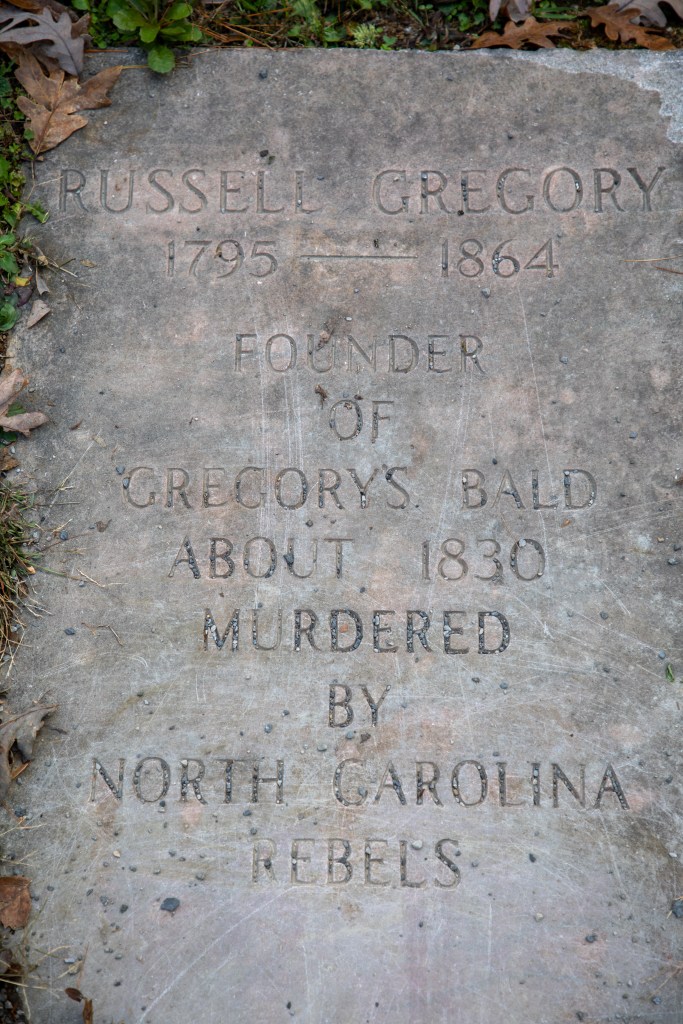
I lucked out and came across some Black Bears while hiking. Abbey missed out because she was looking at graves in a cemetery, but that’s probably for the better. I’m beginning to learn that she has a mild fear of bears.

Now onward to South Carolina!
Cheers!
 Hardway Travels
Enjoying your photos and notes. I’m learning a great deal. Love the Bears, but now to another place I love, South Carolina. Safe travels.
LikeLike